Mattress and Hip Pain: A Practical Sleep Guide
Urgent guide to easing mattress-related hip pain. Learn to select support, test toppers, adjust sleeping positions, and know when to seek medical care.


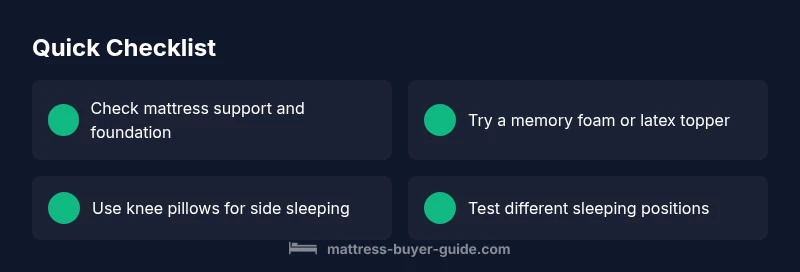
Most hip pain tied to sleeping comes from poor alignment. The quickest fix is a medium-firm mattress with targeted pressure relief and proper support. Try a memory-foam or latex topper if your current bed is too firm or too soft, and adjust your sleeping position with a knee bend or pillow between the knees. If pain persists, seek medical guidance.
Understanding the link between mattress and hip pain
Hip pain is often a signal that your sleep setup isn’t supporting your spine and joints. According to Mattress Buyer Guide, many people experience improved comfort after addressing mattress support and alignment issues. When your hips sink too deeply or ride too high, the pelvis tilts and the lower back bears the load, aggravating pain by morning. In this guide, we break down practical steps you can take today to assess your current bed, select a more supportive option, and create a sleeping environment that minimizes hip stress. You’ll learn what firmness range tends to work for most sleepers with hip discomfort, how materials like memory foam and latex contour around the hip, and why the foundation matters as much as the mattress itself. The Mattress Buyer Guide Team emphasizes that relief often comes from a balanced combination of support, pressure relief, and ergonomic positioning. If your hip pain is chronic or radiates to the groin or knee, consult a clinician to rule out underlying issues.
How to choose a mattress that supports hip alignment
A properly aligned spine reduces strain on the hips. Start by prioritizing mid-range firmness—not too hard, not too soft. Memory foam and latex toppers can provide contouring for the hip while preserving overall support, especially on a mattress that feels too firm. Hybrid mattresses offer a mix of coil support and foam comfort; they are popular for sleepers who want bounce plus pressure relief. When shopping, test whether the mattress supports the hip in the side-lying position, where most hip pain is felt. Look for even sinkage, with the hip and shoulder resting more comfortably without causing the pelvis to tilt. If you sleep on your back, ensure your spine maintains a natural curve; a slight hip support can help. Remember to consider your body type and sleeping style. Mattress Buyer Guide analysis shows that the right blend of contour and support can dramatically reduce morning hip stiffness, often after a single month of use.
Firmness, materials, and personal comfort
Firmness is not universal; your body weight, hip structure, and preferred sleeping position determine what feels best. A medium-firm option is a good starting point for many people with hip pain, but individuals who press deeply into the mattress may prefer soft foams for pressure relief. Memory foam offers close contouring, while latex resists body impressions and keeps a bit more lift. Hybrid designs blend coil systems with foam layers for a balance of support and sink. Pay attention to edge support and how the mattress responds when you roll from side to back. For people who sleep with a knee or leg alignment issue, a supportive pillow between the knees can reduce hip twist. Also consider temperature regulation, as overheating can increase perceived discomfort. The Mattress Buyer Guide Team notes that personal testing is essential; what works in the showroom may feel different after a few weeks in your own bedroom.
Practical at-home testing and toppers
Before replacing your entire bed, try simple at-home adjustments. A memory-foam or latex topper can add or subtract firmness to address hip-pressure points without a full mattress swap. Place the topper on your existing foundation and sleep on it for a minimum of 2-4 weeks to gauge improvement. If the topper reduces pressure on the hip but the back still aches, add a knee pillow for side sleepers; for back sleepers, place a pillow under the knees to reduce pelvic tilt. Inspect the foundation and frame for squeaks, uneven slats, or broken supports; a sagging foundation can mimic poor mattress support. Track daytime activity and pain levels in a simple journal to see whether adjustments correlate with changes in pain. If pain remains persistent after these trials, consider shopping for a new mattress that better matches your weight, height, and sleeping style. A professional assessment can help ensure you do not miss underlying issues.
The role of foundation, frame, and sleep environment
The foundation matters just as much as the top layer. A worn-out foundation can undermine support, causing hip misalignment and morning stiffness. Check that your bed frame is solid, with center supports intact and corners level. Use a hypoallergenic mattress protector to maintain durability and reduce moisture that can alter feel. Room conditions, lighting, and noise influence sleep quality and pain perception; a cool, dark, quiet environment can support deeper rest and faster recovery. Also consider rotating or flipping your mattress if appropriate to distribute wear evenly. If you use a topper, ensure it sits flat and doesn’t bunch; movement underneath can irritate hips and lower back. The Mattress Buyer Guide Team suggests pairing a solid foundation with a responsive top layer to maximize alignment and comfort.
Simple troubleshooting for common hip-pain symptoms
Waking with morning hip stiffness is often a sign of suboptimal alignment or inadequate pressure relief. If pain is worse when sleeping on a particular side, try a knee pillow or a thinner topper to reduce hip sinking. Pain that improves after getting out of bed usually indicates mechanical stress rather than an inflammatory condition. If pain persists throughout the day, consider whether your mattress is losing shape or if an old foundation is contributing to misalignment. Keep a pain diary to track what changes help most in the morning. If you notice numbness spreading to the leg or foot, or if swelling appears, seek medical evaluation promptly. Small changes, like adjusting pillows, can yield meaningful relief, but persistent symptoms require professional assessment.
Sleep hygiene and longer-term relief strategies
Establish a consistent sleep schedule, create a cool and dark sleeping environment, and limit caffeine or heavy meals before bed. Adequate sleep supports tissue recovery and pain perception, which matters for hip discomfort. Complement sleep with gentle stretches focused on the hips, glutes, and lower back—but avoid aggressive exercises right before bedtime. Consider a structured routine that includes a 15–20 minute wind-down period with relaxation techniques. If you’re trying to decide between memory-foam, latex, or hybrids, prioritize alignment and comfort testing rather than brand popularity. The Mattress Buyer Guide Team emphasizes patience; relief commonly emerges after several weeks of using a well-suited mattress and routine.
When to seek professional care and next steps
If hip pain persists beyond 4–6 weeks after a mattress change, or is accompanied by numbness, shooting pains, or weakness, consult a clinician. Ongoing discomfort can indicate underlining conditions such as hip osteoarthritis, sciatica, or radiculopathy that require targeted therapy. Bring your sleep setup details to the appointment—your current mattress type, topper, foundation condition, and sleep position changes can aid diagnosis. In many cases, a coordinated approach that includes physical therapy, ergonomic adjustments, and a properly matched mattress yields the best long-term relief. The Mattress Buyer Guide Team recommends systematic testing, professional guidance when red flags appear, and a measured path to improved sleep quality.
Steps
Estimated time: 60-90 minutes
- 1
Assess current setup
Evaluate mattress firmness, topper presence, and foundation integrity. Check for visible sagging or dips and note hip discomfort during different sleep positions.
Tip: Take photos of the bed’s evenness to compare over time. - 2
Try targeted adjustments
Insert a medium-firm topper if too soft, or remove a overly soft topper if sinking too much. Re-test hip comfort in side and back positions.
Tip: Record pain levels before and after each adjustment. - 3
Optimize sleeping position
Use knee pillows for side sleepers or a small pillow under the knees for back sleepers to maintain spinal alignment.
Tip: Limit stomach sleeping as it often aggravates hip strain. - 4
Evaluate foundation health
Inspect slats, center supports, and frame for wobble or creaks. Replace or reinforce as needed to restore even support.
Tip: A solid base amplifies the benefits of a good mattress. - 5
Test with a full mattress swap
If adjustments fail, trial a new mattress with similar contour and support, maintaining the same foundation.
Tip: Choose a 30–90 night trial to assess comfort properly. - 6
Consult a clinician if needed
If hip pain persists after a full cycle of testing and adjustments, seek medical evaluation to rule out conditions like arthritis or nerve issues.
Tip: Take notes on symptoms and sleep routine for your appointment.
Diagnosis: Waking with hip pain or stiffness after sleep
Possible Causes
- highInadequate support or misalignment from mattress/foundation
- mediumSuboptimal sleeping position (side vs. back) and pillow plan
- lowUnderlying medical condition (less common)
Fixes
- easyTry a medium-firm mattress with a pressure-relief topper and test side-by-side sleeping positions
- easyAdd a knee pillow for side sleepers or a small pillow under the knees for back sleepers
- mediumInspect foundation for sagging or damage; replace foundation if needed
FAQ
What mattress type is best for hip pain?
There isn’t a single best type; many sleepers with hip pain prefer memory foam or latex in a medium-firm range for good balance of contour and support. Hybrids can offer both bounce and pressure relief. Personal testing matters most.
Memory foam or latex in a medium-firm feel is a common choice for hip pain, but test it yourself to be sure.
Can a mattress topper relieve hip pain?
Yes, toppers can adjust firmness and contour around the hip. Memory foam and latex toppers are popular, but they may not fix deeper structural issues.
A topper can help, but it may not solve underlying structural problems.
Does bed height matter for hip pain?
Yes. A comfortable bed height reduces strain when getting in and out. Aim for a natural knee bend and ease of movement.
A bed height that makes it easy to rise from a chair can reduce hip strain.
How long should I test a new mattress before deciding?
Most brands offer 30- to 100-night trials. Use at least 4 weeks to judge hip comfort and support.
Give it about a month to see if hip comfort holds.
When should I see a doctor for hip pain?
If pain persists beyond several weeks or is accompanied by numbness, swelling, or fever, seek medical advice.
If the pain lasts weeks or worsens, consult a clinician.
Do sleeping positions impact hip pain?
Yes. Side sleeping can stress the hip if alignment isn’t supported; back sleeping with proper knee support often helps.
Position matters—try side with a knee pillow or back with knee support.
Is a new foundation ever necessary?
If your frame shows sagging or instability, a new foundation helps restore alignment and prolong mattress life.
Sometimes the base is the culprit; fix or replace it if needed.
Watch Video
Highlights
- Test for balanced support and contour.
- Prioritize spinal alignment with the right topper.
- Use pillows to correct hip and knee angles.
- Give new setups a full 4-week trial.
- Seek medical advice for persistent pain.