Plush vs Firm Mattress for Back Pain: An Analytical Guide
A detailed, evidence-informed comparison of plush vs firm mattresses for back pain, covering spinal alignment, pressure relief, materials, testing tips, and a practical decision framework.


Bottom line: for back pain, a medium-firm mattress generally offers the best balance of support and pressure relief, adjusted for body weight and sleep position. Plush models relieve shoulder and hip pressure for many side sleepers but can compromise spinal alignment for heavier bodies or stomach sleepers. Firm mattresses provide robust support but may create pressure points for lighter sleepers.
The Back Pain Challenge: Understanding Spinal Alignment
Back pain is often caused by misalignment between the spine and the surrounding muscles and joints. When evaluating plush vs firm mattress for back pain, the way a mattress supports your lumbar region, hips, and shoulders matters as much as how it feels at your joints. In general, people with different body weights and sleep positions require different balance points between softness and support. This section explains why spinal alignment matters and how firmness interacts with curves along the thoracic, lumbar, and sacral regions. As the Mattress Buyer Guide team notes, achieving a neutral spine is the primary goal, and the right firmness helps maintain that alignment throughout the night.
Key terms to know include neutral spine, hip sink, shoulder collapse, and core support. By understanding these concepts, you set the stage for a more objective evaluation of plush vs firm options and avoid common myths that equate soft with pain relief or hard with instant relief.
How Firmness Influences Sleep Biomechanics
Firmness interacts with body weight, sleeping position, and pain location to shape pressure distribution and spinal alignment. A mattress that sinks too much in the middle can tilt the pelvis and overwhelm the lumbar curve, even if it feels initially comforting. Conversely, a mattress that is too rigid can push on high-pressure areas such as the shoulders and hips, leading to subtle misalignments and wakeful moments. In general, medium-firm firmness supports neutral spine alignment for a broad range of sleepers, but personalization matters. Mattress science suggests that the most effective feel balances contouring with stable core support, reducing muscle tension and stiffness in the morning. Mattress Buyer Guide observations echo this, emphasizing how weight, position, and pain pattern drive the ideal firmness choice.
Plush Comfort: When Pressure Relief Helps
Plush mattresses excel at contouring small to medium body frames and offering generous pressure relief in critical zones like the shoulders, hips, and lower back. For side sleepers, this can translate to less joint discomfort overnight. The trade-off is that too much plushness can allow the midsection to sag, potentially shifting the spine out of alignment for heavier individuals or stomach sleepers. For people with localized pain in the hips or shoulders but relatively stable lower back, plush can offer long nights of comfort—provided the support core remains adequate. In practice, testing plush feel on a real bed, not just a showroom floor, is essential for seeing how forgiving the surface remains over the night.
Firm Support: When Stability Is Key
Firm mattresses emphasize a solid, stable base that resists excessive sinking. This often translates to a consistent feel across the torso and helps maintain spinal alignment for back and stomach sleepers, particularly those with higher body weight. The downside is that very firm surfaces can create pressure points for lighter sleepers or for joints that rest on the edge of the bed. A well-designed firm mattress with a high-density core or zoned support can mitigate this risk, offering durable alignment without strictly sacrificing comfort. In short, firmness alone does not guarantee pain relief; the underlying materials and construction matter just as much.
Weight, Sleep Position, and Pain Type: Matching Feel to Body
Body weight, preferred sleep position, and pain locus interact to determine which feel helps most. Lighter sleepers often report better alignment on plush surfaces that cushion pressure points, whereas heavier sleepers may benefit from firmer surfaces that prevent excessive sagging. Side sleepers typically prioritize pressure relief at the shoulders and hips, while back and stomach sleepers focus on spinal alignment. For individuals with lumbar pain, a medium-firm option that prevents sagging through the midsection tends to work best. Mattress buyers should consider their weight range, night-time movements, and pain triggers when choosing between plush and firm.
Material Considerations: Memory Foam, Latex, Innerspring
Not all plush or firm feels are created equal. The material mix—memory foam, latex, or coil systems—shapes contouring, support, and durability. Plush memory-foam constructs can deliver excellent pressure relief but may trap heat if poorly ventilated. Plush latex blends can offer better bounce and cooler sleep while still contouring. Firm mattresses can be built with high-density foams or supportive coils to balance long-term support with a moderate level of give. Hybrid constructions often aim to combine the best of both worlds: a supportive core with a pressure-relieving comfort layer. Material choice matters as much as the surface feel.
Temperature, Durability, and Care
Temperature regulation and durability are practical considerations that influence long-term satisfaction with plush vs firm options. Memory-foam-based plush layers may retain heat, particularly in warmer climates or for heavier sleepers who compress the foam more deeply. Denser cores and properly tuned airflow in the mattress cover can mitigate heat buildup. Durability depends on material quality and construction; a well-made firm core often outlasts cheaper plush foams. Regular care, such as rotating the mattress and using a proper foundation, helps maintain alignment and prevent sagging, which is a common driver of back discomfort over time.
Practical Testing: How to Try Plush vs Firm at Home
The most reliable way to judge plush vs firm for back pain is hands-on testing in your own bedroom with your typical sleep setup. Start by lying on your chosen feel in your usual sleep position for several minutes, then switch positions to observe whether alignment holds. Pay attention to where you feel pressure, how your lower back rests, and whether you wake with stiffness. If possible, use a trusted trial period and a compatible foundation to prevent unintended sag. Involve a partner for alternating testing scenarios if you share a bed. This practical approach helps translate showroom impressions into real-night comfort.
Common Myths About Firmness and Back Pain
A common myth is that “the firmer, the better” for back pain. In reality, misalignment can persist on too-firm surfaces, while overly plush mattresses can also fail to support the spine’s natural curves. Another misconception is that memory foam is inherently hot; modern open-cell foams and ventilation can address temperature concerns when paired with breathable covers. Finally, some buyers assume all hybrids feel the same; the actual feel varies with the core material, coil density, and comfort layers. Understanding these nuances helps shoppers avoid oversimplified conclusions.
Putting It All Together: A Decision Framework
To decide between plush and firm for back pain, start with a baseline of medium-firm and adjust based on weight, pain location, and sleep position. Use a structured test plan: test in your primary sleep position, evaluate spinal alignment, check shoulder and hip comfort, and then test a secondary position. If you’re primarily a side sleeper with hip pain, a plush-to-medium transition may help; if you primarily sleep on your back and carry moderate weight, a firm-to-medium option could be preferable. Finally, rely on a durable core and high-quality cover as the backbone of your long-term satisfaction, even if the surface feels slightly different over time.
Comparison
| Feature | Plush mattress | Firm mattress |
|---|---|---|
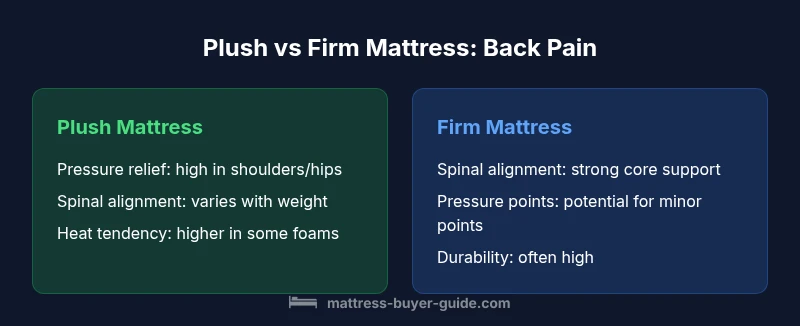
| Spinal alignment across positions | Good for many side sleepers with mid-range sink | Excellent neutral alignment for back/stomach sleepers with robust core |
| Pressure relief | High in shoulders and hips for side sleepers | Moderate to high depending on core materials and zoning |
| Durability / Longevity | Variable; depends on foam/comfort layer quality | Typically high with dense support cores |
| Motion isolation | Better for couples due to foam layers | Lower motion transfer if designed with proper zoning |
| Temperature regulation | Heat retention possible with memory-foam blends | Can sleep cooler with ventilated cores and breathable covers |
| Best for sleepers | Side sleepers seeking pressure relief; lighter bodies | Back and stomach sleepers seeking stable alignment; heavier bodies |
| Typical price range | Mid-range to premium depending on materials | Mid-range to premium depending on materials |
The Good
- Enhanced pressure relief for joints on plush models
- Superior contouring for personalized comfort
- Better for side sleepers and lighter weights
- High initial comfort that helps sleep onset
Cons
- Sagging risk for heavier sleepers or prolonged use
- Potential misalignment for stomach sleepers on too-plush surfaces
- Heat retention in some memory-foam plushs
- Premium materials can raise upfront cost
Medium-firm is the most balanced starting point for back pain
Choose medium-firm for overall alignment. If you’re side-heavy or lighter, consider softer layers for pressure relief; if you’re heavier or back/stomach dominant, a firmer core with measured give can be ideal. Always rely on a solid core and a trial period to confirm suitability.
FAQ
What firmness level is best for back pain?
There isn't a universal answer. Most people with back pain benefit from a middle ground—often a medium-firm feel—that supports neutral spine alignment while offering some contouring. Heavier bodies may need firmer support, while lighter bodies often prefer plush for pressure relief. Always test with your sleep position in mind.
There isn’t a one-size-fits-all firmness. Start with medium-firm and adjust based on your weight and sleep position.
Can plush mattresses help with back pain for side sleepers?
Yes, plush mattresses can relieve shoulder and hip pressure for many side sleepers. The key is to avoid excessive sink that shifts the spine out of alignment. If you’re heavier or prefer stomach sleeping, you may need a firmer surface or a hybrid with zoned support.
Plush can help side sleepers, but watch for alignment and consider weight when choosing.
How should I test firmness before buying?
Lie on the mattress in your typical sleep position, and stay long enough to assess comfort and alignment. Switch positions to see how the surface responds. Use a trial period and a known foundation to avoid misinterpretation of feel due to setup.
Lie down in your usual position and test both sides; allow yourself time to assess.
Are hybrids or innerspring mattresses better for back pain than all-foam plush?
Hybrids can offer a good balance of support and contour, while all-foam plush provides pressure relief but may trap heat and sag over time. The best choice depends on body weight, pain location, and how you sleep. A core with good support plus a comfortable top layer often performs best.
Hybrids can blend support and contour well; choose based on your pain pattern and temperature needs.
Should I rotate or flip my plush vs firm mattress?
Most modern mattresses aren’t designed to be flipped. Rotating the mattress periodically helps promote even wear and maintain consistent support. Check your manufacturer guidelines for rotation frequency.
Rotate regularly to keep wear even; flipping is usually unnecessary.
How long does a new mattress take to break in for back pain?
A mattress can feel different as your body adjusts, and many people notice improvements over a few weeks. During the break-in period, ensure you have adequate support and use a compatible foundation. If pain persists beyond the break-in window, reassess firmness or materials.
Give it a few weeks to adjust and monitor spinal alignment and comfort.
Highlights
- Test firmness with your typical sleep position and weight
- Prioritize spinal alignment over the surface feel
- Match firmness to weight and pain location
- Consider hybrid designs that combine support with contouring
- Use a reliable trial period to confirm comfort