Nectar Mattress vs Purple Mattress: An In-Depth Comparison
A comprehensive, data-informed comparison of Nectar vs Purple mattresses, examining feel, cooling, durability, price, and ideal sleeper profiles.


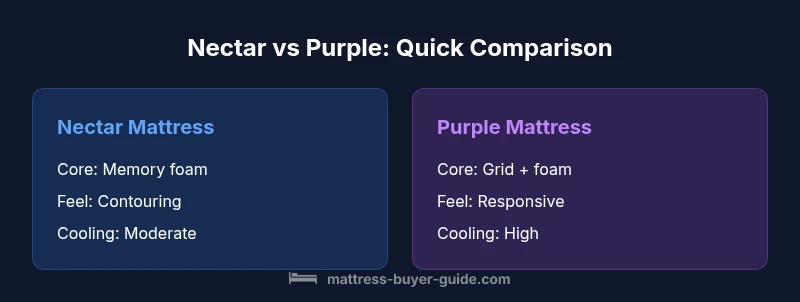
Nectar vs Purple offers two distinct feels: Nectar provides contouring memory foam at strong value, while Purple emphasizes cooling and responsive grid support. For most sleepers, Nectar is best for value-seekers; Purple for cooling and support-rich feel. See our detailed analysis below for deeper nuances on comfort, durability, and price considerations.
Why Nectar Mattress vs Purple Mattress Matter
Understanding how the nectar mattress vs purple mattress compare helps shoppers map comfort, cooling, and value across two popular designs. According to Mattress Buyer Guide, the nectar mattress vs purple mattress comparison captures two distinct design philosophies: a memory-foam based, contouring feel versus a grid-based, responsive system designed for temperature regulation. The choice between these two options matters not just for immediate comfort, but also for durability, motion transfer, edge support, and long-term ownership costs. In this guide we outline who each bed is best for, how their materials influence nightly comfort, and what tradeoffs to expect over years of use. By the end, you’ll have a clearer sense of which option aligns with your sleep profile, budget, and living space—without guessing.
Construction & Materials: What Each Bed Is Made Of
Nectar mattresses typically rely on multiple layers of memory foam designed to cradle the body and slowly ease you into a deep, pressure-relieving sleep. The top layers emphasize contouring around shoulders and hips, with a denser base to support alignment while reducing sink. Purple mattresses, in contrast, use a hyper-elastic grid over high-density foam, which creates a distinctive breathable, responsive surface. The grid is designed to flex with your body, offering mobility while still providing support where it matters most. This fundamental material difference drives many of the feel and performance tradeoffs sleepers notice in practice. Mattress Buyer Guide’s analysis highlights that the foam-focused Nectar tends to yield a familiar “hug,” while Purple’s grid delivers more bounce and air flow.
Comfort & Feel: Contouring vs. Responsive Support
Comfort is highly personal, but most sleepers can categorize Nectar as contouring and plush at initial contact, with a slower response that encourages a sinking-in sensation. This can feel luxurious for side sleepers who want pressure relief at the shoulders and hips. Purple, by contrast, emphasizes a buoyant, responsive surface thanks to its grid core. The feel is less enveloping but more supportive and easier to move around on, which many combination sleepers and lighter weight individuals prefer. Your preference for pressure relief versus ease of movement will often drive your choice between Nectar and Purple.
Temperature Regulation and Cooling Performance
One of the most discussed differences between Nectar and Purple is cooling. Nectar’s foam layers can retain heat for some sleepers, especially in warmer climates or with heavy bedding. Gel-infused options and good airflow can mitigate this, but the memory-foam feel is still associated with more traditional foam heat retention for some users. Purple’s grid design is inherently breathable, allowing air to circulate through the structure and often delivering cooler sleep for hot sleepers. The grid’s openness also contributes to a quick-response feel, which some sleepers interpret as better temperature control. Real-world results depend on room temperature, bedding, and personal physiology, but Purple generally earns a cooler reputation.
Support, Pressure Relief, and Edge Performance
Support quality hinges on body weight and sleeping position. Nectar’s foam stack excels at distributing weight and relieving pressure at critical contact points for many side sleepers, with solid spinal alignment around the lumbar area. Purple provides strong support through the grid, which distributes weight differently and tends to maintain alignment while allowing more lateral mobility. Edge support can vary by model; some Nectar variants offer robust edge comfort, while Purple’s grid can maintain consistent support along the perimeter due to continuous reinforcement. Motion isolation tends to be solid on Nectar, which is a plus for couples sharing a bed.
Durability, Longevity, and Warranty Considerations
Durability for Nectar and Purple tends to be solid, but outcomes depend on usage patterns and model specifics. Nectar’s all-foam construction may show compression in high-use areas over time if the foam density is not sufficiently high, though many users report years of dependable performance with consistent care. Purple’s grid layer is designed to retain its structural integrity, but some users find that the grid can feel noticeably different as weight distribution changes over the years. Both brands generally offer favorable trial periods and warranties, which provide reassurance as you evaluate long-term value. When choosing, review warranty terms carefully, including coverage for indentation depth and structural integrity.
Price, Value, and Ownership Costs
Price and value are central to the nectar mattress vs purple mattress decision. Nectar is often positioned as a value-oriented option, delivering strong contouring and pressure relief at a lower entry price point, which can translate into a lower total cost of ownership for budget-conscious shoppers. Purple typically carries a higher upfront price due to its unique grid technology and its performance advantages in cooling and responsiveness. Over time, the decision may hinge on how much you value cooling, ease of movement, and the feel of the surface, as the long-term costs are influenced by durability and warranty coverage. Consider trial periods as part of total ownership cost, and compare the practical savings of each option based on your sleep priorities.
Which Sleepers Benefit Most From Each Option
Side sleepers who prioritize shoulder and hip relief may prefer Nectar’s contouring, whereas back and combination sleepers who value rapid response and easier repositioning may lean toward Purple. Hot sleepers should weigh Purple’s cooling benefits more heavily, while those seeking a classic memory-foam feel at a lower price may choose Nectar for overall value. Heavier sleepers may want to test the beds in-store or via a trial period to assess support, bounce, and edge performance for their body weight distribution. In short, the best choice aligns with your primary sleep priority: contouring and value versus cooling and mobility.
Comparison
| Feature | Nectar Mattress | Purple Mattress |
|---|---|---|
| Core Technology & Feel | Memory-foam contouring and slow response | Hyper-elastic grid with responsive bounce |
| Cooling & Temperature Control | Moderate cooling with foam layers; potential heat retention | Grid design promotes airflow; generally cooler sleep |
| Support & Pressure Relief | Deep contouring and hip/shoulder relief | Even, dynamic support with grid structure |
| Edge Support & Motion Isolation | Good edge support on many models; strong motion isolation | Edge support varies by model; grid aids movement but may feel different |
| Durability / Longevity | Foam density influences long-term support | Grid layer designed for durability; results vary by weight |
| Warranty & Trial | Generous trial periods and warranties (brand-wide variations) | Typically generous trials and warranties; model-specific terms apply |
| Price & Value (Relative) | Often more affordable entry options | Often higher upfront price with premium features |
The Good
- Strong value for the price in the mid-range market
- Solid contouring and pressure relief from memory-foam layers (Nectar)
- Excellent cooling potential on Purple due to grid structure
- Good motion isolation on Nectar for couples
- Generous trial periods and warranty terms across both brands
Cons
- Nectar may sleep warmer for hot sleepers
- Purple's grid feel isn't for everyone and may take getting used to
- Some Nectar models can feel too soft or too firm for certain sleepers
- Purple can be pricier upfront than some foam-only beds
Nectar is the better value for contouring and pressure relief; Purple excels in cooling and responsive support.
If you prioritize budget-friendly contouring comfort, choose Nectar. If cooling and quick, buoyant support matter more, opt for Purple. Your choice should hinge on which sleep priorities you value most and how you respond to each feel in a trial period.
FAQ
Which mattress sleeps cooler, Nectar or Purple?
Purple generally sleeps cooler thanks to its grid structure that promotes airflow. Nectar can sleep warmer for some sleepers due to foam layers, though cooling technologies and bedding can mitigate this.
Purple tends to sleep cooler because of its grid design, while Nectar can feel warmer unless cooling features or room conditions help.
Which feels firmer, Nectar or Purple?
Nectar leans toward a contouring, plush-to-medium feel, with more sinking in at the shoulders and hips. Purple offers a buoyant, supportive surface with less deep contouring, appealing to movers and combination sleepers.
Nectar is typically more contouring and plush, while Purple is more buoyant and supportive.
Is there a significant price difference between Nectar and Purple?
In general, Nectar is positioned as a value option and Purple carries a higher upfront price due to its unique grid technology. Actual price depends on promotions, models, and sizes.
Nectar usually offers better entry pricing; Purple often costs more upfront but can justify it with cooling and feel.
Which is better for back sleepers?
Back sleepers should prioritize overall spinal alignment and support. Nectar delivers pressure relief with a forgiving foam stack, while Purple offers stable support with its grid, which many back sleepers appreciate.
Back sleepers should test both—Nectar for contouring support, Purple for a steady, buoyant feel.
Do I need a box spring or foundation for these mattresses?
Both Nectar and Purple beds are designed to work with modern foundations or bed frames that provide a solid, flat surface. A slatted base with appropriate support is typically fine; follow the manufacturers’ recommendations.
Both beds typically work with a solid foundation or modern bed frame—check your base's suitability.
How long do these mattresses last and what about the warranty?
Durability depends on model and usage, but both brands offer solid warranties and trial periods that help you assess long-term value. Review coverage details for indentation depth, structural integrity, and what constitutes normal wear.
Both brands provide good warranties and trial periods; read the terms for your model to understand coverage.
Highlights
- Align choice with cooling vs contouring priorities
- Consider your sleeping position and weight distribution
- Test both options if possible during trials
- Review warranty terms and return policies
- Factor in room temperature and bedding on performance