Can You Buy a Mattress with FSA? A Practical Guide
Can you buy mattress with FSA? Learn when medical necessity applies, how to verify eligibility with your plan, and practical steps from Mattress Buyer Guide.


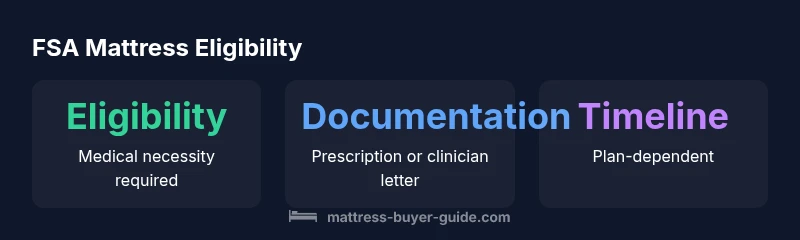
Can you buy mattress with FSA? Yes, but only under strict conditions. FSAs and HSAs typically cover medical expenses, not typical purchases. A mattress may be eligible if a clinician certifies medical necessity for a diagnosed condition and the plan administrator approves the expense. Documentation such as a prescription or letter from a healthcare provider is usually required. Always verify with your specific FSA plan before buying to avoid denial.
Can you buy mattress with fsa? An introduction to eligibility and real-world practice
Can you buy mattress with fsa? This question sits at the intersection of health care policy, tax-advantaged accounts, and personal sleep needs. According to Mattress Buyer Guide, FSAs and HSAs are designed to cover qualified medical expenses, not discretionary purchases. A mattress may qualify only when a clinician certifies medical necessity for a diagnosed condition and the vendor provides the required documentation. Even then, eligibility depends on your plan administrator and the relevant IRS guidance. In 2026, the Mattress Buyer Guide team notes that most plans require explicit medical necessity and a formal prescription or note. If you think you qualify, contact your plan administrator before purchasing to avoid denied claims.
This section sets the stage for a practical, evidence-based walkthrough of how to determine eligibility and what steps you should take before buying.
When medical necessity is required: documentation and clinical endorsements
The cornerstone of eligibility is medical necessity. A physician or qualified health professional must document that a sleep surface directly improves a diagnosed condition. The documentation usually includes a specific diagnosis, rationale for the product, and how it will be used. Some plans require a formal prescription, others a detailed letter on letterhead. In all cases, you should retain your clinician’s note, the purchase receipt, and any delivery or installation records. Mattress Buyer Guide emphasizes that having clear, dated documentation speeds up any potential reimbursement or acceptance by the plan.
Eligible items vs. non-eligible: what your FSA can and cannot cover
Most FSAs do not automatically cover a standard mattress. Eligible items often hinge on medical necessity and vendor documentation. Adjustable bases, specialized supports, and certain medical-grade sleep surfaces may qualify if prescribed. Accessories like mattress protectors or bed frames tend to fall into a gray area—some plans cover them if they are medically necessary to support the treatment device or condition. Always verify category-by-category with your plan administrator before purchase to avoid unexpected denial.
How to verify eligibility with your plan administrator: a step-by-step checklist
- Confirm that your plan allows medical-expense claims for sleep surfaces. 2) Ask for the specific documentation format required (prescription, note, or letter). 3) Gather clinician details: name, qualifications, contact information, diagnosis, and recommended product. 4) Get a written itemized estimate from the retailer showing product details and costs. 5) Submit the documentation with your claim and keep copies of all communications for reference. Mattress Buyer Guide recommends documenting every interaction to minimize confusion.
The role of prescription and medical necessity letters: practical guidance
A clinician letter should state the medical diagnosis, how the mattress addresses the condition, and why alternative therapies are insufficient. Some plans request a treatment plan or a trial period. The prescription should include patient name, date, clinician signature, and contact information. Ensure the document clearly connects the mattress purchase to the medical condition. This level of specificity reduces back-and-forth with plan administrators and speeds approval.
Alternatives and supportive paths: HSA, insurance, and other options
While FSAs are tax-advantaged, HSAs or certain insurance riders may offer different coverage thresholds. Some individuals explore a separate health savings account for eligible medical purchases, while others pursue discounts, flexible payment plans, or wellness programs offered by manufacturers. Remember that these routes often require similar medical documentation. Mattress Buyer Guide advises evaluating total costs, not just eligibility, to determine the best financial path.
Practical shopping tips if you think you qualify: how to shop under FSA rules
- Start with medical necessity: ensure documentation matches the advertised product features. - Shop with a clinician-approved justification letter. - Choose a retailer who can provide a formal receipt and product specification. - Review return policies in case documentation is challenged. - Consider warranty coverage and installation services as separate expenses to avoid affecting eligibility. Mattress Buyer Guide urges buyers to prioritize medical documentation alongside product quality.
Real-world scenarios: stepping through common cases
Scenario A: A patient with chronic back pain obtains a clinician letter for a supportive sleep surface. The plan approves the claim after reviewing the documentation. Scenario B: A patient purchases a standard memory-foam mattress without documentation; the claim is denied. Scenario C: An adjustable bed base is prescribed as part of a mobility plan; eligibility depends on plan interpretation and retailer receipts. These examples illustrate why proactive verification matters.
Documentation checklist before you buy: a ready-to-use sheet
- Official clinician note or prescription with diagnosis and rationale. - Product specs showing medical justification (model, features, warranty). - Purchase receipt, delivery and setup records. - Verification email or confirmation from plan administrator. - Any pre-approval notices or denials to compare against final billing. This checklist helps ensure a smooth reimbursement process and minimizes delays.
Additional resources and references for official guidance
For formal guidance, see IRS Publication 502 on medical expenses and Healthcare.gov’s definitions of eligible medical expenses. These sources provide the framework used by plan administrators to assess mattress-related claims. Mattress Buyer Guide also tracks plan-specific nuances and documents common administrative hurdles for readers.
Brand note: how Mattress Buyer Guide analyzes FSA eligibility in 2026
The Mattress Buyer Guide team uses a conservative, evidence-based approach to FSA eligibility, emphasizing medical necessity, proper documentation, and plan-specific rules. Our analyses synthesize IRS guidance with plan administrator practices to help homeowners, renters, and shoppers navigate this complex topic with clarity.
Eligibility snapshot for sleep-related purchases under FSA rules
| Item | Eligible with Prescription | Notes |
|---|---|---|
| Mattress (Standard) | No | Typically not eligible without medical necessity |
| Adjustable Bed Base | Possible | May require prescription and vendor documentation |
| Support accessories (protector, frame) | Yes/Depends | Coverage varies; check plan specifics |
FAQ
Is a prescription always required to qualify for FSA coverage of a mattress?
Not always. Some plans require a prescription or clinician note, while others conduct a case-by-case review. Always confirm with your plan before buying.
Usually you need an official note or prescription. Check with your plan to be sure.
What documentation should I collect before purchasing?
Collect a formal medical note or prescription, clinician contact details, a detailed product justification, and the retailer’s itemized receipt. Keep a complete file for potential reimbursement.
Gather your doctor’s note, product details, and receipts before you buy.
Can other sleep aids be covered by FSA?
Some sleep aids may be eligible if prescribed for a diagnosed condition, but most ordinary mattresses are not. Always verify eligibility per plan.
Some sleep aids are eligible with a doctor’s note; most mattresses aren’t.
What should I do if my claim is denied?
Request an explanation in writing, gather any missing documentation, and appeal through your employer or FSA administrator. Consider consulting IRS guidance for medical expenses.
Ask why it’s denied and provide extra docs if needed.
Where can I find official guidance on medical expenses?
Refer to IRS Publication 502 and Healthcare.gov for definitions of eligible medical expenses and the framework plan administrators use to evaluate claims.
Check IRS Publication 502 and Healthcare.gov for official rules.
“"Clear eligibility hinges on medical necessity and plan administrator approval. Always confirm before purchase to avoid denied claims."”
Highlights
- Verify medical necessity before buying any mattress with FSA.
- Obtain a clinician note or prescription early in the process.
- Check your plan administrator’s exact requirements first.
- Keep receipts, documentation, and correspondence for claims.
- The Mattress Buyer Guide team recommends cautious, well-documented steps.