Casper Bed Frame Review: Build, Support, and Sleep Quality
An in-depth Casper bed frame review focusing on construction, durability, assembly, and compatibility with Casper mattresses. Practical buying guidance for homeowners and renters seeking reliable, long-lasting support.


Casper bed frames are designed to pair with Casper mattresses, offering sturdy support and clean aesthetics. While prices vary by size and materials, most Casper frames deliver solid value for standard platforms and slatted foundations. This review outlines where they excel, where they fall short, and who should buy in real homes today.
Why Casper bed frame matters for sleep quality
When you invest in a Casper bed frame, you’re not just buying a piece of furniture; you’re choosing a foundation that affects mattress performance, spinal alignment, and overall sleep comfort. Casper bed frame designs emphasize stable support, clean aesthetics, and compatibility with Casper mattresses, creating a cohesive sleeping system. According to Mattress Buyer Guide, frame rigidity and center support play pivotal roles in preventing sagging and preserving mattress warranties over time. For most bedrooms, a low-profile frame with evenly spaced slats delivers better edge support and air circulation, which helps regulate temperature during the night. The Casper bed frame often pairs with a slat-based foundation, which can reduce motion transfer and offer quiet operation, an important factor for light sleepers. In practice, homeowners report steadier mattresses and fewer squeaks when the frame is correctly assembled and anchored to a solid floor. The result is a sleeping setup that feels integrated rather than “just a mattress on a platform.”
Design and materials
Casper bed frames are built to complement the brand’s minimalist aesthetic, using a mix of steel and wood components that balance durability with a slim profile. Frame rails are typically powder-coated for rust resistance and easy cleaning, while slats or boards are sized to distribute weight evenly across the mattress. Material choices influence noise levels, with metal crossbars providing quiet operation and wooden slats offering a warmer, more traditional feel. For Casper customers, the goal is a frame that looks intentional without dominating the room. From a maintenance perspective, the finishes are designed to withstand regular vacuuming and light cleaning with mild soap and water. A key factor is finish quality at joints; well-secured joints reduce creaking and wobble over time, preserving both comfort and the mattress warranty.
Mattress and frame compatibility
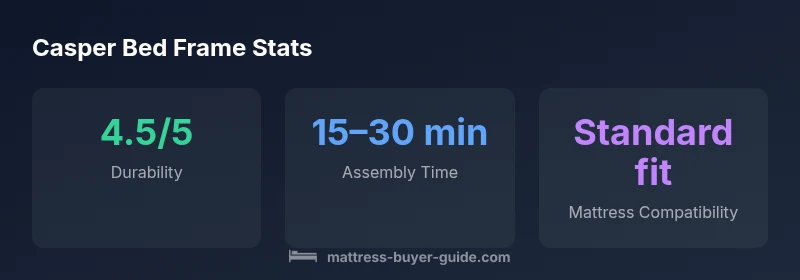
A Casper bed frame is designed to work optimally with most Casper mattress lineups, including standard sizes like Twin, Full, Queen, King, and California King. The frame’s center support and slat spacing are calibrated to minimize mattress sag, which can extend mattress life and maintain support. If you own a non-Casper mattress, the frame can still perform well, provided the mattress aligns with the frame’s supported sizes and the slat configuration offers adequate edge support. Some users also pair Casper frames with adjustable bases, but compatibility depends on the model’s wakefulness and load-bearing design. Always verify the model’s compatibility chart before purchasing to avoid mismatch with an existing mattress or base.
Assembly and setup experience
Casper bed frames are typically marketed as straightforward to assemble, with clear instructions and standard hardware. Expect a basic toolkit, a few dozen screws or slats, and about 30–60 minutes of assembly for an experienced DIYer. For first-time buyers, it helps to have a helper and a clean, level floor to anchor the frame properly. The most common pain points are aligning slats precisely and ensuring corner brackets are snug without overtightening. Once assembled, practical tests—like rolling the mattress onto the frame and verifying edge support—confirm the frame’s stability. Routine tightening of connectors every few months keeps the setup solid and improves longevity.
Support, durability, and warranty considerations
Durability for a Casper bed frame hinges on frame construction, slat quality, and central support. A well-built frame with reinforced corners and a robust center rail maintains alignment under regular use and helps prevent creaking. Warranties typically cover structural components, but coverage varies by model and retailer. Consumers should read the warranty terms closely: look for coverage on slats, rails, and center supports, and note exclusions such as customer modification or improper assembly. To maximize longevity, rotate the mattress periodically, check slat connections, and avoid moving heavy furniture across the frame to minimize stress at joint points.
Aesthetics, finish, and room integration
Casper frames tend to emphasize clean lines, slim profiles, and a neutral finish that blends with most modern bedrooms. The aesthetic goal is to keep the focus on the mattress while providing a solid, almost “invisible” foundation. Finishes range from matte black or metallic tones to natural wood looks, enabling flexible styling from minimal to mid-century modern. For small spaces, a low-profile frame creates the illusion of more floor area, while taller frames may suit larger rooms with higher ceilings. In terms of color consistency, ensure the finish matches other bedroom furniture to maintain a cohesive palette.
How Casper bed frame compares to rivals
Compared with generic metal or wooden frames, Casper bed frames typically emphasize compatibility with the brand’s mattresses and a streamlined assembly process. They often offer better-than-average alignment and less furniture-inducing motion transfer due to reinforced slats and central supports. When pitted against cheaper, no-frills frames, Casper models usually justify the premium through improved warranty coverage and longer-lasting materials. Against premium boutique frames, Casper frames may appear modest, but they excel in value-for-money and straightforward maintenance. For shoppers who value a cohesive, all-Casper sleep system, these frames frequently represent a strong middle ground.
Practical tips for setup and maintenance
To get the most from a Casper bed frame, start with a level floor and remove obstacles to prevent frame wobble. Use a torque-friendly screwdriver to avoid over-tightening screws, and periodically check the center rail and corner brackets for looseness. Place a non-slip underlayment between the frame and the mattress if you notice movement or shifting at the edges. Regular cleaning—dusting slats, vacuuming under the frame, and wiping down finishes—helps maintain a pristine appearance and prolongs the finish. If you relocate, disassemble and reassemble with care, labeling parts to speed up the process. Finally, keep the original packaging and hardware in case replacements are needed.
Common issues and fixes
Common issues with Casper bed frames include minor creaks, slight wobble, and occasional misalignment of slats. Tighten the corner brackets and center support to reduce movement. If creaking persists, apply a small amount of furniture-safe lubricant to joints, avoiding excess that could attract dust. For edge sag, verify slats are properly seated and evenly spaced; replacing worn slats can restore support. If you notice color chipping on painted surfaces, touch up with a matching enamel or contact customer service for replacement parts. Addressing these issues promptly preserves warranty eligibility and overall sleep quality.
Real-world use cases
In real home settings, Casper bed frames perform best in bedrooms with standard ceiling heights and square layouts. Couples report minimal motion transfer and good edge support, especially when paired with a firm Casper mattress. Some users in smaller apartments appreciate the frame’s low profile, which maximizes under-bed storage space. In households with pets or children, the frame’s sturdy construction reduces accidental damage and keeps the mattress properly supported during rough play. Overall, users find Casper bed frames reliable, straightforward to maintain, and aesthetically versatile for diverse decors.
AUTHORITY SOURCES
Sleep health guidance from government and major publications informs best practices for choosing bed foundations and maintaining sleep quality. Key sources include: - https://www.cdc.gov/sleep/index.html - https://www.ninds.nih.gov/Disorders/All-Disorders/Sleep-Disorders-Information-Page - https://jamanetwork.com/journals/jama
The Good
- Sturdy, simple assembly with clear hardware
- Minimalist design that fits most bedrooms
- Good value for the price relative to rivals
- Solid edge support when properly installed
Cons
- Limited features for adjustable bases or ultra-heavy sleepers
- May be heavier to move and reposition
- Warranty details vary by model and retailer
Solid choice for Casper mattress users who want a simple, reliable frame.
The Casper bed frame delivers sturdy support, straightforward assembly, and a clean aesthetic that fits modern bedrooms. It offers good long-term value, though it may lack advanced features for adjustable bases or ultra-heavy sleepers.
FAQ
Is the Casper bed frame compatible with adjustable bases?
Casper frames are designed primarily for fixed foundations. Some models may support adjustable bases depending on the slat system and center support; check product specs before buying.
Most Casper frames are best with fixed foundations; confirm adjustable base compatibility in the model specs.
What sizes does the Casper bed frame support?
Casper frames typically come in standard sizes: Twin, Twin XL, Full, Queen, King, and California King, to match common Casper mattresses.
Casper frames come in standard sizes to fit most Casper mattresses.
Do I need a box spring with a Casper bed frame?
Most Casper bed frames use a slat foundation or platform design, reducing or eliminating the need for a traditional box spring.
Usually no box spring is required with Casper frames.
Is assembly easy for beginners?
Yes. Most Casper frames ship with clear instructions and inline hardware; set aside 30–60 minutes and a basic toolkit.
Assembly is straightforward and beginner-friendly.
What is the warranty on Casper bed frames?
Warranty length varies by model and retailer. Check the specific Casper product page for coverage details and any limitations.
Warranty varies by model; verify coverage on the product page.
Highlights
- Choose for simple setup and reliable support
- Pair with Casper mattresses for best fit
- Expect standard sizes and solid durability
- Confirm base compatibility before purchase
- Consider longevity when choosing materials