Difference in Mattresses: A Practical Side-by-Side Guide
An analytical side-by-side guide comparing memory foam, innerspring, latex, and hybrid mattresses—covering support, cooling, durability, price, and value to help you choose confidently.


Memory foam, innerspring, latex, and hybrid mattresses each trade off support, contouring, and cooling. The difference in mattresses usually comes down to how core materials and comfort layers manage pressure, motion transfer, and heat. By comparing construction, feel, and durability, you can identify which type best fits your sleep needs and budget.
Introduction
When shoppers consider the difference in mattresses, they want an analytical framework, not marketing fluff. This guide from Mattress Buyer Guide offers a clear, evidence-based view of the four most common options: memory foam, innerspring, latex, and hybrids. We’ll explore how construction, feel, cooling, durability, and price shape real-world performance. By understanding these factors, you can align your choice with sleep goals, partner needs (where applicable), and budget constraints. This approach is practical for homeowners, renters, and anyone shopping for a new bed that supports restful nights.
The anatomy of a mattress
A typical mattress consists of a comfort layer, a transition or support layer, and a durable core. The exact setup determines how a bed responds to weight, movement, and temperature. Memory foam uses viscoelastic foam for contouring and pressure relief; latex uses natural or synthetic latex with bounce and resilience; innerspring relies on coils to provide lift and edge support; hybrids blend coils with foam or latex. Density, coil configuration, and layer thickness drive performance. The Mattress Buyer Guide Team emphasizes that the biggest differences come from density and zoning rather than marketing labels.
Key differentiators you should care about
When comparing mattress types, there are several criteria that consistently drive comfort and value. First, support core and feel determine how well the spine maintains alignment across sleeping positions. Second, pressure relief versus bounce affects how comfortable the midsection and shoulders feel. Third, motion transfer matters for couples who don’t want partner movements to disturb sleep. Fourth, cooling and climate control influence comfort on warm nights. Finally, durability, warranty terms, and expected maintenance shape long-term value. Understanding these factors helps you map your sleep priorities to material realities.
Memory foam vs innerspring vs latex vs hybrid: Quick contrasts
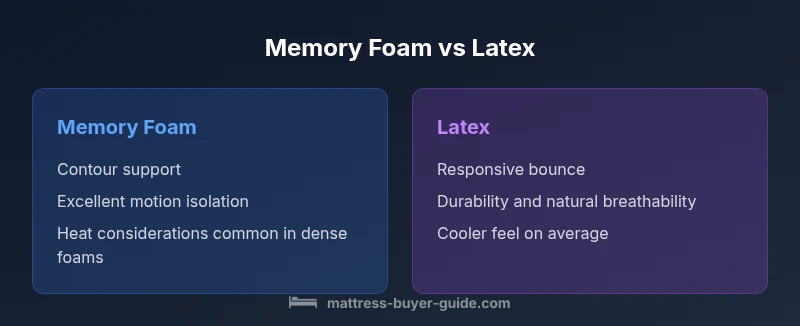
- Memory foam: Contours to your body, excellent motion isolation, but can sleep hot in dense foams; best for side sleepers and those needing pressure relief.
- Innerspring: Traditional bounce, generally cooler, good edge support, and broad price ranges; can be less effective for motion isolation and may wear unevenly with cheap coils.
- Latex: Durable, responsive, breathable, and often more buoyant; natural latex options may cost more but offer long-term value and a cooler feel.
- Hybrid: Combines coils with foam or latex to balance bounce, pressure relief, and cooling; typical price is higher, but performance can be model-specific."
How to choose based on sleeping style and health needs
Your sleeping position, weight, and health concerns should guide your choice. Side sleepers typically benefit from a softer or medium cushioning that relieves hip and shoulder pressure, while back and stomach sleepers often require firmer support to maintain spinal alignment. People with allergies may favor latex or specially engineered foams with low VOCs. Couples should consider motion isolation, edge support, and the range of firmness options available in a single model. If heat is a concern, prioritize breathable materials and a design with good airflow.
Common myths about mattress differences
Myth: All memory foam is hot. Reality: Cooling is highly dependent on foam density, airflow, and cover materials; many memory foams are engineered for better breathability. Myth: Firmer is always better. Reality: Optimal firmness depends on weight, sleeping position, and target spinal alignment. Myth: Higher price means higher quality. Reality: Price often reflects brand, marketing, and warranty terms, not just performance. Myth: Latex is universally expensive. Reality: There are entry-level natural latex options and high-density synthetic variants with different price points.
Real-world testing and warranties
Manufacturers offer sleep trials that let you return a mattress within a set period if it doesn’t meet expectations. Warranties typically cover structural defects and excessive sagging but exclude wear from misuse. A solid warranty often correlates with confidence in materials and construction. The best approach is to simulate real-night conditions for several weeks, use a consistent setup, and keep track of changes in comfort, back support, and temperature. The Mattress Buyer Guide Team suggests documenting your impressions during the trial and comparing them against the claimed benefits of each type.
Practical steps to test mattress at home
- Establish a testing window and return strategy if not satisfied. 2) Try each sleeping position—back, side, and stomach—for 15-20 minutes at a time to gauge comfort. 3) Use a neutral foundation to avoid hidden variables. 4) Test edge-to-edge support by sitting on the mattress edge for balance. 5) Monitor temperature and overall comfort during a full night’s sleep. 6) Compare multiple models within your budget to identify consistent comfort signals.
The value and longevity of different mattress types
Long-term value depends on durability, comfort retention, and warranty scope. Memory foam tends to retain shape well in high-density foams but may soften with extended use; latex is renowned for durability and springy resilience; innerspring quality varies with coil gauge and construction; hybrids’ longevity is model-dependent, balancing foam softness and coil support. In practice, consider total cost of ownership, including upfront price, trial period, and the potential for resale or trade-in. The right choice is the one that maintains comfort and spinal alignment over years, not just months.
Feature Comparison
| Feature | Memory Foam | Innerspring | Latex | Hybrid |
|---|---|---|---|---|
| Core material | Viscoelastic foam | Coil-based system | Natural/synthetic latex | Coil + foam/latex hybrid |
| Firmness range | Medium-soft to firm | Medium to firm | Medium to medium-firm | Medium to firm (model dependent) |
| Pressure relief | Excellent contouring | Moderate contouring with lift | Excellent pressure distribution | Balanced relief with bounce |
| Cooling potential | Variable; depends on foam density | Typically cooler with air flow | Naturally breathable | Depends on coil/foam combination |
| Durability | Moderate to high depending on density | Moderate | High with dense latex | High with quality coils and foam |
| Maintenance | Rotate and monitor sag; avoid moisture | Rotate annually; minimal maintenance | Rotate and care for latex; check for cracks | Rotate and follow model guidelines |
| Estimated price range | $800-$1800 | $400-$1200 | $1000-$2300 | $900-$1800 |
The Good
- Offers a clear, apples-to-apples comparison across major mattress types
- Highlights tradeoffs between contouring, bounce, and cooling
- Helps align sleep goals with material performance
- Integrates price/value considerations for long-term decisions
Cons
- Cannot capture every model's nuances; individual builds vary
- May over-simplify hybrids that blend features
- Prices and warranty terms vary widely by brand
There is no one-size-fits-all mattress; choose by priorities.
For motion isolation and pressure relief, memory foam is strong; for bounce and affordability, innerspring is solid; for durability and natural materials, latex; for balance, hybrids. Mattress Buyer Guide recommends testing options against your sleep priorities and budget to find the best overall fit.
FAQ
What is the main difference between memory foam and latex mattresses?
Memory foam contours closely to the body and excels at motion isolation. Latex systems are more buoyant, durable, and breathable, with a quicker response.
Memory foam contours for pressure relief, while latex feels bouncier and cooler.
Which mattress type lasts the longest?
Durability depends on materials and build quality. Latex and high-density hybrids typically offer longer lifespans, while some memory foams can retain shape well if manufactured densely. Always check density and warranty terms.
Latex and well-made hybrids often last longer, but it depends on density and care.
Are hybrids better for back pain?
Hybrids can provide balanced support by combining coil lift with foam or latex contouring. The best choice depends on your spinal alignment and preferred feel.
Hybrids can offer a good mix of support and pressure relief for back pain.
Do price differences reflect quality?
Not always. Price often reflects factors like brand, marketing, warranty terms, and model features. Compare density, materials, trials, and warranty to judge value.
Price isn’t the only indicator of quality; look at density, materials, and warranty.
How do I choose based on sleeping position?
Back sleepers usually prefer firmer support; side sleepers benefit from softer cushioning to relieve pressure points; stomach sleepers tend to need a firmer, stable surface to keep the spine aligned. Test firmness with your typical position.
Pick firmness based on how you sleep and spine alignment requirements.
Is memory foam good for hot sleepers?
Many memory foams sleep cool with advanced foams and breathable covers, but performance varies by density and airflow. If heat is a concern, look for models marketed as breathable or with cooling technology.
Memory foam can sleep cool in modern designs; check density and airflow.
Highlights
- Identify your primary sleep priorities and test accordingly
- Memory foam excels at motion isolation and contouring
- Latex offers durability and cooler, buoyant feel
- Hybrids balance bounce with pressure relief but vary by model
- Always factor warranty and trial terms into value assessments