Do Two Twin Mattresses Make a King? A Practical Sizing Guide
Learn whether two twin mattresses can form a king bed, including size comparisons, pros and cons, bedding tips, and setup steps from Mattress Buyer Guide.


Twin versus Twin XL: Understanding the Sizes
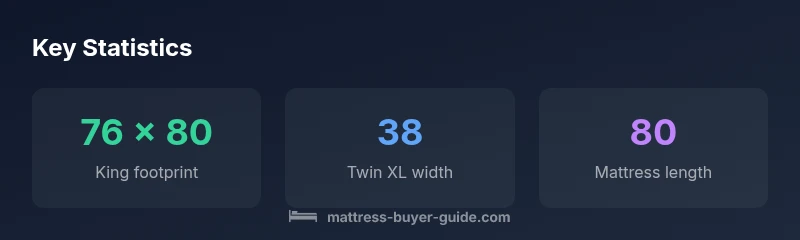
Two common mattress options often come up when planning a larger sleep setup: the standard twin (38" x 75") and the twin XL (38" x 80"). For homeowners evaluating whether do two twin mattress make a king, the math matters more than the romance of pairing two mattresses. In practical terms, twin XLs placed side by side produce a footprint of 76" wide by 80" long, which exactly matches a standard king. In contrast, two standard twins yield 76" width but only 75" of length, which does not equal a king footprint and can leave you with a shortened sleeping surface. Mattress Buyer Guide notes that the longer length of twin XLs makes them the most compatible option for a true king footprint, especially for couples above average height. For beds used on adjustable bases, the separation between the two halves can also influence comfort.
Do Two Twin Mattresses Make a King? The Core Answer
The quick answer is straightforward: two twin XL mattresses placed side by side form a king footprint of 76" x 80". Two standard twins, however, do not reach the full king length, yielding a surface closer to 76" x 75". This distinction matters for long-term comfort, especially if you or your partner are tall. If you’re shopping with a goal of a true king surface, twin XLs are the reliable route. Mattress Buyer Guide recommends confirming the base and sheets you’ll use, since a seamless surface depends on compatible foundations and bedding.
Configuration Options: Two Twin XLs vs Two Standard Twins
When you pair two mattresses, you’re really choosing between a true king footprint with two twin XLs or a nonstandard longer-than-wide option with standard twins. Two twin XLs are commonly sold as a “split king” setup, often paired with a split-king base that allows independent head/foot adjustments on each side. Two standard twins are less expensive upfront but yield a shorter sleeping surface and height mismatch if you’re aiming for a 80-inch-length bed. If you want flexibility on each side, a split base with two twin XLs is typically your best bet; otherwise you may end up with frame fit challenges and bedding compatibility issues.
Compatibility with Frames, Foundations, and Bedding
King frames and foundations are designed around a single, wide mattress or two seamless halves. A true king footprint from two twin XLs can fit most standard king frames, but you’ll often encounter a seam in the middle. Some frames aren’t built to support two separate mattresses securely; in those cases, a split-king base or two individual foundations is preferable. Bedding is another practical detail: standard king sheets won’t cling to two distinct mattresses correctly if there’s a seam, so you’ll want two twin XL sheets or a dedicated two-twin sheet set. A bed bridge or topper can minimize the feel of the seam and improve balance across the surface.
Pros and Cons of the Split-Twin Approach
Pros:
- Flexible, separate surfaces for each sleeper
- Potential cost savings versus a premium king model
- Independent adjustment options with split bases
Cons:
- A visible seam can affect comfort if the mattresses aren’t well aligned
- Bedding and frame compatibility can be tricky
- More frequent mattress replacements may be needed if one side wears faster