Latex for Less: Affordable Latex Mattress Guide 2026
Discover how to buy affordable latex mattresses with confidence: compare latex types, certifications, and care tips, backed by Mattress Buyer Guide Analysis, 2026.


To get latex for less, start by comparing natural, blended, and synthetic latex options, then watch for certification bodies like GOLS and CertiPUR-US. Compare price-per-height, not just sticker price, and consider Dunlop vs Talalay processes for durability. Look for older-stock models or floor samples with intact warranties and ask about in-store promotions to maximize value.
Understanding Latex: Natural, Blended, and Synthetic
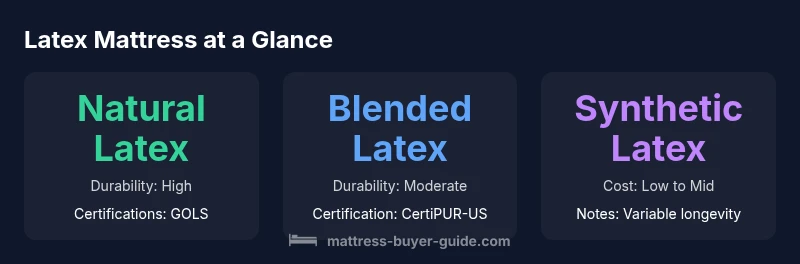
Latex is derived from the rubber tree, but the market uses several forms that affect price, durability, and feel. In this section we break down natural latex, blended latex, and synthetic latex to help you gauge value for latex for less. According to Mattress Buyer Guide, natural latex offers longevity and breathability but can come at a higher price; blended latex aims to balance cost and feel, while synthetic latex tends to be the most budget-friendly. The key to value is understanding density, thickness, and the production process (Dunlop versus Talalay). By appreciating these differences, you can tailor your choice to your sleep position and temperature preferences. Long-term comfort often beats short-term savings, and a well-chosen latex mattress can deliver both.
How to Compare Latex Mattress Types
In the market you will encounter natural latex, blended latex, and synthetic latex. The core metrics to compare are density (ILD), durability, bounce, and temperature regulation. Practical steps: 1) Identify your budget and required lifespan; 2) Check density and layer construction; 3) Review certifications and third-party tests; 4) Examine warranty length and trial periods. Natural latex generally offers the best durability, but blends and synthetics can provide similar feel at lower prices. Consider your sleeping position, heat sensitivity, and how you move during the night to decide which type offers the best overall value. For latex for less, price-per-density matters more than upfront cost.
Certifications Matter: GOLS, CertiPUR-US, and More
Certifications protect you from questionable materials and manufacturing practices. For latex, look for GOLS (Global Organic Latex Standard) when you want organic content, ta ± and CertiPUR-US for blended foam components in the same mattress. While not every latex product will carry every certification, a clear documentation trail helps verify purity, origin, and safety. The Mattress Buyer Guide recommends verifying certificates with the issuing bodies and requesting test reports. Certifications can significantly affect upfront price, but they also influence long-term health and sleep quality.
Price and Value: Getting the Most for Your Budget
Pricing for latex mattresses varies widely by latex type, density, and cover materials. In general, natural latex tends to sit at a higher price point than blended or synthetic latex, but it often yields longer life and better cooling. When chasing latex for less, consider price-per-year of expected use rather than lowest sticker price. Look for seasonal promotions, open-box deals, or factory seconds that maintain warranty terms. Buying during holiday sales or at warehouse-style retailers can yield meaningful savings without compromising safety or performance.
Comfort, Feel, and Sleep Health with Latex
Latex responds with a buoyant yet supportive feel that works well for many sleepers. Dunlop latex tends to be denser and firmer, offering sturdy support, while Talalay latex often provides a lighter, more consistent feel with good contouring. If you sleep hot, prioritize breathable covers and lighter-density layers or premium latex that enhances airflow. For those who move a lot at night, latex’s bounce supports easier repositioning without the sink-in feel of some memory foams. The goal is to balance pressure relief, alignment, and temperature control for healthier sleep.
Buying Tips and Pitfalls
When shopping, bring a clear list of must-haves: certifications, price range, warranty length, and return policy. Beware of overly aggressive discounts that mask limited trial periods or restricted returns. Exercise due diligence on the retailer’s return policy and confirm whether promotional pricing extends to delivery fees or foundations. If you see a deeply discounted latex product, ask about its density, curing method, and layer count to ensure you’re getting durable construction and adequate support. Remember: the best value blends affordability with confidence in material safety and long-term comfort.
Care, Longevity, and Sleep Hygiene
Latex mattresses should be cared for with regular rotation to promote even wear and a breathable, hypoallergenic cover. While most latex mattresses don’t require flipping, rotating every 3–6 months can help maintain consistent feel. Use a breathable mattress protector to shield against spills and allergens; clean up incidents promptly to prevent staining. Vacuuming the surface periodically keeps dust and dander at bay. Proper care is essential for maximizing the life of your latex mattress and ensuring latex for less remains a reliable sleep investment.
Final Recommendations and How to Save
The best value in latex mattresses arises from selecting certified latex, matching your sleep style to density and firmness, and leveraging retailer promotions without compromising warranty coverage. The Mattress Buyer Guide team recommends focusing on price-per-density, choosing Dunlop for durability or Talalay for a more cushiony feel, and validating certifications before purchase. With careful shopping, you can achieve excellent sleep quality at a price that feels fair and sustainable. The Mattress Buyer Guide team’s verdict is that informed buyers can indeed sleep soundly without overspending on latex.
Comparison of latex mattress types
| Latex Type | Typical Durability | Estimated Price Range | Notes |
|---|---|---|---|
| Natural Latex | 8-12 years | "$1200‑$2500" | GOLS-certified options available |
| Blended Latex | 7-10 years | "$800‑$1800" | Balance of cost and feel |
| Synthetic Latex | 6-9 years | "$600‑$1400" | Lowest cost, durability varies |
FAQ
Is natural latex always the best choice?
Natural latex is durable and breathable but can be more expensive. Blends can offer similar feel at a lower cost. Consider certifications and your budget.
Natural latex is a great option, but blends can save money while still offering durability.
What certifications should I look for?
Look for GOLS for latex purity and CertiPUR-US for foam components; verify certificates with the issuing bodies and request test reports.
Seek GOLS or CertiPUR-US certificates to ensure safety and quality.
How long does a latex mattress last?
Typically 8-12 years with good care, depending on latex type and density.
Most latex mattresses last around a decade with proper care.
Will latex sleep hot?
Latex breathes well, and natural latex tends to regulate temperature better than most foams; denser blends may sleep warmer.
Latex usually sleeps cool, especially natural latex.
Is latex safe for households with allergies?
Latex is natural but can trigger allergies for some people; choose hypoallergenic covers and ensure proper ventilation.
Most people tolerate latex well, but check for allergies first.
Can you buy latex mattresses cheaply?
Yes, by shopping sales, considering older stock with warranties, and comparing price-per-density rather than sticker price.
Look for promotions and compare value over sticker price.
“Latex offers durable, breathable support when you select certified options and match it to your sleep style.”
Highlights
- Compare latex types to balance price and durability.
- Prioritize GOLS or CertiPUR-US certifications for safer materials.
- Price-per-height matters more than sticker price.
- Ask about floor models or older stock with warranties.
- Choose Dunlop for density or Talalay for specialized feel depending on sleep needs.