Mattress Plush vs Firm: A Thorough Comparison Guide
An analytical, data-informed comparison of plush and firm mattresses, covering pressure relief, support, sleep position, materials, temperature, durability, and buying tips to choose the right firmness for your sleep.


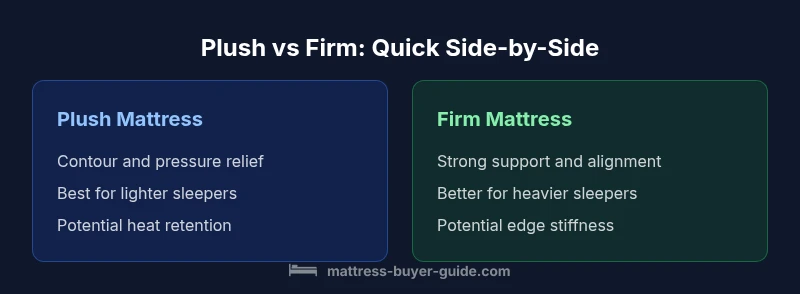
When faced with mattress plush vs firm, weight, sleep position, and personal comfort drive the choice. Plush surfaces favor lightweight sleepers and side sleepers seeking pressure relief, while firmer surfaces deliver robust support and spinal alignment for back and stomach sleepers, and heavier individuals. A medium firmness often balances comfort and support for couples with mixed preferences.
Understanding the plush vs firm spectrum
The phrase mattress plush vs firm captures a spectrum of feel rather than two binary options. The key idea is balance between contouring and support. Plush surfaces compress easily under light pressure, creating a soft, hugging feel that relieves pressure points in shoulders and hips. Firm surfaces resist compression, providing consistent support and helping align the spine along its natural curves. For many shoppers, the goal is to dial in a level of surface contour that reduces focal pressure while maintaining pelvic and spinal alignment. Mattress plush vs firm decision is influenced by body weight, sleep position, and personal comfort, and it often sits somewhere in a middle ground, such as a medium firmness that accommodates varied needs without sacrificing essential support. In this guide from Mattress Buyer Guide, we explore how to evaluate these feels and translate them into real-world results for your sleep quality.
The science behind firmness ratings and feel
Firmness is more than subjective comfort. It is a combination of surface feel, contour, and support. Operators of sleep products use standardized tests to rate firmness, but the end experience is personal. Look for the ILD rating if available, which indicates how much a material resists compression. Foam layers and spring systems interact to create a blended feel; a plush top layer can soften the overall feel of a firm core, while a plush core can reduce ultimate support. When comparing plush vs firm, consider how the mattress behaves under your weight distribution and how it supports your midsection, hips, and shoulders. The Mattress Buyer Guide team emphasizes testing feel under typical sleeping positions to gauge how each option affects alignment and comfort over the course of a night.
Sleep position and body type considerations
Your primary sleep position strongly dictates which firmness works best. Side sleepers generally benefit from a plush or medium plush feel that cushions shoulders and hips, reducing pressure buildup. Back sleepers often prefer a medium to medium-firm surface that supports the lumbar region without creating gaps. Stomach sleepers typically need more support, leaning toward a firmer surface to avoid excessive sagging in the midsection. Weight also matters: lighter individuals may find plush more comfortable, while heavier individuals often perceive firm surfaces as providing better trunk support and alignment. This is why many shoppers lean toward a-symmetric approach or a medium firmness that straddles the line between pressure relief and support.
Pressure relief, contouring, and support dynamics
Pressure relief comes from the mattress's ability to contour around contours of the body without causing gaps that disturb spinal alignment. Plush mattresses mold more readily to curves, offering softer cushion under joints. However, too much contouring can lead to motion transfer and overheating in some materials. Firm mattresses offer steady support and can prevent sinkage that disrupts alignment, but they may feel too rigid for lighter sleepers or side sleeping. The best outcome often emerges when the surface blends contour with stable support, such as a midrange firmness or a Zoned system that provides more give where needed while maintaining core support along the spine.
Materials and construction differences
Plush feel is often achieved with memory foam or soft polyfoam layers, potentially topped with a gentle comfort layer. Firm feels rely on denser foams, latex, or robust spring cores that resist compression. Hybrid constructions can combine plush comfort layers with a decisive firm core to deliver mixed performance. The exact mix affects pressure relief, durability, and temperature regulation. When evaluating mattress plush vs firm, examine the top layers for softness and the core for support. Check warranty language and ensure the materials align with your priorities, whether that means long-lasting durability, cool sleep, or a balance of cushion and support.
Temperature, breathability, and moisture management
Not all plush mattresses sleep hot, but many memory foam top layers retain more heat than latex or coil-based cores. A plush feel may amplify heat retention if the upper layers are dense. Conversely, firmer models with good airflow or breathable materials can sleep cooler, particularly when they incorporate coil systems or perforated foams. For hot sleepers, look for breathable covers, phase-change materials, or latex blends that promote airflow. If you tend to overheat, a medium firmness with an open-cell foam or hybrid design can offer both comfort and temperature regulation. Mattress plush vs firm outcomes are deeply affected by the material choice and overall mattress architecture.
Durability, warranty, and long term performance
Durability depends on materials, build quality, and usage. Plush surfaces may experience more surface wear over time, especially if the comfort layer bears most of the load. A well-constructed plush model with high-density foam and a strong support core can retain shape longer, but price often mirrors durability expectations. Firm mattresses tend to resist sagging in the midsection but may show edge and surface wear if the boundary between layers breaks down. A solid warranty and a trial period are important when assessing long-term performance because they reveal how the manufacturer stands behind their product and how the mattress behaves as it ages.
Budget, value, and buying scenarios
Plush models typically come in a wide price range, with entry level options offering great value for lightweight sleepers or guest rooms, while premium memory foam or latex options push higher. Firm models also vary broadly, with coil-based beds often delivering favorable price-to-performance ratios. The key value consideration is whether the mattress meets your long-term comfort and support needs without excessive bounce, sinkage, or heat retention. For couples, consider a split firmness or a model with a medium overall feel that accommodates both partners. In the end, price should align with anticipated lifespan, warranty, and trial period to ensure a fair return on investment.
Plush is often better for: ideal sleepers and scenarios
Plush mattresses shine for lightweight or side sleepers who want immediate pressure relief on shoulders and hips. They are also appealing for those who prioritize body contouring and a snug, cradling sensation. If you experience joint stiffness in the night or have a history of tendon or muscular discomfort, a plush feel can soften the onset of pain during sleep. For guests or children, plush options may provide a forgiving surface that feels comfortable without requiring a high level of initial strength to get in and out of bed. Remember that comfort is highly subjective and may shift with changing body weight and health.
Firm is often better for: ideal sleepers and scenarios
Firm mattresses typically suit back and stomach sleepers who require spinal support and minimal sinkage. They are advantageous for heavier individuals who need robust core support to prevent sagging and maintain alignment. A firm surface can also be beneficial for couples who prefer less motion transfer and a stable, even surface for movement. For individuals who suffer from specific back conditions or who wake up with lower back pain after spending nights on a too-soft surface, a firmer feel can offer a predictable baseline support that eases the spine into a healthier alignment.
How to test firmness at home and during trials
The best way to choose between plush and firm is through hands-on testing. Use a 10 to 15 minute trial lying on your back, side, and stomach to gauge pressure relief, sinkage, and spinal alignment. If buying online, rely on generous trial periods and easy return policies to experiment with both ends of the spectrum within a few weeks. Bring a mattress topper into the test if you want to adjust feel temporarily without committing to a full replacement. Take notes on how your shoulders, hips, and lower back feel after a standard night’s sleep, and consider your partner’s comfort as well.
Decision framework: matching your needs to the right firmness
To decide between plush vs firm, establish your criteria: nightly comfort level, spinal alignment, pressure point relief, heat management, and durability. Weight and sleep position guide which feel is most suitable. Light side sleepers usually lean toward plush or medium plush for contouring and reduced pressure, while heavier back or stomach sleepers may benefit from medium to firm guarantees that support a straight spine. When you feel uncertain, a model with a balanced mid-range firmness often gives you room to test and adjust without committing to a clear winner. The right choice balances comfort and support, making restful sleep more achievable.
The end result: plan for a trusted purchase experience
A good mattress is a long term sleep investment. Regardless of plush or firm, prioritize a reputable brand with transparent materials, a reasonable trial period, and a robust warranty. Compare models using a consistent set of criteria: firmness feel, body support under load, temperature behavior, durability indicators, and return policies. The goal is to reduce trial friction and avoid buyer’s remorse by validating the core features you value most. With a thoughtful approach, you can align your mattress plush vs firm decision with your sleep health and daily energy levels.
Comparison
| Feature | Plush mattress | Firm mattress |
|---|---|---|
| Support level | Low to medium, comfortable contour | Medium to high, strong trunk support |
| Pressure relief | Excellent for lighter weights and side sleepers | Good for spinal alignment with heavier weights |
| Motion isolation | Typically strong due to foam layers | Moderate, more noticeable if coils are present |
| Durability | Depends on materials; high-density foams and latex perform well | Depends on core quality; good edge support helps longevity |
| Breathability | Can sleep cooler with breathable foams and hybrids | Often cooler with coils and latex but varies by design |
| Best for | Lightweight side sleepers seeking contour and pressure relief | Back and stomach sleepers or heavier individuals needing support |
| Price range | $400-$1500 | $500-$1600 |
The Good
- Provides targeted pressure relief for lighter sleepers
- Enhances contouring and comfort on shoulder and hip regions
- Offers a broad spectrum of materials and price points
- Many models blend plush comfort with balanced support
Cons
- Plush surfaces can sleep hot with certain foams
- Firm mattresses may feel too rigid for side sleepers
- Durability varies by materials and construction
There is no universal winner; choose based on weight, sleep position, and comfort preference
Lightweight sleepers and side sleepers often prefer plush for pressure relief, while heavier sleepers and back/stomach sleepers tend to benefit from firmer support. For mixed preferences, a balanced mid-range firmness typically delivers the best overall sleep quality.
FAQ
What is the main difference between plush and firm mattresses?
Plush mattresses contour more and compress easily for pressure relief, ideal for light sleepers. Firm mattresses resist compression and offer steady support, better for heavier individuals or those needing spinal alignment.
Plush mattresses cushion pressure points, while firm ones support the spine and torso. Think contour versus stiffness.
Is plush better for side sleepers?
Yes, side sleepers often benefit from plush or medium plush for shoulder and hip relief. But the right level depends on weight and preferred feel.
Side sleepers usually do well with a plush feel that cushions the joints.
Can I combine plush with firm using toppers?
Yes, a plush topper on a firmer base can create a custom feel. This approach lets you tweak contour without replacing the entire mattress.
A plush topper over a firm bed can customize the feel and support.
How should couples choose firmness when preferences differ?
Aim for a middle ground or consider a split firmness model. A solid trial period helps both partners verify comfort and support.
If partners disagree, test a middle firmness or split design during a long trial.
Do memory foam mattresses sleep hotter when plush?
Memory foam can sleep warmer in plush configurations due to body impressions and slow recovery. Look for breathable covers and cooling foams to mitigate heat.
Yes, memory foam can feel warm in plush setups; choose cooler materials if heat is an issue.
Is there a universal best between plush and firm?
No single best choice fits every sleeper. The ideal option aligns with weight, position, and personal comfort plus a solid trial period.
There isn't a universal best; pick what matches your body and sleep style.
Highlights
- Test both ends of the spectrum in your sleep positions
- Prioritize spinal alignment over sheer softness or hardness
- Consider trial periods and warranties to avoid buyer’s remorse
- Match the mattress feel to weight and primary sleep position
- Aim for a middle ground if sharing the bed with a partner