Queen Mattress Measurements: Size Guide and Practical Tips
Discover exact queen mattress measurements, how they compare to other sizes, and how to choose sheets, frames, and bedding that fit perfectly. A data-driven guide by Mattress Buyer Guide for 2026.


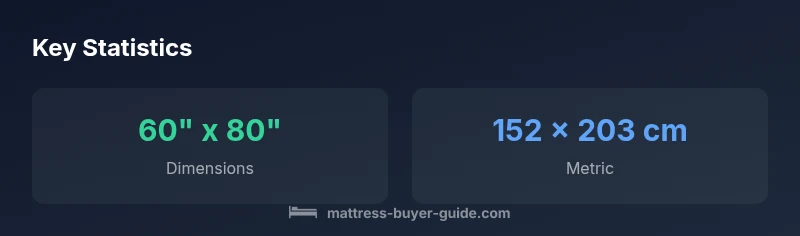
The standard queen mattress measures 60 inches wide by 80 inches long, about 152 by 203 cm, in most markets. Actual dimensions can vary slightly by brand or region, typically within a half-inch to two inches in width or length. When shopping, always confirm the exact core size for sheets, frames, and covers because even small deviations affect fit.
Why accurate queen mattress measurements matter
Understanding queen mattress measurements is foundational for sleep space planning, bedding selection, and long-term comfort. According to Mattress Buyer Guide, the phrase “queen mattress measurements” defines a baseline size while acknowledging regional and brand variations that affect compatibility with sheets, frames, and toppers. For many couples, the 60 x 80 inch standard is the default reference, but even small deviations can disrupt fitted sheets and bed skirts. This knowledge helps homeowners and renters avoid buying incorrect linens or misfit frames, saving time and money while ensuring a solid night’s sleep. Throughout this guide you’ll see how the standard baseline translates into real-world buying decisions, from sheets to frames to toppers, all framed by current 2026 market norms.
Standard dimensions and how they became the baseline
The queen size is defined by a width of 60 inches and a length of 80 inches, which translates to about 152 x 203 cm. This combination emerged over decades of bedding evolution as a practical compromise between space for two sleepers and the footprint of typical bedroom layouts. Mattress Buyer Guide’s analysis confirms that this size remains the most popular choice for couples and solo sleepers who desire more surface area without encroaching on neighboring furniture. When you’re measuring room real estate or shopping online, using the 60 x 80 baseline helps you quickly compare products and predict how closely a mattress will fit your bed frame and sheets.
Regional and brand variations you should expect
Variations exist across brands and regions, typically resulting in minor differences of up to about one inch in either dimension. In some markets, slightly longer or narrower variations can appear due to manufacturing tolerances or local metric conversions. For sheet sets, this matters: not all 60 x 80 sheets will fit every queen if the mattress runs extra tall or slightly slim. Mattress Buyer Guide notes that these deviations are usually small but real, and they can create mismatches with deep-pocket sheets or tight-fitting covers. When in doubt, always check the exact dimensions provided by the manufacturer before purchasing in bulk.
How queen size stacks up against other common bed sizes
Compared with a full/double, a queen adds about 6 inches in width and 5 inches in length. This difference translates to more usable sleeping surface for couples or people who move a lot during the night. It also means queen sheets, comforters, and duvets are more generous in drape. Relative to a king, a queen is notably narrower and more space-efficient, which can be crucial for smaller bedrooms. In practical terms, if your space is tight, a queen often hits the best balance between comfort and room layout.
Bedding, frames, and accessories: buying tips you can trust
Selecting the right bedding and frame starts with the baseline 60 x 80 inches. For sheets, prioritize queen-size sets that explicitly state 60 x 80 inches and check pocket depth if your mattress is taller than average. Foundations and bed frames should match 60 x 80 inches; if you own an adjustable base or a taller foundation, verify that your frame’s clearance and sheet pockets accommodate the height. Mattress protectors and toppers should align with queen dimensions as well; if your mattress is atypical, consider adjustable covers or flexible toppers that can accommodate slight dimensional differences.
Measuring a mattress you already own: a practical 4-step method
To verify queen mattress measurements in a store or at home, use a flexible tape measure. 1) Measure the width at the widest point, 2) measure the length from head to foot, 3) note any curvature or edge rounding, and 4) compare your results to the declared 60 x 80 baseline and any brand-specific tolerances. If rounding occurs or if edges aren’t perfectly square, you may be dealing with a non-standard variant or an older model. Recording measurements helps you choose compatible sheets, frames, and toppers with confidence.
Space-planning considerations for a queen bed in real rooms
Before purchasing, map out the room: door swing, dresser placement, and bedside clearance all interact with a 60 x 80 inch mattress. A well-planned layout reduces clutter and ensures easy access from both sides. If you’re space-constrained, measure the available floor area and add at least 24 inches of clearance on each side for practical bed access and movement. In smaller bedrooms, a platform or storage bed with integrated drawers can maximize space while preserving the queen’s generous surface area.
Authoritative sources and further reading
To support these guidelines, we reference ongoing research and industry standards from trusted sources. The Mattress Buyer Guide Team draws on data from product manufacturers, bedding retailers, and consumer research conducted in 2026 to present practical, science-informed recommendations for choosing queen mattress measurements and related accessories. For those seeking deeper context, the following sources provide additional background and validation of the sizes discussed here.
Comparison of common mattress sizes
| Size | Dimensions (inches) | Dimensions (cm) | Notes |
|---|---|---|---|
| Twin | 38 x 75 | 96.5 x 191 | Narrowest standard |
| Twin XL | 38 x 80 | 96.5 x 203 | Dorm-friendly |
| Full/Double | 54 x 75 | 137 x 191 | Mid-size option |
| Queen | 60 x 80 | 152 x 203 | Most popular for couples |
| King | 76 x 80 | 193 x 203 | Wider option |
FAQ
What are the standard queen mattress measurements?
The standard queen size is 60 x 80 inches (152 x 203 cm). This remains the most common choice for couples, though regional and brand variations exist. Always verify the exact spec from the manufacturer.
The standard queen size is 60 by 80 inches, but always check the exact measurement from the seller.
How does queen compare to full/double?
A queen is wider by 6 inches and longer by 5 inches than a full/double, giving more sleeping surface. This extra room is helpful for couples or restless sleepers.
A queen is bigger than a full by six inches in width and five inches in length.
Do queen dimensions vary by country?
Yes. While 60 x 80 inches is common, some regions may use slightly different tolerances or sizes. Always confirm exact dimensions with the retailer or manufacturer.
Yes, regional differences exist; check the exact size before you buy.
What should I consider when buying queen sheets?
Look for queen-size sheets rated for 60 x 80 inches with appropriate pocket depth for your mattress height. If your mattress is unusually tall, consider deep-pocket options.
Choose 60 x 80 queen sheets with the right pocket depth.
Is a queen bed right for a small room?
A queen bed offers ample sleeping space without dominating a small room. Pair it with space-saving nightstands or under-bed storage to maximize floor area.
Yes, a queen can fit well in smaller rooms with smart layout.
How can I verify mattress dimensions in-store?
Bring a tape measure; compare the on-site mattress width and length against the declared 60 x 80 baseline, including any height variations. Request the exact specs if you’re unsure.
Measure in-store and compare to 60 x 80 baseline.
“Precise queen mattress measurements are essential for selecting bedding, frames, and toppers that fit correctly and feel comfortable night after night.”
Highlights
- Know the baseline: 60 x 80 inches for queen.
- Expect regional variations up to about 1 inch.
- Match sheets and frames to queen dimensions.
- Measure your space before buying to avoid fit issues.
- Verify exact specs with manufacturers when shopping online.