What Mattress to Buy for Cot: A Practical Baby Sleep Guide
Learn how to choose a cot mattress that is firm, breathable, and safe for babies. Compare sizes, materials, and safety features with Mattress Buyer Guide for confident, practical guidance.


By the end of this guide, you’ll know what mattress to buy for cot: a firm, snug-fitting mattress with breathable materials and a washable, waterproof cover. Prioritize safety certifications, correct size, and easy cleaning. Inspect the tuck edge for gaps, avoid soft surfaces, and check warranty. This quick answer previews the full checklist below.
What to know before you buy
Choosing a cot mattress starts with safety, fit, and long-term practicality. A mattress that is too soft, too large, or difficult to clean can compromise safe sleep. Look for a surface that remains firm when pressed, and a cover that’s easy to wipe down. The Mattress Buyer Guide team emphasizes starting with the basics: verify crib compatibility, confirm the mattress fits snugly, and ensure the materials are breathable. As you shop, factor in cleaning ease, edge durability, and how the mattress will adapt to a growing child. This foundational knowledge helps parents avoid common pitfalls and makes the rest of the buying process smoother. According to Mattress Buyer Guide, prioritizing safety standards, size accuracy, and maintenance considerations yields the best sleep outcomes for babies and peace of mind for caregivers.
Cot mattress sizes and fit
Most cribs in the United States and many other regions use a standard mattress size, but exact dimensions can vary by model and country. The key requirement is a snug fit: there should be no more than a finger’s width of gap around the sides when the mattress is in the crib. If you notice wiggling, shifting, or gaps around the edges, the mattress is not a safe fit. Measure the crib’s interior dimensions and compare them to the mattress label before purchasing. For safety, always choose a mattress that matches the crib’s size specification and never rely on a mattress advertised as “slightly adjustable” to fix a poor fit. Mattress Buyer Guide recommends rechecking fit after delivery and before use to prevent risk factors that could arise from an ill-fitting mattress.
Materials and safety features
A cot mattress should prioritize firmness and durability over plushness. Look for materials that promote breathability and minimize heat retention. Natural latex and certain high-density foams can offer good support when properly engineered, but avoid soft, sag-prone surfaces. A waterproof, washable cover is a practical feature that helps keep moisture away from the baby’s skin and reduces the need for frequent deep cleaning. If you see a foam core, verify it’s certified for baby use and free from potentially harmful chemicals. The presence of a Certipur-US or equivalent certification can indicate safer materials and better manufacturing processes. The Mattress Buyer Guide team notes that safety-focused fabrics and protective covers reduce staining and simplify routine care, contributing to a healthier sleep environment for infants.
Firmness, support, and breathability
Firmness is more important than plushness for cot mattresses. A firm surface helps minimize sinking and reduces the risk of suffocation hazards. The surface should feel solid to the touch and resist compression that would allow baby to indent the mattress deeply. Breathability matters for moisture management; look for breathable cover fabrics and perforated foam where applicable. A well-designed mattress also minimizes off-gassing and uses low-emission materials. While memory-foam options exist, prioritize products specifically designed for infant sleep that meet safety standards and certifications. In short, a firm, breathable, and easy-to-clean mattress supports safer, longer, and more comfortable naps and night sleep for your baby.
Cleaning, waterproofing, and longevity
Caring for a cot mattress typically involves regular spot cleaning and a routine of using a waterproof mattress protector or cover. Choose products with sealed seams and a washable top layer to simplify maintenance. When cleaning, use a mild detergent and allow surfaces to air dry completely before use. Waterproof covers extend the mattress life by protecting against leaks and spills. Avoid using harsh chemicals that could irritate sensitive baby skin. Regular inspection for signs of wear or sagging helps determine when replacement is needed. The combination of a durable core and a high-quality protector can significantly extend the mattress’s useful life while keeping it hygienic for the infant.
How to compare brands and certifications
Certification labels like Certipur-US signal safer materials and manufacturing practices, which is a core consideration for cot mattresses. Compare brands based on safety certifications, three essential features (firmness, fit, and breathability), and warranty terms. Check for third-party safety testing, recall history, and country-specific safety guidelines to ensure compliance. While price matters, prioritize value: longevity and ease of cleaning often translate into lower total cost of ownership. Mattress Buyer Guide encourages shoppers to read product labels carefully, verify fit in-store or via return policies, and choose a mattress with clear, baby-friendly design features and robust support.
Step-by-step buying checklist (quick-start)
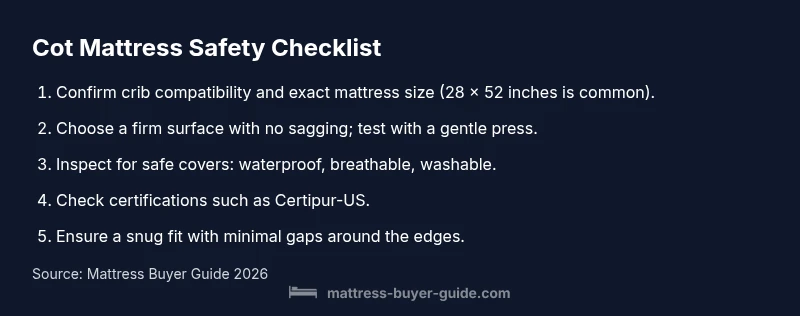
Use this concise checklist to jump-start your cot mattress purchase. First, measure the crib interior; next, verify exact size and fit; third, examine materials and safety certifications; fourth, confirm firmness and breathability; fifth, check waterproofing and cover care; sixth, review warranty and return policies. Keep a copy of these checks for reference and to compare different models side-by-side. This section aligns with the broader buying guide from Mattress Buyer Guide and provides a practical path from search to sleep.
Final buying tips and what Mattress Buyer Guide advises
Choosing a cot mattress is a balance of safety, fit, and maintenance practicality. Always prioritize a snug fit and firm surface, then consider materials and certifications as the next filters. Keep your baby’s sleep environment clean and safe by pairing the mattress with a high-quality protector. The Mattress Buyer Guide Team emphasizes that responsible choices in cot mattresses contribute to better sleep health and peace of mind for families. Remember, safety comes first, but keeping the mattress simple to clean and sturdy over time also matters for busy households.
Tools & Materials
- Measuring tape(To verify crib interior dimensions and mattress fit)
- Notepad and pencil(For comparing specifications and warranty terms)
- Waterproof mattress protector(Choose one with a breathable top layer and sealed seams)
- Mild, baby-safe detergent(For light spot-cleaning only)
Steps
Estimated time: 30-60 minutes
- 1
Measure crib interior
Use a measuring tape to confirm the crib’s interior length and width. Record these dimensions and compare them to the mattress label. Ensure there is no more than a finger’s width gap around the mattress when placed inside.
Tip: Take measurements at multiple points to account for any slight variation in the crib frame. - 2
Check safety certifications
Look for labels such as Certipur-US or other recognized safety certifications. These indicate materials tested for low emissions and safer additives. Avoid models that lack clear certification information.
Tip: If a badge is unclear, contact the retailer or manufacturer for documentation before purchasing. - 3
Evaluate materials
Assess whether the mattress uses high-density foam, latex, or innerspring cores. Consider potential heat buildup and odor, particularly with memory foam. Prioritize firm surfaces and fabrics that won’t irritate a baby’s skin.
Tip: Favor models marketed for infant sleep with explicit safety notes and non-toxic finishes. - 4
Confirm fit and edge durability
Place the mattress in the crib and test all edges for a snug fit. Gently rock the mattress to ensure no movement occurs. Edge stitching should be secure and non-irritating.
Tip: If you can wiggle the mattress noticeably, select a different size or model. - 5
Choose protector and cover
Pair the mattress with a waterproof, breathable protector. Ensure it fits well and is easy to remove for cleaning. Check that the cover is machine-washable and retains its shape after washing.
Tip: Don’t skip the protector—spills are common and protect the mattress’s life. - 6
Review warranty and return policy
Read warranty terms to understand coverage for sagging, manufacturing defects, or material failures. Confirm return windows and seller policies in case the mattress doesn’t meet expectations.
Tip: Keep receipts and product packaging until after the first few weeks of use.
FAQ
What size mattress fits a standard cot/crib?
Most cribs use a standard 28 x 52 inch mattress, but always measure your crib interior and compare to the label. A snug fit with minimal gaps is essential for safe sleep.
Most cribs use a standard size, but always measure to confirm. A snug fit with minimal gaps is essential.
Is memory foam safe for babies in cot mattresses?
Memory foam isn’t inherently unsafe, but many experts advise choosing firmer surfaces designed for infant sleep and verifying safety certifications. Avoid soft, plush foams that can indent easily.
Memory foam isn’t ideal for babies; choose firmer, certified surfaces and avoid soft foams.
What certifications should I look for?
Certipur-US and other recognized safety labels indicate safer materials and processes. Check for clear documentation and trust signals from the manufacturer.
Look for Certipur-US or similar safety labels and ask for documentation if unclear.
How can I test firmness at home?
Press with two hands in the center of the mattress. It should feel firm and resist deep indentation. If it sinks easily, it may be too soft for infant sleep.
Push firmly in the center; it should stay firm and not sag too much.
When should I replace a cot mattress?
Replace if there are persistent stains, odors, sagging, or visible wear. Regular inspection helps catch issues before they affect sleep safety.
Replace the mattress if you notice sagging or lingering odors.
Do cot mattresses require a waterproof cover?
A waterproof, breathable cover protects against leaks and makes cleaning easier. A good protector extends mattress life and keeps the sleep environment hygienic.
Yes—use a waterproof, breathable cover to protect the mattress and simplify cleaning.
Watch Video
Highlights
- Ensure a firm, snug-fit cot mattress.
- Verify exact crib size and mattress compatibility.
- Prioritize safety certifications and easy cleaning.