What Size Mattress Is a Daybed? A Practical Guide
Learn the daybed mattress sizes that fit standard frames, with guidance on twin, twin XL, and full options. Includes measurement steps, thickness tips, and a shopping checklist for reliable comfort.


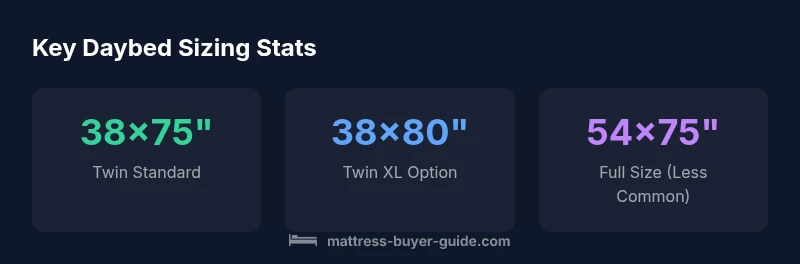
The most common daybed mattress size is a standard twin (38x75 inches), which fits the classic daybed frame. Some frames support twin XL (38x80 inches) for taller sleepers, while a few rare models use full/double (54x75 inches) depending on the model. Always verify your specific frame’s opening clearance and weight limits before purchasing today.
Daybed mattress size fundamentals
When people ask what size mattress is a daybed, the answer depends on frame design and standard mattress sizes in the United States. In most cases, daybed frames are built around a twin-size footprint: about 38 inches wide by 75 inches long. This means that for a classic daybed you will generally shop for a twin mattress to fit a standard frame. Some models, however, extend the available sleeping surface by using Twin XL (38x80 inches) or even Full-size (54x75 inches) mattresses. These options exist when the frame rails provide extra clearance along the sides or when a particular manufacturer markets the daybed with a larger platform. The key is to verify the inner dimensions of your frame before purchasing. Measure the width between the rails, the length from head to foot, and the clearance along the rails to accommodate any differences in thickness. Also check the recommended mattress height from the frame’s front edge to ensure the mattress sits flush and the bedding stays neat. With this clarity, you can avoid mismatches and ensure a comfortable night’s sleep.
Common daybed sizes and their sleep implications
The classic starting point is the twin size, but the market offers a few variations depending on frame design. Twin (38x75) remains the most widely used size for traditional daybeds, balancing fit and bedding availability. Twin XL (38x80) can be a practical upgrade for taller sleepers who want full leg support without shortening the mattress. Full/double (54x75) is less common for daybeds but may appear in larger frames or specialty models. When considering these options, remember that taller or wider mattresses may protrude beyond rails or interfere with trundle mechanisms. Always compare the inner frame dimensions to the mattress footprint and leave a small buffer for bedding and movement.
How to measure your daybed frame for a snug fit
Start by removing all cushions to access the frame rails. Use a flexible measuring tape to record three critical numbers: (1) width, the distance between the inner sides of the rails; (2) length, the distance from the headboard (or frame end) to the footboard; and (3) rail clearance, the gap between the mattress edge and the outer rail. Don’t rely on the outer frame dimensions alone; some frames have curved corners or decorative rails that reduce usable space. If you’re considering a different size, test with a cardboard template or a tape measure while the frame is empty to visualize tight spots and ensure you’ll have adequate bedding clearance.
Thickness and materials: choosing comfort without hitting rails
Mattress thickness matters as much as footprint. For most daybeds, a 6-8 inch mattress is optimal because it sits comfortably within rail heights and supports standard bedding. Thicker options (9-12 inches) can look imposing and may rub against the frame’s edges or reduce under-bed storage clearance. If you expect vigorous use or prefer extra plushness, consider a high-resilience foam or latex core with a low-profile foundation, but verify compatibility with your rails. Always pair the chosen firmness with your preferred sleeping position—back sleepers typically benefit from medium firmness, while side sleepers may prefer slightly softer foams.
Twin vs Twin XL vs Full: which is right for you?
Choice depends on sleeper height, room aesthetics, and the daybed’s intended use. Twin remains the default for most guest rooms and living spaces; it’s easier to source and pairs with standard linens. Twin XL adds length for taller people but requires confirmable frame clearance. Full-size daybeds offer more surface area but are rarer in the daybed category and can impact overall room proportion. If you plan to place a daybed in a compact room, measure both the footprint and the space needed to open any attached cushions or storage drawers.
Practical shopping checklist for daybed mattresses
Before you buy, use this quick checklist:
- Confirm the exact frame size by measuring width and length.
- Check rail clearance for thickness and overhang.
- Decide on the frame’s compatibility with Twin, Twin XL, or Full.
- Aim for a mattress in the 6-8 inch thickness range for best fit.
- Test edge-to-edge comfort by lying along the rails to feel if there’s pressure at the sides.
- Review the warranty and return policy, especially for non-standard sizes.
- Consider memory foam or latex for reduced motion transfer in shared spaces.
Special configurations: trundles, storage, and convertible daybeds
Some daybeds include a built-in trundle or storage drawers. If you’re planning to use a trundle mattress, be sure to buy a separate, thinner mattress for the trundle slot to avoid overfilling the overall height. Convertible daybeds may be designed to fit multiple mattress sizes; check the manufacturer’s guide for exact fittings and recommended weight limits. In all cases, avoid forcing a mattress into a frame that is not designed for that footprint, as it can cause structural stress over time.
Maintenance and replacement timing for daybed mattresses
Like any mattress, daybed cushions should be rotated every few months to promote even wear. If you notice permanent indentations, excessive sag, or mattress odors that don’t respond to cleaning, it may be time to replace. A typical daybed mattress should be evaluated for replacement every 5-7 years with daily use, and sooner in guest rooms that see frequent, heavy use. Use a breathable mattress protector to extend life and keep the internal materials from compressing unevenly.
Daybed frame size guidance by footprint
| Frame Type | Recommended Mattress Size | Notes |
|---|---|---|
| Standard Daybed Frame | Twin | Most common; fits classic design |
| Twin XL Daybed Frame | Twin XL | Longer option for taller sleepers |
| Full-Daybed Frame | Full | Less common; more surface area; check rails |
FAQ
What size mattress is recommended for most daybeds?
Most daybeds use a standard twin mattress (38x75 inches). Twin XL or full sizes exist but depend on the frame; always verify the frame specs.
Most daybeds use a twin mattress; twin XL or full sizes may be used if the frame allows, but always check your frame specs.
Can you use a full-size mattress on a daybed with standard rails?
Only if the rails and clearance accommodate a full-size footprint; otherwise the mattress may protrude or rub the rails.
Only if the frame has enough clearance for a full-size mattress; otherwise stick to twin or twin XL.
Should I choose a mattress with a specific thickness for a daybed?
Yes. A 6-8 inch thickness is generally ideal for daybeds to fit rails and bedding well.
Most daybeds do best with a 6 to 8 inch thick mattress.
Is memory foam a good choice for daybeds?
Memory foam reduces motion transfer and can be very comfortable; ensure the frame supports the density and breathability you want.
Memory foam works well if it matches your comfort goals and frame clearance.
How should I measure a daybed before buying?
Measure width between inner rails, length along the frame, and the clearance at the edges. Include any space needed for cushions.
Measure width, length, and edge clearance to ensure a proper fit.
What about daybeds with trundles or storage?
Trundle and storage add-ons require separate mattresses or thinner profiles. Verify compatibility with the entire system.
If you have a trundle or storage, plan for a matching or separate mattress.
“For daybeds, size must align exactly with the frame’s inner perimeter to ensure proper support and prevent sag along edges.”
Highlights
- Measure your frame before shopping.
- Twin is the baseline for most daybeds.
- Twin XL and Full are possible but frame-dependent.
- Check rail clearance and mattress thickness.
- Always verify manufacturer specs before purchase.