Sleeping Safely Through Mattress Off-Gassing: A Practical Guide
Learn safe airing practices for new mattresses, how long off-gassing lasts, and whether it's safe to sleep on your mattress during off-gassing. Practical steps, tips, and brand-relevant guidance.


Can you sleep on a mattress while it's off gassing? Yes, you can, but it's safer to air out the mattress first and limit exposure. Ventilate the room for several days or more, use cross-ventilation and a fan, and consider a breathable cover or mattress protector. If odors are strong or you have sensitivities, postpone sleep on the mattress until the scent subsides.
Why off-gassing happens
According to Mattress Buyer Guide, new mattresses release volatile organic compounds (VOCs) as coatings, adhesives, solvents, and foam components cure or off-gas. VOCs are common in memory foam, polyurethane foams, latex, and certain fire retardants. The intensity and duration depend on the mattress construction, the materials used, and the environmental conditions like temperature and ventilation. Odors can signal higher VOC concentrations, but not all exposure will produce symptoms. For most healthy adults, brief exposure during airing is low risk, yet people with chemical sensitivities, asthma, or allergies may notice irritation, dizziness, or headaches. Understanding where VOCs come from helps shoppers pick products with lower-emission materials and better ventilation.
How to interpret off-gassing odors
- Odors can vary from faint chemical aroma to noticeable acrid or sweet smells.
- Odor strength does not always correlate with harm, but stronger smells warrant longer airing and caution.
- If you experience throat irritation, headaches, or breathing trouble, pause use and ventilate further or seek medical advice.
What counts as 'safe' exposure is personal
Everyone’s sensitivity differs. The Mattress Buyer Guide Team emphasizes listening to your body. If you feel uncomfortable, stop sleeping on the mattress and allow more time for airing. For many, air-out periods of days to weeks help reduce VOC levels to a more comfortable baseline. Always prioritize your own comfort and safety, especially for children, older adults, or those with respiratory concerns.
Ventilation strategies to reduce exposure
Effective airing relies on moving air in and out of the room. Cross-ventilation—opening windows on opposite sides of the space—drives fresh air in and stale air out. A portable fan or ceiling fan can help keep air moving. If outdoor air quality is poor, or if you’re sensitive, consider running an air purifier with activated carbon or HEPA filtration to reduce odors and particulates. Keep doors closed to prevent dust from mixing in while you air out the mattress.
Practical steps to reduce off-gassing exposure
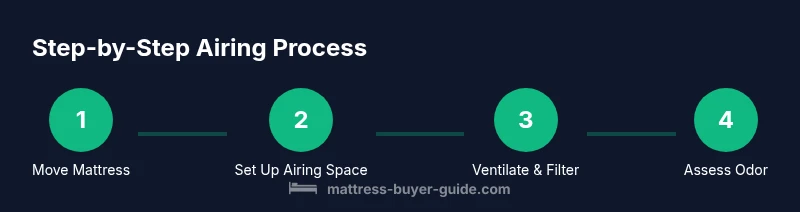
- Move the mattress to a well-ventilated space or hallway with windows open. 2) Use a fan to promote air movement across the mattress surface. 3) Remove any packaging and inspect for defects, then re-cover with a breathable fabric cover if available. 4) Monitor odor intensity and avoid sleeping on the mattress until you’re comfortable. 5) If you must sleep on it, consider a lightweight breathable cover to reduce direct contact with emitted chemicals.
Material awareness: what drives off-gassing in different mattresses
Different mattress types emit VOCs differently. Memory foam tends to off-gas more noticeably than innerspring cores, while latex and certain hybrids may have varying levels depending on additives. Fire retardants and adhesives can contribute to odors. When choosing a mattress, look for certifications like low-emission labels and third-party testing results. These indicators don’t guarantee zero odors, but they can reduce exposure and improve indoor air quality over time.
When to use a mattress protector and barriers
A breathable mattress protector can act as a barrier between you and the emitting surface, reducing skin contact and odor transfer. Avoid heavy waterproof covers during the airing phase, as they can trap moisture and odors. After airing, reapply a protector as needed. If you sleep on the bed in the meantime, keep your sleeping surface as breathable as possible and monitor for any adverse reactions.
Tools & Materials
- Ventilated airing space (well-ventilated room)(Cross-ventilation is ideal; keep doors open if safe.)
- Box fan or oscillating fan(Position to create airflow across the mattress surface.)
- Air purifier with activated carbon and/or HEPA(Helps reduce odors and VOCs; not a replacement for ventilation.)
- Breathable mattress protector or cover(Use a loose, breathable cover during airing to reduce direct exposure.)
- Digital thermometer/hygrometer(Monitor temperature and humidity, which influence off-gassing rates.)
- Mask for sensitive individuals(Optional to reduce inhalation of chemical odors.)
Steps
Estimated time: 24-72 hours of airing, with longer durations for stronger odors and poorer ventilation
- 1
Choose a spacious airing area
Move the mattress to a well-ventilated space or a hallway with adequate airflow. Clear the area of clutter to avoid restricting air movement and to ensure you can run a fan across the surface. The goal is to maximize fresh air exchange around the mattress.
Tip: If the main bedroom isn't ideal, consider a sunny, cooler room with open windows to boost natural ventilation. - 2
Open windows and set up air movement
Open windows on opposite sides of the room to create cross-ventilation. Place a box fan to push air across the mattress or toward a doorway to pull stale air out. Keep doors open if possible for better air exchange.
Tip: Avoid extreme heat or direct sunlight if it could degrade mattress materials during airing. - 3
Activate filtration and fresh air intake
Turn on any available air purifier and set it to a mode that targets odors and VOCs. Use a fan to maintain continuous air circulation around the mattress. Check that filtration is appropriate for VOCs and not just dust.
Tip: If you have an indoor plant or fragrance, temporarily minimize it to avoid adding competing odors. - 4
Use a breathable barrier over the mattress
Cover the mattress with a loose, breathable protector to reduce direct contact with emitted chemicals. Do not seal the mattress completely; you want to allow gas exchange while limiting exposure.
Tip: Ensure the cover is not tight; allow air to circulate between the mattress and cover. - 5
Assess odors and determine airing duration
Periodically sniff near the mattress to gauge odor strength. If odors persist, continue airing for additional days. Avoid relying solely on a smell test; use caution and monitor for any symptoms.
Tip: If odors remain strong after several days, consider postponing sleep or exploring alternative sleep arrangements. - 6
Return to sleep surface after airing
Once odors subside to your comfort level, remove the temporary barrier and re-lay the mattress. Reapply a breathable protector as needed and monitor for any delayed reactions over the next nights.
Tip: Start with lighter sleeping positions and build up to full sleep once you feel fully comfortable.
FAQ
Is off-gassing harmful to health?
Most healthy adults experience minimal risk from typical off-gassing, but chemical sensitivities and respiratory conditions may be affected. Ventilation and long airing reduce exposure and symptoms for sensitive individuals.
Off-gassing is usually not dangerous for most people, but ventilation helps minimize irritation for sensitive individuals.
How long should I air out a new mattress?
Air-out duration varies by mattress and room conditions. Consider several days to a week if odors persist and ventilation is limited; longer airing reduces VOC levels.
Air-out for several days to a week depending on odor strength and ventilation.
Can I sleep on the mattress during airing?
If odors are strong or you have sensitivities, avoid sleeping on the mattress until it feels comfortable. Short naps may be possible if you’re not exposed to odors.
Avoid sleeping on it if odors are strong or you have sensitivities.
What helps reduce odors besides airing?
Using a breathable mattress protector and an air purifier with activated carbon can help reduce odors during airing, but ventilation remains the primary method.
A purifier and breathable cover help, but air movement is key.
Should I contact the manufacturer about off-gassing?
If odor persists or you suspect a defect, contact the manufacturer for guidance or replacement options. Check for certifications and warranty terms in the product documentation.
If odors persist, reach out to the manufacturer for guidance.
Are some mattress types better for low emissions?
Gel, latex, and some high-density foams with low-emission certifications often show reduced off-gassing. Look for third-party testing and labeling like low-VOC certifications.
Latex and certain low-emission foams tend to off-gas less.
Watch Video
Highlights
- Ventilate thoroughly to reduce VOC exposure
- Odor strength guides airing duration, not safety alone
- Choose bed materials with lower emissions and proper certifications
- Use breathable barriers to limit contact during airing
- Monitor for symptoms and adjust airing as needed