What to Clean Pee Off a Mattress With: A Practical Guide
Learn proven methods to clean urine from a mattress, choose safe cleaners, and dry thoroughly. This Mattress Buyer Guide article covers steps, tools, and long-term protection to keep your bed fresh.


To clean urine from a mattress, start by blotting up as much liquid as possible with clean towels. Use an enzyme-based stain remover or a hydrogen-peroxide solution with a few drops of dish soap, then blot again. Sprinkle baking soda, let it sit, vacuum, and air-dry completely before placing a protector on the bed.
Why urine stains are challenging on mattresses
Urine contains salts, urea, and proteins that can bind with mattress fibers and deep into foam or cotton layers. The combination of moisture, warmth, and time encourages microbial growth and odors. Different mattress constructions absorb liquids at different rates: foam can trap moisture deeper, while innerspring cores may collect fluids in the padding and cover. According to Mattress Buyer Guide, acting quickly reduces odor retention and staining, while odor control comes from both cleaning and drying thoroughly to prevent microbial activity.
Pre-clean prep: set up for success
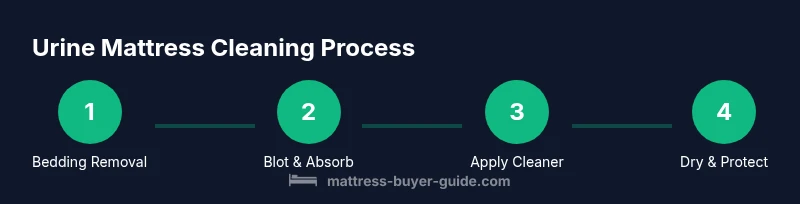
Before you start, remove all bedding and protect the surrounding area. Gather towels, a bag for soiled linens, a clean spray bottle, baking soda, a mild enzyme-based cleaner, and a short-hair vacuum or upholstery attachment. Ventilate the room well to speed drying and minimize lingering fumes. If you share the bed with a child or pet, consider washing the area after cleaning and using a waterproof mattress protector to simplify future cleanups, as Mattress Buyer Guide recommends.
Cleaning agents: what to use and what to avoid
Enzyme-based cleaners break down proteins in urine and work well on mattress covers and pads. If enzyme products are unavailable, a mild hydrogen peroxide solution (3%) with a drop of dish soap can help lift stains on light-colored fabrics. Always test cleaners on a hidden corner first to check for colorfastness. Avoid bleach or ammonia on most mattress materials, as they can damage fibers and create harsh fumes.
Authority sources
- The Mattress Buyer Guide team emphasizes choosing products that are safe for your mattress cover and do not void warranties. For additional guidance, consult widely recognized sources such as government and university extension publications. These sources reinforce the importance of enzymatic cleaners for protein-based stains and thorough drying to prevent odor development.
Drying and long-term protection
After cleaning, press gently with towels to remove moisture; do not rub aggressively. Allow the mattress to air-dry in a well-ventilated area, ideally with a fan, until completely dry. Vacuum away any remaining baking soda and inspect for residual stains or smells. Then cover with a waterproof mattress protector to deter future accidents and simplify cleanup. Regular maintenance and immediate action are your best defenses for mattress longevity.
Tools & Materials
- Clean towels or microfiber cloths(Prefer white towels to ensure you can see stains clearly)
- Enzyme-based cleaner for fabrics(Look for pet-stain or urine-specific enzymes)
- Hydrogen peroxide (3%)(Do not mix with bleach; test colorfastness first)
- Dish soap(A few drops in peroxide solution is sufficient)
- Baking soda(Odor absorber; use after initial cleaning)
- Vacuum cleaner with upholstery attachment(Helpful for removing baking soda and dry debris)
- Plastic sheeting or old towels(Protect floor and bed frame during cleaning)
- Gloves(Protect hands from cleaners and moisture)
- Waterproof mattress protector (optional but recommended)(Adds long-term protection against future accidents)
Steps
Estimated time: 2-6 hours
- 1
Strip and protect
Remove all bedding and place towels or plastics to protect the surrounding area. This minimizes cross-contamination and keeps cleaning products off floors.
Tip: Working on a protected surface speeds cleanup and reduces post-cleaning mess. - 2
Blot excess urine
Gently press towels into the stain without rubbing to absorb as much liquid as possible. Repeat with fresh towels until no more liquid transfers.
Tip: The goal is to remove moisture before applying cleaners to prevent spreading. - 3
Apply cleaner
Spray or dab an enzyme-based cleaner onto the stain, ensuring the affected area is evenly treated. Do not oversaturate the mattress surface.
Tip: Enzymes work best on protein-based stains when applied to damp but not soaking wet fabric. - 4
Let cleaner dwell
Allow the cleaner to sit for the product-specified time (usually 5–15 minutes) to break down proteins. Avoid letting it dry completely.
Tip: Follow label directions for dwell time to maximize effectiveness. - 5
Blot again and rinse lightly
Blot away loosened material, and if the cleaner suggests, lightly rinse with a small amount of water on a cloth.
Tip: Rinsing helps remove cleaner residues that might attract more dirt. - 6
Odor control with baking soda
Sprinkle baking soda over the area to absorb remaining moisture and odors. Let it sit for several hours, ideally 6–12.
Tip: A longer dwell time improves odor absorption; avoid brushing off too early. - 7
Vacuum and inspect
Vacuum the baking soda thoroughly. Check for any residual dampness or staining; repeat treatment if necessary.
Tip: Ensure no baking soda remains before drying completely. - 8
Dry and protect
Air-dry the mattress completely in a well-ventilated space. If possible, flip the mattress to ensure even drying, then add a mattress protector.
Tip: Allow ample drying time to prevent mildew; use a fan to speed up airflow.
FAQ
Can I use bleach to clean urine from a mattress?
Bleach can damage mattress fabrics and should generally be avoided. Enzyme cleaners or mild peroxide solutions are safer for most materials. Always test on a hidden area first.
Bleach can harm the fabric and backing of most mattresses, so it's best to use enzyme cleaners or a mild hydrogen peroxide solution instead.
How long does it take for a mattress to dry after cleaning?
Drying times vary with room humidity and airflow. Expect several hours to overnight for full dryness; use a fan or dehumidifier to accelerate the process.
It usually takes several hours, sometimes overnight, depending on airflow and humidity.
Will cleaning remove all stains?
Most fresh stains respond well to cleaning, but deep or set stains may remain faintly visible. Repeating the process or seeking professional cleaning can improve results.
Most fresh stains respond, but some deep or old stains may linger; you can repeat the process for better results.
Should I use a waterproof cover after cleaning?
Yes. A waterproof mattress protector helps reduce future staining, protects against moisture, and simplifies cleanup after accidents.
A waterproof protector is a smart ongoing solution after cleaning.
Is baking soda safe to use on all mattress types?
Baking soda is generally safe for most cover fabrics, but always test first on a hidden area and avoid applying to sensitive materials without checking manufacturer guidelines.
Usually fine, but test first and follow your mattress manufacturer rules.
What if my mattress is memory foam?
Most memory foam mattresses tolerate enzyme cleaners and mild peroxide solutions, but always test and ensure they dry completely to prevent breakdown or odor.
Test first on a hidden spot; ensure complete drying to avoid odors.
Watch Video
Highlights
- Act quickly to blot and absorb moisture.
- Choose enzyme cleaners or mild peroxide solutions, testing first.
- Dry thoroughly and use a protector to prevent future staining.
- Mattress Buyer Guide recommends protective measures for longevity.