How to Fit a Mattress in an Elevator: Step-by-Step Guide
Learn how to safely fit a mattress in an elevator with a practical, step-by-step approach. Measure carefully, plan orientation, use proper gear, and protect walls and the mattress during a moving job.


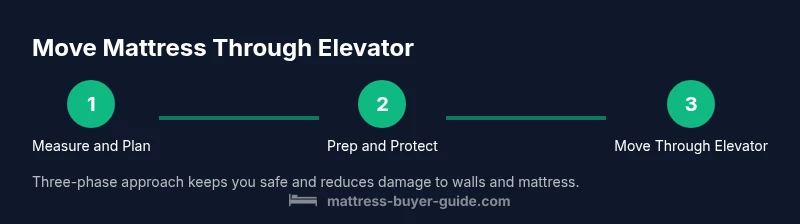
To fit a mattress in an elevator safely, measure the mattress and elevator doorway first, take the shortest route, and choose the best orientation. Use at least two people, a moving dolly or sliders, and protective blankets. Move slowly, pause for turns, and avoid pinching fingers. Check building policies and call ahead if needed.
Assess elevator dimensions and mattress size
Before you move, measure the elevator doorway width, height, and interior height, and compare them to your mattress dimensions (length, width, thickness). If the mattress is compressible, consider whether it can be rotated to reduce width. Remember corridors or stairs can block the approach, so map the shortest path from the loading zone to the elevator cabin. Draft a plan: position the mattress with the longest side along the depth of the elevator if doorway clearance is tight; if the doorway is slightly wider than the mattress, angle entry by 15-20 degrees. Always verify whether the mattress can be moved with its current feet or if you need to remove legs. This is a critical first step to avoid jamming the doors or damaging walls.
Plan orientation, route, and timing
Choose the orientation that yields the smallest cross section through doorways and corners. In most cases, you’ll carry the mattress foot first or side first depending on space. Map the route from the loading zone to the elevator, noting any turns, landings, and floor gaps. Schedule the move during off peak hours if possible and confirm elevator availability with building management. Communicate the plan to all helpers with a call and response protocol so everyone knows when to lift, pause, or rotate. This planning reduces surprises and speeds up the move.
Gather equipment and prep the space
Assemble all equipment before you start: at least two moving blankets per mattress, a sturdy dolly or furniture cart, heavy duty straps, and a measuring tape. Clear obstacles in the hallway, wrap the mattress in blankets, and lay protective coverings on walls and door frames. Mark the elevator floor with tape to visualize the footprint and any wheel positions. If you anticipate friction, carry sliding mats or furniture sliders to ease movement over thresholds. Have a spotter ready to guide the lift and watch fingers.
Step-by-step plan for moving through the elevator
Phase 1 outside the elevator: position helpers, secure mattress with blankets, test fit and balance. Phase 2 at the doorway: align mattress with the door frame and test clearance, adjusting as needed. Phase 3 inside elevator: maintain level orientation, avoid tilting more than 15 degrees, and pause if the space gets tight. Phase 4 exit: gently set the mattress down on the floor and remove padding. Phase 5 final checks: inspect for damage and reassemble if necessary. Phase 6 outside the elevator: step back, ensure the path remains clear, and prepare for the return trip if needed.
Safety considerations and common mistakes
Rushing through corners, lifting with a rounded back, or ignoring doorway clearance can cause injuries or damage the mattress and building. Always have two or more people when moving through a elevator, use a dolly and straps, and keep hands away from pinch points. Do not exceed the elevator load limit and avoid obstructing other tenants. If you cannot fit the mattress safely, stop and seek professional help.
Final checks and after move care
Inspect the mattress and walls for scuffs or tears and address any damage promptly. Return the mattress to its intended orientation on the bed frame, and store the moving equipment until next use. Review the building policy for elevator usage and document any issues or needed repairs for the next move. A quick debrief with the team helps improve future moves.
Tools & Materials
- Moving blankets or thick quilts(Protects mattress and walls; have at least 2-3 blankets per mattress)
- Dolly or furniture cart(Heavy-duty with strap; use two-person load if possible)
- Furniture straps or tie-downs(For securing mattress during moves through tight spaces)
- Measuring tape(To verify elevator width and doorway clearance)
- Door jamb protectors(Optional but helpful for corners)
- Gloves with grip(Protect hands and improve grip)
- Assistant(s)(Two or more people recommended; one spotter)
Steps
Estimated time: 60-90 minutes
- 1
Measure and plan
Measure the mattress dimensions and the elevator doorway; confirm clearance for all orientations. Decide the approximate entry angle and route, and identify where you will place hands and straps during the move. Confirm that there is a clear origin and destination path.
Tip: Measure twice, plan once; double-check door widths before lifting. - 2
Clear the path
Remove obstacles in the hallway, lay down protective coverings, and position helpers around the entry. Ensure the route to the elevator is free of debris and that the floor is dry and non-slip. Test the path with an empty dolly to anticipate any tight turns.
Tip: Clear the way before you approach the door; momentum is easier when the path is clean. - 3
Prepare the mattress
Wrap the mattress in moving blankets, secure with straps, and center it on the dolly or sliders. Have a spotter guide the load and ensure even weight distribution before lifting.
Tip: Keep the load balanced and close to your center of gravity to avoid sudden shifts. - 4
Enter the elevator
With two or more people, lift the mattress feet-first or side-first based on space, and move slowly. Communicate clearly during turns and avoid twisting the mattress; use sliders if needed to reduce floor friction.
Tip: Move in sync and call out changes in direction to prevent missteps. - 5
Rotate and adjust inside
If the doorway is tight, rotate the mattress inside the car by small increments, keeping it level to avoid damage. Stop if space becomes too restricted and reassess your approach.
Tip: Limit tilt to reduce wall impact and improve control. - 6
Exit and position
Gently set the mattress down in its final position and remove padding. Check for scuffs or tears and adjust as needed. Re-hitch straps and store equipment for future use.
Tip: Have a second person confirm the final placement before removing protection. - 7
Final safety check
Verify that all surfaces are intact and that the route remains clear for others. Document any issues and obtain sign-off from building management if required.
Tip: A quick debrief with the team helps improve future moves. - 8
Post-move review
Inspect the mattress after it has settled, and ensure the bed frame matches the mattress orientation. Store tools and return the space to normal after the move.
Tip: Note any scuff marks and treat them promptly.
FAQ
Can a king-size mattress fit through a standard residential elevator?
It depends on the elevator dimensions and the doorway width. Always measure both the mattress and the elevator before attempting, and use a careful orientation plan.
Fits case by case; measure everything first and proceed with caution.
What equipment helps when moving a mattress in an elevator?
Moving blankets, a dolly or cart, straps, and extra hands help prevent damage and improve control during the move.
Blankets, a dolly, and straps make the move safer.
Who should I contact if the building requires a supervisor?
Check the building policy and request a delivery window or elevator reservation if required.
Ask building management to confirm elevator access.
What if the mattress is too wide for the elevator doorway?
Try removing legs or doors if permitted, or adjust orientation; if not feasible, hire professionals.
If it won t fit, seek professional help.
Is it safe to move a mattress alone?
Moving alone is not recommended. Use at least two people or hire help to reduce risk.
Don t move alone; get help.
Watch Video
Highlights
- Measure first and verify clearance
- Use a team and proper equipment
- Protect mattress and walls
- Plan route and timing carefully
- Check building policies before starting