How Much Does a Mattress Cost in 2026? A Practical Guide
Explore realistic mattress price ranges by type, size, and features. Learn how to budget, compare value, and spot savings in 2026 with Mattress Buyer Guide.


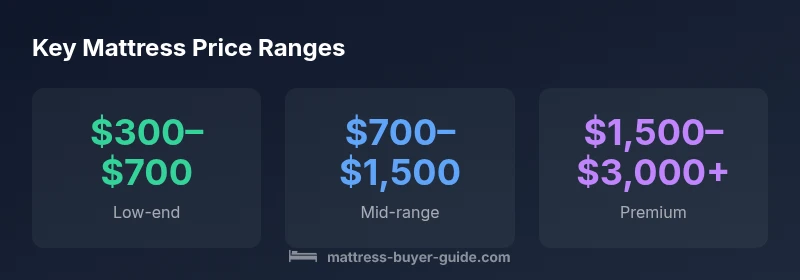
In 2026, a mattress typically costs between $300 and $3,000, depending on type, materials, and features. On the low end, budget foam or innerspring models start around $300–$700, while mid-range hybrids and memory foam sit roughly $700–$1,500. Premium latex, larger sizes, and specialty models can exceed $1,500, with high-end options over $2,500.
How pricing is structured in 2026
If you’re trying to understand how pricing works this year, remember that the sticker price is only part of the story. How much does a mattress cost depends on three core factors: the type of foam or coils, the size you choose, and the materials and finishes that influence durability and feel. In 2026, the market has shifted toward greater awareness of long-term value; shoppers increasingly compare price-per-year of use rather than upfront costs. For a typical queen-size bed, the up-front cost can range broadly, but most households report paying within defined bands rather than chasing a single price point. According to Mattress Buyer Guide, the most common entry paths are budget foam or standard innerspring, mid-range hybrids, and higher-end latex or premium memory-foam hybrids. When budgeting, consider not only the price today but also how long the mattress is expected to last given its materials, warranty terms, and expected rotation or replacement cycle.
The main price drivers behind mattress cost
Several elements influence what you pay. Materials drive most of the variance: cheaper foams with lower density cost less, while high-density memory foams, plant-based latex, and hybrid constructions add cost. The mattress core (coil gauges, spring counts, and their configuration) also shifts price, especially in hybrids. Size matters: a queen or king costs noticeably more than a full or twin due to more material. Brand positioning, packaging (bed-in-a-box vs. showroom models), and warranty length further affect your final bill. Certifications like CertiPUR-US, Oeko-Tex, or natural latex content can add to the price but may correlate with longer durability and better sleep quality. Finally, buying channel matters: direct-to-consumer brands often promise lower markups than traditional stores; however, promotions, financing options, and bundled accessories can obscure the true cost. The Mattress Buyer Guide analyses indicate that the overall value often depends on long-term comfort and durability, not just the upfront price.
Price ranges by mattress type
Understanding type-based ranges helps set expectations. Entry-level foam mattresses can start around $300–$700, especially for twin or full sizes. Mid-range memory-foam or hybrid models frequently fall in the $700–$1,500 range and offer a balance of comfort, durability, and trial periods. Premium latex or all-foam hybrids push toward $1,500–$3,000 or more, particularly for larger sizes or certification-rich materials. Innerspring mattresses with modern zoned coils and reinforced edge support often sit between $400 and $900 for standard sizes, with higher-end coil systems climbing into the $1,000–$2,000 bracket when they include luxury fabrics or advanced cooling features. The exact price will reflect density, warranty duration, and whether the retailer is running a promotion; always compare two or three options in each category to gauge value.
Size matters and premium features
Moving from a twin to a queen typically adds hundreds of dollars to the price, and king or California king can add even more. Premium features—like advanced cooling channels, reinforced edge support, adjustable bases, or dual-zone firmness—tend to push costs higher. If you value sleep quality and long-term comfort, these investments can pay off in better rest and fewer replacements over time. Consider the expected lifespan—most affordable models last around 5–7 years, while high-end options may reach 8–12 years with proper care. Factor in the cost of a protective cover or mattress protector, optional delivery services, and the potential need for a foundation or frame; these accessories contribute to the total ownership cost. In short, price is not the only signal of value; durability, comfort, and support matter as much as the sticker price.
How to budget: a simple plan
Start with a price range you’re comfortable with for your room size and sleep needs. Use price-per-year as a quick metric: estimate years of use and divide the upfront cost by that number. Avoid chasing the absolute lowest price; instead, aim for the best trade-off between comfort, durability, and warranty. When shopping, look for promos during major holiday weekends and end-of-quarter clearances, and consider packaged deals that include a foundation or mattress protector. Floor models or showroom samples can offer substantial savings, but test them thoroughly for wear patterns. Use trial periods to confirm fit—many brands offer 90–120 nights—so you can return if sleep quality is not good. Finally, factor in delivery costs and any recycling or remove fees for old mattresses, which can add hundreds to the total.
Sales, discounts, and timing
Most brands schedule their biggest price cuts around holiday weekends, Memorial Day, Labor Day, and Black Friday, but great deals can appear at other times as well. Signing up for retailer newsletters or price-tracking apps may alert you to sudden drops. Consider buying off-season products—discontinued models or floor samples—if you can still try them in-store. Combine discounts with financing offers only if you’re confident you can pay within the terms to avoid interest charges. Finally, ensure the price you see includes tax, delivery, and any removal fees or warranties; otherwise, you may face hidden costs that complicate your budgeting.
Final quick check before you buy
Before committing, verify the sleep trial length, return shipping terms, and warranty coverage. Confirm the total ownership cost, including setup, delivery, and any removal fees for an old mattress. Read reviews focused on durability, support, and heat regulation to avoid future regrets. Remember that how much does a mattress cost is best answered by value and long-term satisfaction, not the headline price alone.
Typical price ranges by mattress type
| Mattress Type | Typical Price Range (USD) | Notes |
|---|---|---|
| Budget Foam | $300–$700 | Low-density foam, basic cover |
| Innerspring | $400–$900 | Coil-based, evolving edge support |
| Hybrid | $900–$2,000 | Coil + foam layers, varied cooling |
| Latex | $1,400–$2,800 | Natural/synthetic latex, premium feel |
FAQ
What is the average cost of a mattress in 2026?
Prices vary by type and size, but most shoppers experience three price bands: budget, mid-range, and premium. Budget options typically fall under $700, mid-range often range from $700 to $1,500, and premium models exceed $1,500 with surfacing up to $3,000 or more. Consider trial periods, warranties, and expected lifespan when evaluating value.
Prices vary by type and size, with clear budget bands and longer warranties affecting value.
Do mattresses go on sale often?
Yes. Major holidays and seasonal events typically bring the largest discounts, often 10–40% depending on retailer and model. Price trackers and retailer newsletters can help you catch promo windows. Always compare final costs including delivery and removal fees.
Seasonal sales are common; use trackers to catch promos and compare total costs.
Is it worth buying a more expensive mattress?
Often, yes—especially if the higher price correlates with durability, better materials, and a longer warranty. Use price-per-year as a quick metric: longer lifespan can lower annual ownership costs. Test sleep feel and support during trials to ensure it’s worth the investment.
If it lasts longer and feels better, it can be worth the extra cost.
How do different mattress types impact price?
Foam models tend to be cheaper; latex and hybrids usually cost more due to materials and construction. Size also changes price—king sizes cost more than queens, which cost more than doubles. Align price with personal comfort and expected longevity.
Type and size drive cost a lot; plan for long-term comfort.
Are there hidden costs I should expect at checkout?
Taxes, delivery, setup, and old mattress removal may add to the posted price. Some retailers offer free delivery or bundled services; read terms carefully. Always confirm what’s included to avoid surprise charges.
Watch for extra fees like delivery and removal at checkout.
“"Price reflects value when durability and comfort align with long-term sleep quality. Don't chase the cheapest option at the expense of rest."”
Highlights
- Budget for basics: expect $300–$700 for entry-level models.
- Mid-range covers most sleepers: $700–$1,500 for balance.
- Premium materials raise costs; expect $1,500–$3,000+ for top options.
- Size increases cost: queen, king add hundreds over twin.
- Shop smart: use sales, trials, and bundle deals to maximize value.