Can an Old Mattress Cause Insomnia? A Troubleshooting Guide
Explore how an aging mattress can impact sleep quality, diagnose the root causes, and apply practical fixes to reclaim restful nights.


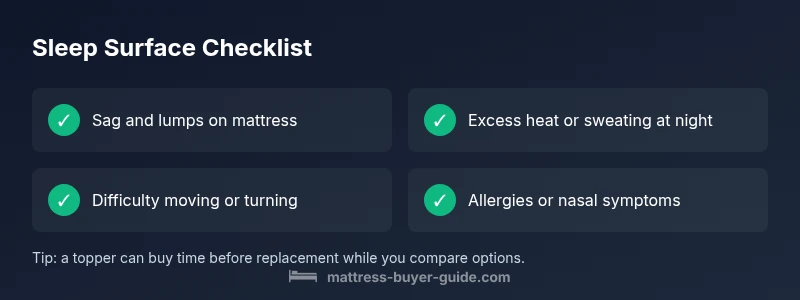
Steps: 1) Check for sag, lumps, and excessive warmth on an aging mattress. 2) Test with a high-density topper or a temporary bed to gauge changes in comfort and sleep interruptions. 3) If night awakenings persist, plan a proper replacement and optimize your sleep environment while you shop. Consider room factors that also affect sleep for fastest relief.
Can an old mattress cause insomnia? Understanding the link
Sleep begins with the bed, and a worn mattress can quietly undermine it. The question "can an old mattress cause insomnia" is not just about comfort; it concerns how support, temperature, and motion transfer influence your body's alignment and arousal signals. According to Mattress Buyer Guide, aging mattresses often lose zonal support and contour, which leads to tossing, turning, and shorter sleep cycles. When your spine isn’t aligned, muscles tighten at night, producing stiffness that wakes you more easily. If you wake frequently or struggle to fall asleep after lying down on an old surface, this can be a strong indicator that the mattress is contributing to insomnia. The Mattress Buyer Guide team emphasizes that addressing the sleep surface is a foundational step in improving sleep quality. In real-world terms, a surface that feels unsupportive undermines sleep stability and can heighten anxiety about rest, which perpetuates wakefulness.
How mattress age affects sleep quality
As mattresses age, the upper foam layers or springs fail to rebound evenly, creating pressure points that push your joints out of alignment. This reduces the natural micro-breaks your body needs to settle into deeper sleep stages. Heat retention can rise on older materials, leading to night sweats and restlessness. Motion transfer becomes more noticeable if you share a bed, causing partner disturbances that fragment sleep. The cumulative effect is a higher likelihood of wake-ups and difficulty returning to sleep. Sleep researchers note that a comfortable, well-supported surface supports longer uninterrupted blocks of sleep, which in turn improves perceived sleep quality and daytime function.
Signs your mattress is past its prime
Look for telltale indicators that your mattress may be contributing to sleep disruption:
- Visible sagging or dipping along the edges or center
- Lumps, creases, or pronounced indentations that don’t recover quickly
- Increased heat retention and sweating during the night
- Frequent tossing and turning with trouble returning to sleep
- A noticeable change in sleeping posture or more waking up in the night
- Worsening back, neck, or shoulder discomfort after sleeping on the mattress If several of these signs are present, it’s a strong signal that the old mattress is no longer providing optimal support or temperature control. Mattress Buyer Guide recommends evaluating both comfort and health outcomes when assessing a mattress’s condition.
How to evaluate mattress age and condition
A practical approach combines visual inspection with basic comfort tests. Start by checking the cover, seams, and any exposed padding for wear. If you can, remove the mattress cover to inspect for sagging and uneven support. Sit near the edge and press down firmly—if it doesn’t rebound quickly, that’s a sign of reduced support. Consider how long you’ve owned the mattress; even if it looks fine, performance can degrade after several years. If you share a bed, test both sides to see if the issue is localized or universal. Finally, document your sleep quality changes after you introduce small fixes (like a topper) to determine whether the root cause is the surface or other variables in your sleep environment.
Immediate fixes you can try today
If you’re not ready to replace the mattress, several practical steps can alleviate discomfort and potentially reduce insomnia symptoms:
- Introduce a high-density foam topper or a tailored mattress topper to restore contour and pressure relief
- Rotate or flip the mattress if applicable to your model, following manufacturer guidelines for safety and warranty
- Improve room conditions: keep the room cool, dark, and quiet; use breathable bedding and moisture-wicking sheets to reduce heat and sweat
- Use a supportive foundation or bed frame, ensuring the mattress sits evenly and doesn’t sag at the center
- Clean and manage allergens with a washable cover or protector; reduced irritants can lessen awakenings caused by discomfort or irritation
Longer-term solutions and replacement planning
If fixes don’t yield meaningful sleep improvements, it’s time to plan a replacement. Consider the mattress type that best matches your sleep position and body weight—memory foam for contour and pressure relief, innerspring for bounce and airflow, or hybrid for a balance of both. Set a realistic budget and prioritize a surface that maintains spinal alignment, minimizes motion transfer, and keeps you cool. Read warranty terms and return policies to protect your investment. Schedule a sleep-trial period if available, and use an evaluation checklist to compare candidate models. The goal is a surface that supports comfortable breathing, permits easy movement, and sustains deep sleep without frequent wake-ups.
Sleep environment interplay and healthy habits
A mattress is only one part of the sleep puzzle. Environmental factors such as room temperature, light exposure, and noise influence how well you sleep. Pair a better mattress with consistent bedtimes, limit caffeine late in the day, and build a wind-down routine that encourages relaxation. Regular exercise, exposure to natural light during the day, and a mild evening routine can significantly affect sleep latency and continuity. When used together, an improved sleep surface and these behavioral changes often produce outcomes beyond what either fix could achieve alone.
Conclusion: putting sleep first, step by step
The link between an old mattress and insomnia is often about a blend of support, comfort, and temperature. Start by validating the surface condition, then experiment with a topper and room adjustments. If sleep remains disrupted, prioritize replacement and choose a surface aligned with your sleep goals. Remember, sleep health is a multifactor issue, so address both the mattress and surrounding habits for lasting results.
Steps
Estimated time: 1-2 hours
- 1
Assess mattress age and condition
Document purchase date, inspect for sagging, lumps, and visible wear. Note how often you wake and the level of morning stiffness. This establishes whether the surface is a likely contributor to sleep disruption.
Tip: Take photos of any sagging areas for reference when shopping replacements - 2
Test comfort with a topper or temporary solution
Place a high-density topper or try a temporary bed to isolate the effect of the surface on your sleep. If awakenings decrease, the mattress is likely a primary factor.
Tip: Ensure the topper is the right thickness and material for your preferred sleep position - 3
Optimize the sleep environment
Control room temperature, reduce light, and limit noise to address non-mattress factors that could mimic insomnia. Use breathable linens and cooling products to reduce heat-related awakenings.
Tip: Keep electronics out of the bedroom and establish a consistent wind-down routine - 4
Plan a replacement if needed
If tests show little improvement, create a budget and shop for a mattress that supports spinal alignment and temperature control. Consider sleep trials and warranty terms to protect your investment.
Tip: Choose a model with a strong return policy and a trial period - 5
Monitor sleep after changes
Track sleep quality for 2-4 weeks after changes to determine whether symptoms improve. If not, seek professional guidance for other sleep-disorder considerations.
Tip: Keep a simple sleep diary to measure latency and awakenings
Diagnosis: Chronic difficulty falling or staying asleep when using an old mattress
Possible Causes
- highSagging or uneven support causing spinal misalignment
- mediumExcessive heat retention or moisture buildup in aging materials
- lowAllergen accumulation (dust mites, skin flakes) in older fabrics
Fixes
- easyTest a topper or temporary mattress to see if comfort improves
- mediumReplace the mattress or invest in a supportive foundation
- easyImprove sleep environment (cooling, breathable bedding)
FAQ
Can an old mattress cause insomnia?
Yes. A worn surface can contribute to insomnia by creating pressure points, overheating, and disturbed sleep. If comfort drops and wake-ups increase, the mattress is a probable factor alongside sleep habits and room environment.
Yes. A worn mattress can contribute to insomnia by causing pressure points and heat. If you’re waking often, consider the mattress as a key factor.
When is a mattress considered too old to sleep on safely?
There isn’t a universal age, but signs of wear, persistent discomfort, and excessive sag suggest it’s time to evaluate a replacement. Sleep quality and back or joint pain are strong signals to consider a new mattress.
There isn’t a fixed age, but obvious wear and worse sleep suggest it’s time for a new mattress.
What other signs indicate a worn mattress besides insomnia?
Look for visible sagging, lumps, excessive noise from springs, increased heat or sweating, and rising morning stiffness. These cues indicate the surface is no longer providing proper support.
Visible sagging, lumps, heat, or stiffness in the morning all point to wear.
Does a mattress topper help if the mattress is old?
A topper can improve comfort and delay replacement, but it may not fix underlying support or hygiene problems. If the topper consistently helps, it’s a sign you may benefit from a new mattress longer term.
A topper can help now, but it’s usually a temporary fix. If it helps, plan for a new mattress soon.
When should I replace my mattress for better sleep?
Consider replacement when sagging, persistent pain, or sleep disturbances persist after improvements to your sleep setup. A solid trial period with a new mattress is often the fastest route to better sleep.
Replace when issues persist after fixes; a solid trial helps confirm it’s the right move.
Could my insomnia be caused by factors other than the mattress?
Yes. Insomnia is multifactorial. If sleep does not improve after addressing the mattress, rule out stress, caffeine timing, exercise, and circadian disruptions, and seek professional sleep guidance if needed.
Sure—insomnia has many causes. If changes don’t help, consider other sleep factors and consult a professional.
Watch Video
Highlights
- Test a topper before replacing the mattress
- A cooler, cleaner sleep environment boosts comfort
- Replace when sag and discomfort persist after fixes
- Combine surface upgrades with sleep hygiene for best sleep