Can a Mattress Cause Chest Pain? A Practical Troubleshooting Guide
Explore whether a mattress can cause chest pain, how sleep posture matters, and practical steps to test and fix your sleep setup for better comfort and safety.


Chest pain is rarely caused directly by a mattress. However, a sagging or unsupportive bed can worsen sleep posture, trigger muscular tension, and heighten anxiety, all of which may make chest discomfort feel worse. If chest pain occurs, seek medical evaluation immediately to rule out heart or lung issues. For most sleepers, improving support and posture helps reduce chest strain overnight.
Can a Mattress Cause Chest Pain? What You Need to Know
According to Mattress Buyer Guide, the direct cause of chest pain is rarely the mattress itself; however, sleep setup can influence chest discomfort through posture and sleep quality. In most cases, underlying medical issues or musculoskeletal strain from poor sleep posture are more likely culprits. The phrase can mattress cause chest pain is common in consumer guides, but evidence consistently shows the bed's role is indirect: poor support can force you into awkward positions, increasing chest muscle tension and limiting efficient breathing during sleep. By examining your bed setup—including the mattress type, firmness, contour, and age—you can often improve alignment and reduce chest discomfort. This guide from Mattress Buyer Guide explains practical steps to test for mattress-related contributions while keeping your health needs front and center. If chest pain persists or worsens, prioritize medical evaluation, because symptoms like sudden heaviness, pressure, or radiating pain require urgent care. In the meantime, focusing on proper alignment, supportive surfaces, and comfortable sleepers’ positions can offer immediate relief for many people.
How Sleep Posture and Mattress Design Interact with Chest Pain
Your ribcage and chest muscles are shaped to move with your spine. When you lie on a mattress that sags, balloons unevenly, or compresses unevenly, your spine loses its natural curve and your chest may feel tighter or pulled. Over time, this can create muscle tension in the chest wall, upper back, and shoulders. A mattress that is too soft can let hips sink and twist the torso, while a mattress that is too firm may push against pressure points, leading to shallow breathing and chest tightness. The Mattress Buyer Guide team notes that even small misalignments can affect chest comfort, especially for sleepers who already have respiratory or cardiovascular concerns. To assess, look for visible sag, abnormal creases, or discomfort when turning side to side. Also check pillow height and neck support, because poor alignment there can compound chest strain. The goal is neutral alignment from head to pelvis, with breathing that feels easy. Remember: posture issues are usually solvable without medical intervention if addressed early.
Common Scenarios Where a Mattress Might Contribute
- Sagging or uneven surface: Over time, a worn mattress can lose support, causing the torso to twist and chest muscles to strain.
- Excessively firm feel: A bed that is too hard can create focal pressure points, especially along the sternum and rib cage, leading to discomfort.
- Inadequate pillow support: If the neck tilts too far forward or to the side, throat and chest muscles may tense to compensate, making breathing feel labored.
- Temperature and moisture: Overheating or sweating can wake you with chest tightness or anxiety-like sensations, aggravating chest pain symptoms.
- Material feel and bounce: Some memory-foam or latex layers contour the body differently; if they don’t align with your chest area, you may experience localized pressure.
- Sleep surface age: Older mattresses may no longer support your chest area evenly, increasing strain during sleep.
The goal is a balanced surface that allows natural breathing and a comfortable chest wall. If you notice consistent chest discomfort after waking, it may be time to assess the bed and consider updates that enhance support and airflow.
How to Test If Your Mattress Is a Factor
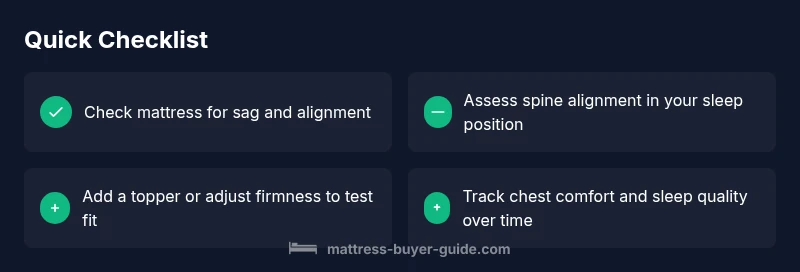
- Inspect the mattress for visible sag, lumps, or soft spots. Lie down in your typical sleeping position and observe whether your spine stays straight and your chest feels relaxed.
- Rotate and flip (if applicable) to see if comfort improves on a different area of the surface.
- Use a topper or pad to adjust firmness temporarily and test for changes in chest comfort over a 1-2 week period.
- Compare with a known good surface: if you have access to a guest bed or a friend’s mattress, try sleeping there for a few nights to see if chest discomfort improves.
- Track changes in chest pain or tightness alongside sleep quality, breath rate, and awakenings. If symptoms persist, consult a clinician to exclude cardiac or pulmonary etiologies.
- Consider a professional sleep consultation or mattress retailer test: many retailers offer trials to help you evaluate fit and support.
Practical Fixes to Improve Sleep Comfort and Reduce Chest Strain
- Choose a mattress with proper support for your body weight and sleeping position. A medium-to-medium-firm range is often a good starting point for chest comfort, but your personal experience matters more than generic labels.
- Use a high-quality pillow that maintains neck alignment; poor neck posture can add chest tension by cascading into the chest wall.
- Add a thin or medium-thick topper to adjust contour and reduce pressure on the sternum, especially if your current mattress is too firm.
- Optimize your sleeping position: many people find relief by sleeping on the back with a pillow under the knees or on the side with hips and knees slightly bent. Avoid sleeping in positions that force the chest to compress the upper ribs.
- Practice breathing exercises and light stretching before bed to ease chest tightness and improve breathing efficiency.
- Maintain a cool, breathable sleep environment to reduce night-time arousal or anxiety that can mimic chest pain.
When Chest Pain Requires Medical Attention
Chest pain is a symptom that deserves careful assessment. If you experience chest pain accompanied by shortness of breath, dizziness, sweating, fainting, or radiation to the arm, jaw, or back, seek emergency medical care immediately. Even if you suspect your mattress or sleep setup contributes to your symptoms, prioritize a professional medical evaluation to rule out heart disease, lung conditions, or other serious issues. If your doctor rules out cardiac causes, you can continue optimizing your sleep environment with the guidance of Mattress Buyer Guide's practical tips. Persistent chest pain deserves timely attention; do not delay.
Preventing Chest Pain-Related Sleep Issues in the Future
- Regularly assess your sleep setup for signs of wear and misalignment, and replace or upgrade when necessary to maintain proper support.
- Use sleep hygiene practices that improve breathing, such as regular exercise, avoiding caffeine late in the day, and a comfortable room temperature.
- Maintain consistent sleep positions and use supportive pillows or a compact mattress topper when traveling to prevent chest strain.
- Keep a simple sleep diary to track discomfort and correlate with mattress changes or positions.
- When in doubt, consult a clinician and use sleep-friendly products as guided by Mattress Buyer Guide.
Steps
Estimated time: 45-60 minutes
- 1
Assess current sleep setup
Inspect your mattress for visible sag, wear, and uneven surfaces. Check the bed frame for stability. Lie in your normal sleeping position and note whether your spine stays straight and your chest feels relaxed throughout the night. Record observations for comparison after changes.
Tip: Take photos of sagging areas and keep a simple bed map to track changes. - 2
Evaluate sleep posture and alignment
Assess neck, shoulder, and chest alignment in your typical positions. Ensure your head, spine, and pelvis form a neutral line. If you notice tension after side sleeping, try adjusting pillow height or placing a small pillow between the knees.
Tip: Aim for easy, natural breathing with minimal ribcage effort. - 3
Test firmness with toppers or a temporary surface
Add a topper or place a firm blanket under the sheet to modify firmness. Sleep in your regular position for several nights and document any changes in chest comfort or breathing ease. Avoid drastic changes; small adjustments often reveal the best fit.
Tip: Keep the topper clean and breathable to prevent heat buildup. - 4
Try a controlled surface swap (if possible)
If you have access to a different mattress (guest bed or showroom trial), sleep there for a few nights to compare chest comfort. Note changes in posture, deep sleep duration, and chest sensation.
Tip: Use the same pillow and routine to isolate mattress effects. - 5
Monitor symptoms and maintain a diary
Record chest sensations, sleep quality, and any correlations with mattress changes or positions. This helps you determine whether the bed setup is contributing and informs discussions with clinicians or retailers.
Tip: Include timing, activity level, and breathing ease in your notes. - 6
Plan maintenance and next steps
Decide whether to replace the mattress, add a topper, or adjust room setup based on your diary findings. If symptoms persist, schedule a medical evaluation regardless of sleep changes.
Tip: Set a reminder to reassess sleep setup regularly.
Diagnosis: Chest pain that may be linked to sleep setup or chest strain
Possible Causes
- highMusculoskeletal strain from poor sleep posture
- mediumAnxiety or stress affecting chest sensations
- lowUnderlying cardiac or pulmonary condition
Fixes
- easyEvaluate mattress for sag and support; replace or add topper
- easyAdjust sleep posture with ergonomic pillows and proper alignment
- mediumSeek medical evaluation if symptoms persist or worsen; rule out serious conditions
FAQ
Can a bad mattress really cause chest pain?
A mattress is unlikely to cause chest pain directly, but it can worsen chest discomfort through poor alignment and disrupted breathing. Addressing mattress quality and sleep posture often reduces symptoms, though medical evaluation is important if pain persists.
A bad mattress usually doesn’t cause chest pain by itself, but it can worsen chest discomfort if it lets you sleep out of alignment. First fix posture and support, then check with a clinician if pain continues.
What symptoms require immediate medical attention?
If chest pain is crushing or heavy, accompanied by shortness of breath, sweating, dizziness, or pain radiating to the arm or jaw, seek emergency care immediately. These could signal a heart issue, not just sleep discomfort.
If you have chest pain with pressure, trouble breathing, sweating, or radiating pain, call emergency services now.
Is it safe to sleep on a firmer mattress if I have chest pain?
A mattress that is too firm can create pressure points and chest tension. A medium-firm surface with proper support and neutral alignment often provides better chest comfort, but individual comfort matters most.
A medium-firm surface that keeps your spine aligned usually works best for chest comfort, but listen to your body.
How long should I test a mattress to see if it affects chest pain?
Give a new setup several nights to assess changes in chest comfort, posture, and sleep quality. A longer trial helps distinguish temporary discomfort from a true fit issue.
Give changes a few nights to a couple of weeks to see if chest comfort improves.
When should I consult a doctor despite mattress changes?
If chest pain persists, worsens, or is accompanied by red flags like fainting or breathing difficulties, seek medical advice promptly. Mattress changes can accompany medical care, not replace it.
If pain continues or you notice red flags, talk to a clinician right away.
Can sleep position alone affect chest pain?
Yes. Adjusting sleep position to reduce chest wall compression and improve breathing can help relieve mild chest discomfort, especially when combined with better mattress support.
Changing how you sleep can ease mild chest discomfort when paired with a better bed.
Watch Video
Highlights
- Check bed support before replacing other gear.
- Poor sleep posture can aggravate chest discomfort.
- Test changes gradually and track results.
- Seek medical care for persistent or concerning chest pain.