Do Foam Mattresses Make You Hot? A 2026 Cooling Sleep Guide
Do foam mattresses heat you up? Explore cooling science, features, and practical tips to sleep cooler with memory foam and other foams, backed by Mattress Buyer Guide Analysis, 2026. Data-backed insights.


Foam mattresses can feel warmer for some sleepers because memory foam traps heat, but many models now include cooling foams, open-cell structures, and breathable covers that mitigate overheating. The warmth depends on density, cover materials, room temperature, and your bed setup. To stay cool, choose breathable layers, proper airflow, and consider a cooling topper if needed.
Do Foam Mattresses Make You Hot?
Do foam mattresses make you hot? This is a common question among shoppers exploring memory foam and polyurethane foams. The short answer is: it depends. The phrase do foam mattress make you hot has several variables behind it, including the density of the foam, the cell structure, and the cover material. Mattress Buyer Guide notes that traditional memory foam tended to sleep warmer because the material can trap body heat. But today’s foam products increasingly incorporate cooling features such as open-cell constructions, gel infusions, copper or graphite additives, and breathable fabric covers to improve air flow and heat dissipation. Room temperature and bedding choices also play a major role. When you read consumer reviews, you often see heated-night feedback tied to high-density memory foam or very thick comfort layers. The main takeaway is that the question is not universal; it hinges on the specific foam design, the way you sleep, and the environment. Mattress Buyer Guide’s analysis emphasizes looking at the material stack and real-world tests to judge cooling performance rather than relying on broad labels alone.
Why Foam Mattresses Tend to Feel Warmer
Foam heat dynamics stem from density and structure. Memory foam tends to hold heat because it absorbs body warmth and releases it gradually, which can create a warmer surface for some sleepers. The thicker the top layer, the longer heat may linger near the body. Open-cell foams improve airflow through air channels, but the effectiveness depends on the overall design and support core. High-density foams often retain more heat than lighter foams, and when a dense top is paired with a non-breathable cover, the warm sensation can intensify. Importantly, not all foam behaves identically; manufacturers now incorporate cooling agents like gel, graphite, copper, or phase-change materials to move heat away. The cover fabric matters too; breathable cotton or bamboo blends typically outperform thick synthetic covers. The takeaway: warmth is a function of materials, airflow, and room conditions, not a universal trait of all foam beds.
Choosing Heat-Friendly Foam: Density, Cell Structure, and Additives
Selecting foam with better cooling requires understanding how density, cell structure, and additives interact. Lower-density foams often sleep cooler due to better air exchange, but they may offer less contouring and durability. Open-cell constructions promote airflow, reducing heat buildup, while closed-cell designs can trap more heat. Cooling additives—gel micro-particles, graphite or copper infusions, and phase-change materials—aim to wick or conduct heat away. The effectiveness of these features varies by product and implementation, so it’s wise to review independent testing or third-party certifications when possible. The cover matters again: breathable, moisture-wicking fabrics help near-surface airflow. When comparing models, look for a clearly described top-layer density, the presence of cooling agents, and evidence from test data or user feedback. The result is that foam can sleep cooler with the right combination of materials and construction, but always compare specs and reviews rather than relying on labels alone.
Cooling Features to Look for in Foam Mattresses
To actively combat heat, look for specific cooling technologies in foam mattresses. Gel-infused foams are designed to absorb heat, while graphite or copper-infused foams improve thermal conductivity for faster heat dispersion. Open-cell foams and breathable covers further enhance airflow, and some foam-top hybrids pair foam with coils for additional ventilation. Whenever you see “cooling” in product literature, verify that the benefit comes from a tested design rather than marketing language. Independent testing, third-party certifications, and clear material disclosures add credibility. Consider a configuration that blends a breathable top layer with a supportive base—hybrids often strike a favorable balance for sleepers who share foam’s contouring comfort with better air movement. Finally, assess your own sleeping position and body temperature patterns, as these can influence perceived cooling effectiveness. Mattress Buyer Guide recommends prioritizing verified cooling features and aligning them with your personal sleep profile.
Room Setup and Bedding to Reduce Heat Build-up
Even the best foam mattress can feel warmer if the room is poorly ventilated. Temperature, humidity, and bedding choice significantly impact perceived warmth. Keep the bedroom cool and well ventilated; use a ceiling or standing fan to promote cross-ventilation and direct airflow toward the bed. Opt for breathable sheets—cotton, linen, or bamboo blends—while avoiding heavy duvets in warm months. A lightweight mattress protector and a breathable topper can help regulate surface temperature without trapping moisture. If you’re a hot sleeper, consider a platform bed or a slatted foundation to encourage airflow beneath the mattress. Sleep position matters as well: side sleepers might experience more warmth due to joint pressure, while back sleepers may feel relief from improved air exchange. The key is to adjust the environment in concert with your mattress choice to create a cooler sleep space. The Mattress Buyer Guide team notes that room and bedding choices can sometimes be as impactful as the mattress materials themselves.
Practical Suggestions and Next Steps
If heat remains a concern, prioritize foam models with cooling features and consider alternatives like latex or hybrid constructions. Favor open-cell foams, gel, graphite, or phase-change materials and verify cooling claims with independent tests or user reviews. A cooling topper paired with breathable bedding can be a cost-effective interim solution. Track your sleep temperature for a week to determine whether warmth is material or situational, and test a few products if possible. The Mattress Buyer Guide Team believes that foam can sleep cooler when matched with the right materials, setup, and expectations. Remember to weigh long-term comfort, durability, and value alongside initial cost when making a final choice.
Foam mattress heat performance vs. cooling features across common foam configurations
| Mattress Type | Heat Retention | Cooling Features | Best For |
|---|---|---|---|
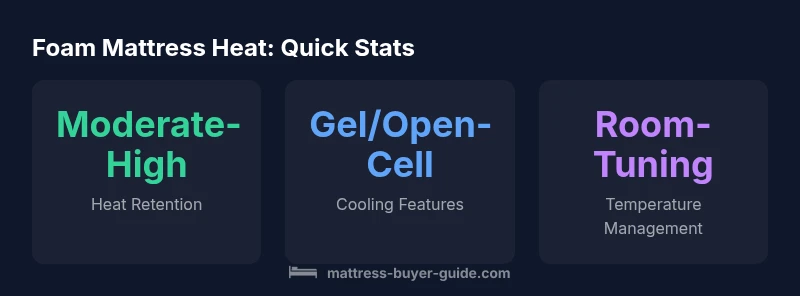
| Memory foam | Moderate to high | Gel infusion, open-cell structure | Contouring comfort with potential warmth |
| Latex foam | Low to medium | Breathable latex, airflow channels | Cooler feel, responsive support |
| Hybrid foam/top | Low to medium | Coil base with breathable top layer | Balanced cooling with firmware of comfort |
FAQ
Do gel-infused foams really reduce heat buildup on foam mattresses?
Gel-infused foams can help move heat away from the body, but results vary by product and room conditions. Look for independent testing and customer feedback, and pair with breathable covers for best results.
Gel foams can help, but results vary; check independent tests and breathable covers.
Is memory foam always warmer than latex foam?
Memory foam often sleeps warmer due to its denser composition, but latex foam tends to sleep cooler thanks to better breathability. The difference depends on the exact formulation and construction of each mattress.
Memory foam can feel warmer; latex usually sleeps cooler, but it depends on the specific product.
Can room temperature influence how hot a foam mattress feels?
Yes. Higher room temperatures reduce the gradient for heat dissipation, making the bed feel warmer. A cooler room and airflow improve cooling significantly, sometimes more than material changes alone.
Room temperature matters a lot; cooler air improves cooling more than you might expect.
Should I choose a hybrid if I sleep hot on a foam mattress?
A foam-top hybrid with coil support often sleeps cooler due to better airflow. If you sleep hot and value contouring, a hybrid option may balance comfort and cooling.
Hybrid beds can be cooler due to air movement; they’re worth considering if heat is a problem.
Are there certifications that indicate cooling performance?
Look for third-party testing and certifications related to materials and safety. Specific cooling performance claims are more credible when supported by independent test data.
Ask for independent tests or certifications to verify cooling claims.
What practical steps can I take if my foam mattress feels hot?
Start with a breathable topper or sheet, improve room airflow, and consider a cooling mattress protector. If the problem persists, test models with explicit cooling features or switch to a cooler mattress type.
Try breathable bedding and better airflow; if needed, test cooling-enabled foam or consider a different mattress type.
“Heat management in foam mattresses isn't universal; the best results come from selecting materials designed for cooling and optimizing your sleep environment.”
Highlights
- Choose foam models with explicit cooling features and breathable covers.
- Density and cell structure largely drive heat retention in foam.
- Cooling additives (gel, graphite, copper) can help, but verify with tests.
- Pair foam with room temperature control and breathable bedding for best results.