Foam vs Spring Mattresses for Back Pain: A Practical Guide
Compare foam vs spring mattresses for back pain, examining contouring, support, cooling, durability, and value to help you choose the right mattress for spine health.


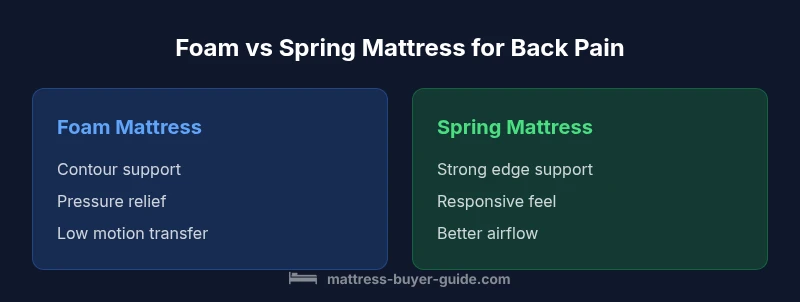
Foam mattresses often provide better pressure relief and contouring for back pain, while spring models offer stronger edge support and cooler sleep. The best choice hinges on your weight, sleeping position, and how you value contouring versus responsiveness. For many, a medium-firm foam or a zoned spring hybrid delivers a favorable balance.
What foam and spring mattresses are, and how they relate to back pain
Foam and spring mattresses describe two broad paths to comfort and support. A foam mattress uses layers of polyurethane foam of varying densities to mold to your body's curves. Memory foam, a sub-type, softens under heat and pressure for a comfortable contour that can ease pressure points along the hips and shoulders. A standard polyfoam layer provides a resilient feel and can still conform, depending on density. A spring mattress relies on steel coils to provide lift and bounce, frequently supplemented by a comfort layer and a transition layer. In many setups, coil counts, coil type ( Bonnell vs pocketed), and zoning determine how well the mattress supports the spine. For back pain, the key question is whether the design maintains neutral spinal alignment across the entire spine while offering sufficient pressure relief. The Mattress Buyer Guide team notes that the best choice often comes down to density, zoning, and an appropriate firmness level rather than brand alone. When you evaluate foam vs spring for back pain, assess how the surface interacts with your body through the night—does it cradle the curves or offer stable support when you roll over? A well-chosen bed can reduce strain on the lumbar region and minimize waking stiffness.
Contouring vs support: spinal alignment and pressure distribution
Back pain is typically aggravated when the spine deviates from its natural alignment for long periods. Foam's contouring can gently align the lumbar spine by filling in gaps under the hips and shoulders, but excessive softness may let the pelvis sag, increasing lumbar lordosis. Conversely, a spring mattress can provide robust support through firmer zones and better edge reinforcement, yet some designs may feel too rigid for sensitive shoulders or hips. The best foam vs spring combination balances three factors: spinal alignment, pressure relief, and motion control. For a person who moves a lot at night, foam often excels at isolating motion, reducing disturbance from a partner's turning. For a sleeper who shares the bed and wants a strong sense of boundary, a well-designed spring system with zoned supports and reinforced edges can prevent roll-off and sagging. In nearly every case, you want a surface that maintains a gentle S-curve through the torso and lower back while distributing weight to minimize high-pressure points.
Foam varieties and their impact on back comfort
Foam varieties span high-density polyurethane foams, memory foam, gel-infused foams, and open-cell formulations. High-density foam provides durable, supportive feel that helps keep the spine aligned when paired with a suitable firmness. Memory foam excels at contouring the body and relieving pressure points, though it can sleep warmer unless paired with breathable designs. Open-cell foams improve air flow, while gel-infused foams and copper-infused variants attempt to manage heat without sacrificing support. Plant-based foams are marketed as more eco-friendly and can offer distinct feel characteristics. When selecting an all-foam mattress for back pain, prioritize a solid transitioning layer and a comfortable top layer that matches your preferred firmness. Durability depends on foam quality and construction; cheaper foams may soften faster, reducing support and potentially altering spinal alignment over time. A well-chosen foam bed can combine comfort with long-lasting support that aligns the lumbar spine during sleep.
Spring architectures and how they influence back pain relief
Spring mattresses rely on coils to provide lift and a responsive feel. Pocketed coil systems separate motion and can offer targeted support, while continuous or Bonnell coils may alter the surface texture. Zoned spring designs place firmer coils under heavier body regions (such as the torso) and softer coils elsewhere to encourage a more neutral spine. Edge reinforcement and coil gauge also influence support along the bed’s perimeter, which matters for roll-off prevention and overall stability. In back-pain scenarios, a well-made spring or hybrid with suitable zoning often delivers strong support for the midsection while avoiding excessive pressure buildup at the hips. Hybrids, which combine foam comfort layers with a coil core, can deliver a balance of contouring and resilience that benefits spinal alignment over the long term. Remember that the perceived firmness will depend on the cover and comfort layers above the coils as well as the underlying support.
Temperature, durability, and long-term comfort
Temperature regulation is a common concern with all-foam beds, especially memory foam variants. Breathable foams, open-cell constructions, and hybrids with airflow channels can mitigate heat accumulation. Spring-based designs tend to promote better air circulation, aiding temperature control for many sleepers. Durability is linked to the quality of the foam and coils, the density of materials, and how the bed is used with a foundation. A well-constructed bed with proper support should resist sagging and maintain spinal alignment over time, reducing the need for frequent replacement. If you expect to share the bed with a partner, the combination of foam and springs in a hybrid model can offer both pressure relief and controlled motion, which can contribute to longer-term comfort and satisfaction. Mattress longevity often depends on usage patterns, care, and the underlying engineering of the mattress.
How to choose based on weight, position, and motion
Your body mass and sleep position influence how a foam or spring mattress feels. Heavier sleepers may benefit from firmer surfaces or zoned constructions that prevent excessive sinking, while lighter sleepers might prefer softer foams that still support the spine. Back sleepers typically aim for a surface that maintains the natural curvature of the spine—neither overly soft nor too stiff. Side sleepers may require more pressure relief at the shoulders and hips, which can favor foam top layers or softer foams in hybrids. People who share a bed value motion isolation, which foam beds typically offer well, though modern springs with pocketed coils can also perform strongly in this area. If you are unsure, start with a medium firmness as a baseline, then use a generous trial period to evaluate comfort and spinal alignment in real sleep conditions. Your choice should emphasize maintaining a neutral spine in different positions and providing consistent pressure relief across the torso.
Testing and evaluating at home: sleep trials and returns
A practical approach is to test multiple options in your own bedroom using legitimate sleep trials. Look for beds with adjustable foundation options and straightforward return policies. During testing, evaluate how easy it is to roll from back to side, whether you wake with stiffness, and whether you feel rested upon waking. Consider factors beyond feel, such as temperature regulation, noise (some springs are quiet, others can creak with age), and the bed’s ability to support a balanced posture. Don’t hesitate to rotate, switch, or adjust the bed’s foundation to understand how each change affects alignment. A careful, extended trial period provides the clearest signal about whether a foam or spring mattress supports your back health over weeks or months.
Common myths about foam vs spring for back pain
Several myths persist about foam and spring beds. One is that foam always sinks and loses support over time; the reality is that high-quality foam with proper layering can maintain alignment for years. Another myth is that springs are inherently cold or uncomfortable; many modern spring designs incorporate zoned support and breathable materials that address comfort and cooling. A common misconception is that temperature alone determines comfort; while cooling helps, spinal alignment and pressure distribution often matter more for reducing back pain. Remember that your body, weight distribution, and sleeping position drive comfort, and the mattress’s construction should support those factors without creating new pressure points. A careful evaluation and trial can help differentiate perception from actual benefits for your back health.
Putting it all together: a practical decision framework
To choose between foam and spring for back pain, start with a clear set of criteria: spinal alignment, pressure relief, temperature control, motion isolation, and durability. First, determine your primary concern—contouring and pressure relief or edge-to-edge support and temperature stability. Next, select a design that matches your weight and typical sleeping position, favoring a medium-firm range as a starting point. Then, evaluate a hybrid option if you want a blend of contouring with resilient support. Finally, rely on a trusted sleep trial and generous return policy to refine your choice through real-world testing. The Mattress Buyer Guide team emphasizes that a thoughtful, individualized approach—grounded in proper support and comfort—will yield the best long-term outcomes for back health.
Comparison
| Feature | foam mattress | spring mattress |
|---|---|---|
| Support mechanism | Conforms to body contours for pressure relief and alignment | Coil-based support with zoning for spinal alignment |
| Edge support | Often weaker without reinforced edges | Typically stronger with perimeter reinforcement or pocketed coils |
| Pressure relief | Excellent contouring in memory/HD foam varieties | Good support with some buffering from foam layers; varies by coil design |
| Motion isolation | Excellent in most foam designs | Moderate to high in pocketed coil systems |
| Breathability/temperature | Can sleep hot without breathable foam or hybrids | Generally more breathable; enhanced by open designs and hybrids |
| Durability | Depends on foam density and construction; high-density foams last longer | Depends on coil quality and foundation; durable with proper care |
| Price range | Often lower to mid-range with varying foam densities | Mid to high range depending on coil quality and zoning |
The Good
- Excellent pressure relief and body contouring (foam)
- Low motion transfer, good for couples (foam)
- Edge reinforcement and resilience possible with certain springs
- Wide firmness options in both categories
- Hybrid options offer balanced contouring and support
Cons
- Can sleep hot if using dense foam without cooling features
- Edge support weaker on some all-foam designs
- Durability may vary with foam density and construction
- Premium springs and hybrids can be costly
Foam is typically favorable for contouring and pressure relief; springs excel in edge support and airflow. For back pain, consider a medium-firm option or a zoned design, and test a hybrid if you want a blend of benefits.
Choose foam when contouring and pressure relief are your priorities. Opt for a zoned spring or foam-spring hybrid to balance support, temperature control, and durability. A personal sleep trial remains the decisive factor.
FAQ
Which is better for back pain, a foam mattress or a spring mattress?
There isn’t a one-size-fits-all answer. Foam mattresses excel at contouring and pressure relief, while spring mattresses often provide stronger edge support and airflow. The best choice depends on your body type, sleeping position, and comfort preferences. Mattress Buyer Guide notes that a balanced, trial-backed approach often works best for back health.
Foam is great for contouring, springs for support and airflow. Your body and sleep position decide which is best, with a trial period helping you confirm your choice.
Are memory foam mattresses good for back pain?
Memory foam can help back pain by contouring the spine and relieving pressure points, but its performance depends on density and temperature management. Choose high-quality memory foam with a good transition layer and consider a breathable cover or cooling features.
Memory foam can help if it contours to your spine, but pick a denser, well-made option and ensure cooling features are present.
Do foam mattresses sleep hot?
Some foam mattresses sleep warmer due to their dense layers, but many models incorporate open-cell designs, gel infusions, or hybrid structures to improve airflow and cooling. If heat is a concern, look for breathable foams and blended materials.
Foam can sleep hot, but many foams now include cooling features and hybrids help with airflow.
What about hybrids for back pain?
Hybrid mattresses combine foam comfort layers with a coil core for a balance of contouring and support. They can be a strong option for back pain when the design uses zoned support and quality edge reinforcement.
Hybrids blend contour and support well, especially with zoning and solid edges.
How firm should a mattress be for back pain?
A medium-firm feel is a common starting point for back pain, as it aims to balance support and pressure relief. Personal comfort and body weight matter, so use a sleep trial to fine-tune firmness.
Start with medium-firm and adjust based on how your back feels after a couple of weeks.
Highlights
- Assess your sleep position and weight to pick the right surface
- Prioritize spinal alignment and pressure relief in any design
- Consider hybrids for balanced contouring and support
- Use a generous trial period to confirm comfort for back health