Are Premium Mattresses Worth It? A Clear Comparison
Investigate whether premium mattresses pay off in sleep quality, durability, and long-term value. This guide weighs comfort, support, and care to help you decide if investing in premium sleep is right for you.


Are premium mattresses worth it? The short answer is yes for many sleepers, but it hinges on budget, sleep position, and health goals. Premium models typically offer stronger support, better pressure relief, and longer warranties, which can translate into more restful nights over time. This quick answer points you to a detailed, evidence-informed comparison.
Are premium mattresses worth it? Understanding the question
Are premium mattresses worth it is a question that sleepers ask when weighing comfort against cost. The real answer is nuanced: value hinges on how you sleep, your body, and your willingness to trade upfront price for potential long term benefits. If you’re asking are premium mattresses worth it, the answer depends on your sleep needs and goals. A premium model typically uses higher quality materials, more precise zoning for spine alignment, and longer warranties, all of which can translate into more consistent sleep, less pain, and fewer disturbances over years. The Mattress Buyer Guide team emphasizes that the decision should factor in your sleep goals, daily routines, and budget, plus the expected lifespan of the product. By framing the question around outcomes—pain reduction, fatigue, and mood—consumers move beyond sticker price to meaningful sleep value.
What premium materials actually buy you
Premium mattresses often employ higher density foams or latex, robust coils, and premium fabrics. The benefits include longer lifespan, detailed contouring for pressure relief, better edge support, and reduced wear patterns. A premium hybrid blends resilient springs with luxury foams and sometimes natural materials, aiming for a cooler, more supportive surface. While these features can be compelling, they come with higher upfront costs. The key is to evaluate whether the perceived advantages align with your sleeping style, body weight, and climate. The Mattress Buyer Guide team notes that materials quality correlates with durability and comfort, but the returns may vary based on how you sleep and how well you care for the mattress.
How premium mattresses influence spinal alignment
A core claim of premium mattresses is improved spinal alignment through targeted support and zoning. Rigid or uniformly firm surfaces can push the spine out of alignment for some sleepers, especially those who switch positions during the night. Premium models often leverage zoned coils, higher density foams, and transitional layers to maintain a neutral spine from head to pelvis. The benefit is most noticeable for people with back or neck discomfort, as properly aligned posture can reduce strain and wakefulness. That said, the alignment advantage depends on your body type, preferred sleeping position, and mattress size. The Mattress Buyer Guide team stresses trying different firmness levels within premium lines to find the sweet spot for your back and hips.
The sleep experience: pressure relief and motion isolation
Pressure relief and motion isolation are frequently cited advantages of premium mattresses. When materials cradle joints without creating pressure points, you experience smoother transitions through the night and fewer awakenings. For couples, motion isolation means a partner’s movement is less likely to disturb the other sleeper. Premium foams and hybrids can deliver more consistent feel over time, reducing sag and maintaining contour. However, density, temperature regulation, and personal preference influence satisfaction. The goal is to find a surface that minimizes pressure where you need it most while staying comfortable across various sleeping positions. The Mattress Buyer Guide team recommends trying models in your typical sleep posture for an extended period during a trial to assess true performance.
Durability and long-term value
Durability is a major selling point of premium mattresses. High quality materials and construction can resist sag and maintain support longer than budget options, which may translate to lower replacement frequency. Longevity depends on usage, body weight distribution, and care. A premium mattress with a solid foundation, appropriate warranty, and proper rotation can retain its feel for years. The reality is that what you save on replacement costs may be offset by higher upfront prices if you don’t use the mattress long enough. The Mattress Buyer Guide team advises evaluating durability claims in the context of your expected lifespan and available room in the budget for future upgrades.
Price bands and budgeting: what you really pay for
Understanding price bands helps frame the value question. Premium mattresses typically sit above mid range, reflecting materials, build precision, and longer warranties. Budget-conscious shoppers may find strong contenders in the mid-range, particularly during sales or during model year changes. The key is to translate the upfront price into a long term metric: how many nights of better sleep, how much relief from pain, and how long you expect the surface to hold its feel. The Mattress Buyer Guide team suggests a cost of ownership approach, accounting for comfort gains, long-term durability, and the likelihood of needing replacements sooner with lower quality options.
Who benefits most: sleepers by anatomy and sleep position
Back sleepers often value a balance of support and contour that premium models can provide, while side sleepers may seek targeted pressure relief across shoulders and hips. Stomach sleepers may prefer a slightly firmer feel to prevent midsection sagging. Premium mattresses can better accommodate a range of body weights and shapes by offering variants within a line, from firmer to softer zones. The best choice depends on your anatomy, sleeping position, and any conditions like arthritis or shoulder pain. The Mattress Buyer Guide team notes that testing across positions during a trial period helps identify the best match for your unique needs.
When to consider premium upgrades vs mid-range
If you wake up with stiffness, numbness, or excessive heat, a premium upgrade can be worthwhile because it may address the root causes of discomfort. If your sleep environment is stable, you may extract most value from mid-range options with thoughtful materials and good warranties. Consider your budget, shopping timeline, and the importance of features such as edge support, temperature regulation, and motion isolation. The decision often comes down to how you value long-term sleep quality versus upfront cost, with premium models offering stronger assurances of continued comfort over time.
Testing, trials, and returns: buying with confidence
A rigorous test period is critical when evaluating premium mattresses. Use the trial to assess comfort, support, temperature, and ease of movement. Sleep on your side, back, and stomach as needed for several weeks to see if the surface remains supportive across positions. Check for return policies and restocking fees, and understand how the company handles exchanges. The Mattress Buyer Guide team highlights questioning the retailer about break-in periods, return logistics, and whether the mattress offers pressure relief guarantees across your typical nights.
Warranty, service, and total ownership costs
Warranty length and coverage are important indicators of a premium investment. Look for coverage that includes sagging beyond a certain threshold and the terms for support surface failures. A longer warranty often signals confidence in durability, but read the fine print to understand exclusions and what constitutes a claim. Beyond warranty, consider the total cost of ownership: initial price, potential for discounted warranties, maintenance needs, and any required accessories such as foundations or protectors. The Mattress Buyer Guide team recommends choosing a premium option with clear service policies and a reputation for responsive customer care.
How to compare brands without getting overwhelmed
With many premium brands, side-by-side testing is essential. Focus on a handful of criteria: contouring and support, temperature control, motion isolation, edge durability, and warranty terms. Use in-store demos and at-home trial periods to sift through options. Take notes on how each surface responds in different sleep postures and temperatures, and weigh your observations against your budget. Remember that brand name is not a guarantee of fit; the best choice is the one that aligns with your individual sleep profile and maintenance capacity.
Practical steps to upgrade your sleep setup
If you decide to pursue a premium upgrade, plan a phased approach. Start by selecting a surface with a clearly defined contour and support system that suits your sleep posture. Pair it with a compatible foundation and breathable, washable protectors to maximize longevity and hygiene. Set a testing window, document your sleep quality, and adjust as needed. Consider buying during seasonal promotions to soften the upfront cost, and verify return policies before committing. The goal is a smoother transition that improves nightly rest and reduces daytime fatigue.
Care and maintenance to maximize value
Maximizing the life of a premium mattress involves regular care: rotating or flipping when appropriate, keeping the frame stable, and protecting from moisture or stains with a mattress protector. Regular cleaning and following manufacturer maintenance guidelines help preserve feel and performance. Address sagging early with recommended support options and avoid excessive heavy use on one area. A well cared-for premium surface can maintain its comfort and support longer, maximizing the return on your sleep investment. The Mattress Buyer Guide team emphasizes proactive care as a cornerstone of value.
Comparison
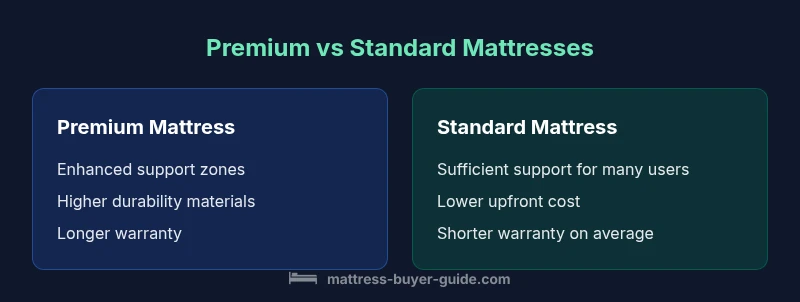
| Feature | Premium Mattress | Standard Mattress |
|---|---|---|
| Support and pressure relief | Superior contouring with targeted zones | Adequate support, less premium contouring |
| Durability and materials | High-density foams, advanced springs, premium fabrics | Lower-grade materials, faster signs of wear |
| Temperature regulation | Often better heat management with airflow designs | Variable cooling performance by construction |
| Warranty length | Longer, more comprehensive coverage | Shorter or more limited coverage |
| Price range (relative) | Higher upfront cost, strong ownership value | Lower upfront cost, potential trade-offs |
| Best for | Sleepers needing strong support and longevity | Budget-conscious buyers needing value |
The Good
- Potentially longer lifespan and better sleep quality
- Stronger warranties and material quality
- Improved motion isolation and comfort consistency
- Enhanced edge support and durability
- Better long-term value if used correctly
Cons
- Higher upfront cost
- Longer lead times or limited availability in some regions
- Less obvious benefits for casual or short-term use
- Risk of diminishing returns if not aligned with sleep needs
Premium mattresses offer clear value for many sleepers, especially those who prioritize support, durability, and long-term sleep quality.
If you sleep in a way that benefits from precise contouring and durable materials, premium models pay off over time. For others, the added cost may not justify the marginal gains.
FAQ
Are premium mattresses worth it for back pain?
Many sleepers with back pain find premium mattresses beneficial due to targeted support and alignment. However, results vary by body type and sleeping position, so a trial period is essential.
Premium mattresses can help back pain for many, but outcomes vary; test with your sleep posture during the trial.
What counts as a premium mattress?
Premium mattresses typically use higher quality materials, advanced construction, and longer warranties. They aim for better support, durability, and comfort across different sleep positions.
Premium means better materials, smarter design, and longer warranties.
How long do premium mattresses last compared to budget options?
Premium mattresses generally offer longer durability due to superior materials and construction. Longevity depends on use, care, and setup; expect slower aging with a quality build.
They tend to last longer, but care and use affect longevity.
Is there a big jump in comfort from mid-range to premium?
Some sleepers notice a meaningful difference in pressure relief and support when moving from mid-range to premium. Others may find marginal gains depending on sleep position and weight.
For many, premium offers noticeably better contouring and support; for others, the difference is subtler.
How should I test a premium mattress before buying?
Lie on the mattress in your typical positions for an extended period during the trial. Check how it feels when you wake, how it handles movement, and whether you sleep cooler.
Use the trial to test comfort over time and across positions.
Highlights
- Test premium options during trials to assess real comfort
- Value rests on sleep outcomes, not just price
- Prioritize support and durability for long-term payoff
- Warranty length matters as a proxy for durability
- Care and maintenance extend mattress life and value