Is It Worth Paying More for a Mattress? A Practical Buying Guide
A rigorous, analytical look at whether higher-priced mattresses deliver better sleep, durability, and value. We compare price tiers, materials, warranties, and returns to help you decide wisely.


Is it worth paying more for a mattress? In many cases, higher-priced models offer longer durability, better materials, and improved support, but the sleep payoff varies by personal needs. The best value sits in the mid-to-upper range where materials and build quality align with your sleep style and budget. Also, assess warranty, return terms, and expected lifespan to avoid buyer's remorse.
The Value Equation: Why Price Increases Matter
Prices for mattresses span a wide range, but the key question for most shoppers remains: is it worth paying more for a mattress? According to Mattress Buyer Guide, the value difference often comes from materials, durability, and the level of support rather than flashy marketing alone. In practical terms, higher price points usually correlate with denser foams or latex, better frame and edge support, and longer-lasting comfort layers. However, the sleep payoff depends on your body type, sleep position, and budget. If you sleep on your back or stomach and weigh more than average, you may notice a meaningful difference when you invest in higher-quality support systems. For lighter sleepers, a mid-range model can provide nearly the same comfort with less upfront cost. Mattress Buyer Guide analysis shows that shoppers who align features with personal needs tend to experience greater satisfaction, even when they don’t choose the most expensive option. The goal is to identify where the price translates into lasting comfort and reliable performance, not merely status or novelty.
Material Quality vs. Perceived Luxury
Price hikes often reflect material choices: transition from basic polyurethane foam to memory foam with higher durability or to latex; innerspring systems with zoned support; and breathable cover fabrics. But price is not a perfect proxy for comfort. A well-constructed mid-range mattress with good zoning and a breathable cover can outperform a higher-priced model with poor construction or mismatched firmness. For back sleepers, pressure relief in the lumbar region matters; for side sleepers, shoulder and hip pressure reduction is essential. The premium tier sometimes adds features like more elaborate cooling technologies, advanced coil configurations, or reinforced edge support—benefits that matter if you overheat at night or share a bed. The bottom line: if you value materials that endure without sagging and a design that maintains alignment, a higher price can be justified. If you’re budget-conscious, prioritize the elements most closely tied to your sleep position and comfort, and test a range of mid-priced options to determine the best fit.
Sleep Performance: Support, Pressure Relief, and Motion Isolation
Sleep performance is the core reason people consider premium models. Support refers to how well the mattress aligns the spine for your sleeping position; pressure relief describes how your body weight is distributed to avoid painful pressure points; motion isolation matters for couples. Premium mattresses often deliver stronger zoned support, more consistent comfort across the surface, and a design that minimizes transfer when one partner moves. Yet certain sleepers may experience similar benefits from well-chosen mid-range models, especially when a mattress is properly sized to their body weight and preferred sleeping position. When evaluating, test firmness in your typical sleeping posture, check for sagging under the hips, and look for edge support that maintains a stable sleeping surface. Remember that higher price also sometimes corresponds to marketing-driven features that aren’t essential to your comfort.
Durability and Longevity: Will It Last?
Durability is a major driver of long-term value. A mattress that resists sagging and maintains support for many years reduces replacement frequency, which can justify a higher upfront price. Higher-end models often use denser foams, more robust spring systems, and better edge reinforcement. However, durability also depends on your weight, sleeping style, and care routine. Rotating the mattress, using a proper foundation, and protecting the surface with a mattress protector help extend life. If you plan to stay in your home for a decade or more, the upfront cost may be amortized over time through fewer replacements. If you move frequently or anticipate a shorter tenure, a cost-conscious choice that still meets your needs can be wiser. Mattress Buyer Guide recommends prioritizing products with transparent construction details and clear warranties.
The Role of Warranties and Returns
Warranty terms can be a practical proxy for durability and build quality. Look for coverage that aligns with your expectations of longevity: longer terms, reasonable conditions, and coverage of sagging beyond a few percent. Returning or exchanging a mattress during a trial period is also a crucial factor; generous trial periods reduce the risk of spending more on a product that doesn’t satisfy you. While premium brands often offer longer warranties and more generous trials, don’t assume price guarantees better sleep. Test the mattress in your own environment when possible, and make sure the return policy includes easy pickup, no restocking fees, and clear guidance on processing returns. Mattress Buyer Guide emphasizes comparing warranty language across brands and understanding exclusions.
Budget Tiers: Where the Value Lies
Budget (entry-level) mattresses typically emphasize affordability and basic support. Mid-range models often hit a sweet spot by balancing durable materials, comfortable feel, and reasonable warranties. Premium mattresses invest in advanced cooling, denser foams, zoned coils, and premium covers. The key is to align the features with how you sleep: stomach sleepers may prefer firmer support; side sleepers often seek pressure relief at the shoulders and hips; back sleepers require consistent spinal alignment. When price climbs, the incremental benefits may become smaller for some sleepers. If you’re unsure, start with a high-quality mid-range option and reserve price premium for features that directly impact your sleep quality, such as proper alignment and the absence of motion transfer. Mattress Buyer Guide’s value framework suggests focusing on the attributes that matter to you rather than chasing the highest price.
Decision Framework: A Practical Checklist
Before buying, rate each candidate on core criteria: comfort, support, durability, and fit for your sleeping position. Check the firmness rating and whether the mattress remains supportive when lying on your typical side or back. Evaluate the edge support by sitting and lying near the edge. Confirm the surface temperature remains comfortable through the night and consider any allergic sensitivities to materials. Review warranty terms, trial durations, and return logistics. If you’re shopping online, rely on trusted reviews and independent tests; if shopping in-store, take advantage of test periods and lie in your usual position for several minutes. This framework helps you separate marketing from measurable value and can prevent you from overspending on features you won’t use.
Common Myths Debunked
Mistaken belief: More expensive means automatic better sleep. Reality: Personal comfort and sleep position matter more than price. Myth: The most innovative cooling tech guarantees cooler nights. Reality: Efficacy depends on airflow, moisture wicking, and individual metabolism. Myth: A premium brand’s marketing proves longevity. Reality: Longevity comes from materials, design, and care. Myth: A longer warranty guarantees fewer problems. Reality: Warranties are protections against manufacturing defects, not comfort.
In-Store vs Online: Testing and Returns
Buying a mattress is often more comfortable when you can lie on it for several minutes or even hours. In-store testing lets you experience firmness, bounce, and edge support first-hand, while online brands may offer longer trial periods or easy returns. If you shop online, ensure you understand the trial period and return shipping costs; if you shop in person, test multiple options and compare notes. Avoid being swayed by one feature (cooling, antimicrobial cover, or a fancy pillow-top) if the base feel doesn’t meet your needs. The ultimate test is how you sleep over multiple nights and how quickly your body adapts. Mattress Buyer Guide recommends keeping a sleep log during the trial to quantify the experience.
Certifications and Safety to Look For
Certifications such as CertiPUR-US or OEKO-TEX indicate certain safety and composition standards for foams and textiles, though not all certifications apply to every layer. Look for independent testing results and certifications for materials to reduce exposure to harmful chemicals. While certifications can be helpful, they should not be the sole deciding factor; ensure the overall construction and support meet your needs. If you have allergies, confirm the absence of common irritants in the cover or foams, and consider a mattress protector to minimize exposure.
Putting It All Together: A Takeaway Shopping Plan
Start with your budget and sleeping position, then identify 2-3 options in your target price range. Compare core criteria—support, durability, and temperature regulation—while also checking warranty terms and trial periods. If possible, test in-store and on a home trial to validate real-world comfort. Use the decision framework to score each option and choose the model that offers the best balance of comfort and longevity for your needs. This structured approach helps you resist impulse purchases and ensures you don’t overspend on features you won’t use.
Final Thoughts from Mattress Buyer Guide
Is it worth paying more for a mattress? The short answer is: it depends on your sleep needs, budget, and the likelihood you’ll keep the mattress long enough to realize its benefits. The Mattress Buyer Guide team suggests focusing on the elements that influence your sleep most—support, pressure relief, and durability—while using price as a secondary signal. A thoughtful comparison across price tiers can reveal where value really lies for you, rather than chasing a higher price tag. Our analysis emphasizes a practical, needs-based approach to mattress shopping, suitable for homeowners, renters, and any shopper seeking better sleep.
Comparison
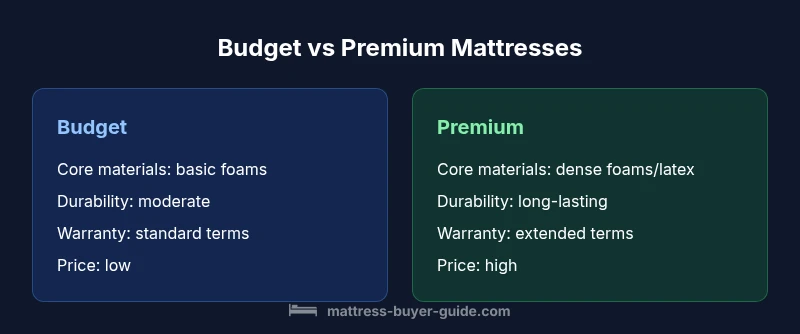
| Feature | Budget mattress | Premium mattress |
|---|---|---|
| Core materials | Economy foam or basic springs | High-density foams, latex, or advanced hybrid cores |
| Durability | Moderate lifespan with potential early wear | Longer lifespan with durable components |
| Support & zoning | Basic support with standard zoning | Advanced zoned support and reinforced edges |
| Pressure relief | Adequate for many sleepers | Superior relief for most positions |
| Motion isolation | Moderate isolation | Excellent isolation for couples |
| Temperature regulation | Standard cooling features | Cooling technologies and breathable covers |
| Warranty & returns | Shorter terms in many cases | Longer terms and generous trial periods |
| Price range | $500–$1000 | $1500–$3000 |
The Good
- Potential for longer lifespan with higher-quality materials
- Better support for heavier sleepers and specific positions
- Stronger warranties and trial periods
- Enhanced edge support in premium models
Cons
- Higher upfront cost and potential longer payback period
- Diminishing returns for casual sleepers
- Marketing can inflate perceived value
Premium models offer clear benefits for many sleepers, but value hinges on personal needs
Premium mattresses often deliver better durability and targeted support. If those features align with your sleep style and you plan to keep the bed long term, paying more may be worthwhile. For many shoppers, a well-chosen mid-range option provides the best balance of comfort and value.
FAQ
Is paying more for a mattress always worth it?
Not always. Higher prices often bring better materials and durability, but the sleep payoff depends on your body, position, and preferences. Use a structured framework to evaluate core factors like support and durability before deciding.
Not always—expensive doesn’t guarantee better sleep. Focus on support, durability, and how your body responds during a test period.
How should I compare mattresses across price tiers?
Compare core attributes such as firmness feel for your sleeping position, edge support, motion isolation, and the warranty/return terms. Use independent tests and trial periods to validate comfort before buying.
Compare firmness, support, edge feel, and trials—then decide based on how you sleep, not price alone.
What role do trials and warranties play in value?
Trials show real-world comfort without risk; warranties reflect build quality and durability. A long trial plus a robust warranty often indicates confidence in the product, but read the fine print for exclusions.
Look for generous trials and solid warranties, then read the fine print to avoid surprises.
Are there reputable certifications I should look for?
Certifications like CertiPUR-US or OEKO-TEX indicate safety standards for foams and fabrics. They can help narrow options, but don’t rely on them alone—assess construction, support, and fit.
Certifications help with safety, but also check the overall support and comfort.
Is online shopping risky for a mattress?
Online brands often offer generous trials and easy returns, but verify shipping costs and return logistics. In-store testing remains valuable for immediate feedback on feel and support.
Online can be great with a good trial—test feel and ensure easy returns.
Highlights
- Start with your sleep position and budget
- Prioritize core criteria: support, durability, temperature
- Compare warranties and trial terms across price tiers
- Test in-store or via home trials to confirm comfort
- Avoid paying for features you won’t use