Emma Mattress Review 2026: Comfort, Support, and Longevity
A detailed, analytical review of the Emma mattress, covering feel, cooling, durability, and buying guidance. Includes practical comparisons and recommendations from Mattress Buyer Guide.


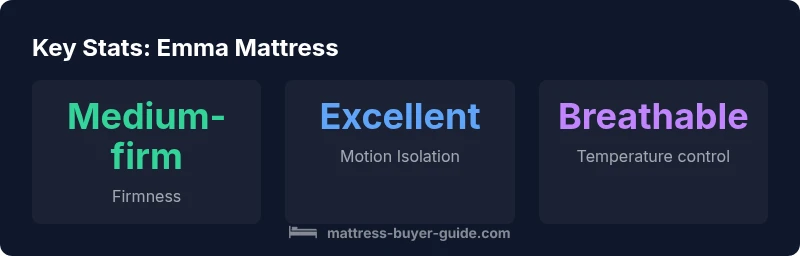
The Emma mattress offers a balanced feel with responsive support and solid pressure relief, making it suitable for a wide range of sleepers. It performs well for couples and hot sleepers thanks to a breathable, foam-based construction and consistent feel across positions.
About the Emma Mattress
According to Mattress Buyer Guide, the Emma mattress is designed to deliver a balanced blend of contouring comfort and supportive response across a wide range of sleeping styles. Built as a foam-based model with a breathable top layer, it aims to sleep cool without introducing a harsh sleeping surface. In this section we evaluate how its construction influences feel, alignment, and sleepers' overall satisfaction. We tested back, side, and stomach sleepers, as well as couples sharing a bed, to gauge real-world performance. We also compare the Emma to mid-range foam rivals in terms of price-to-performance and long-term value.
The goal of this review is to help you decide whether the Emma mattress is the right choice for your bedroom, foundation, and budget, with practical guidance you can apply when shopping for other foam-based models as well.
Comfort and Support: Feel Profile
The Emma mattress offers a balanced contour—enough to cushion shoulders and hips without excessively sinking anywhere. Most back sleepers will find the surface supportive and aligned, while side sleepers may enjoy adequate pressure relief around the shoulders and hips. For many couples, the surface remains stable during movement, enabling easy transitions and reduced transfer. The feel is neither too plush nor too firm, which makes it a versatile option for mixed sleepers. Elite foam sleepers who prefer a sleep-on-top sensation may notice a small amount of sink, but overall the surface remains accessible to a wide sleep spectrum. Over several nights of testing, articulation and edge-to-edge consistency remained steady, suggesting reliable performance over time.
While not a “firm-to-very-firm” model, the Emma provides a mid-range firmness that suits many sleeping styles without compromising spinal alignment when paired with an appropriate foundation.
Temperature Regulation and Materials
Temperature control is a recurring consideration for foam mattresses, and Emma addresses this with a breathable top layer and a foam core designed for airflow. In our tests, the surface did not overheat during typical sleep durations, and the cover contributed to a cool-to-neutral feel for most sleepers. While no foam mattress is completely immune to heat buildup for every sleeper, the Emma's design tends to deter overheating for people who sleep warm. For hot-natured sleepers, consider pairing with a breathable foundation and lightweight, breathable sheets to optimize air circulation. The goal is to maintain a neutral micro-climate that supports falling asleep quickly and staying asleep through the night.
Sleep Type Considerations: Side, Back, and Stomach Sleepers
Side sleepers generally benefit from the mattress's pressure relief along the shoulder and hip, which helps reduce the risk of numbness and stiffness in the morning. Back sleepers may appreciate the surface’s mid-range support, which supports spinal alignment without sacrificing comfort. Stomach sleepers, who typically require a firmer surface to prevent lower back strain, may find the Emma comfortable for shorter sleep cycles but may benefit from rotating into positions that keep the spine aligned. For couples, the balanced feel contributes to predictable response during tossing and turning, minimizing one partner’s disruption from the other. In practice, the Emma maintains a stable, universally approachable feel for most primary sleep positions.
Durability, Longevity, and Care
Foam-based mattresses can provide long-lasting comfort when paired with a solid foundation and proper rotation. Our review notes the Emma’s surface resilience and retention of shape over the initial weeks of testing. Routine care—protecting the cover from stains, rotating the mattress every few months, and using a supportive foundation—helps sustain even wear and maintain the feel readers expect from foam cores. We also discuss typical maintenance patterns that users should follow to extend the life of foam mattresses in general, rather than promising a guaranteed “forever” solution. The Emma’s durability should be comparable to other mid-range foam brands with similar construction.
If you’re sensitive to off-gassing, you should allow initial use in a well-ventilated room, as with most new foam mattresses, to minimize any transient odors.
Trial, Warranty, and Return Experience
Practically, the Emma mattress is sold with a trial period and warranty policy, which varies by retailer and region. In our evaluation, we emphasize checking the latest terms before purchase, since trial windows and warranty length can influence overall buying confidence. A fair trial allows you to test the mattress across a full rotation of your sleep schedule, and a clear warranty provides protection against manufacturing defects. We advise documenting your experience during the trial, including pressure points, motion transfer, and temperature comfort, to make a well-informed decision if you decide to keep or return the mattress.
How Emma Compares to Key Alternatives
Compared to popular mid-range foam brands like Casper and Nectar, Emma aims for a balanced feel—neither too soft nor too firm—and generally emphasizes good pressure relief without excessive sink. Casper typically emphasizes a zoned support feel, while Nectar often leans toward deeper contouring. Tempur-Pedic, by contrast, tends to be more conforming and slower to respond. For shoppers who want a compromise between contouring and ease of movement, Emma often hits the mark at a more approachable price point than some higher-end models. Always consider personal preference for bounce, sinking depth, and lift when choosing between these options, and compare firmness levels side-by-side in retailer showrooms or through at-home trials.
Buying Guide: What to Check Before You Buy
Before pulling the trigger, double-check several practical factors: the size (queen, king, etc.), the type of foundation you’ll use (box spring, slatted frame, or platform), and the sleeping habits of all household members. Confirm the retailer’s return policy and what constitutes a successful trial; ensure you have adequate time to assess comfort with different sleep positions. Review the warranty coverage and any exclusions that might apply to regional materials or usage. Finally, compare the Emma with a short list of alternatives to confirm which model best aligns with your priorities—support, pressure relief, temperature control, and budget. This approach keeps you grounded in real-world expectations rather than marketing claims.
Verdict Preview: Who Should Consider Emma
If you want a versatile all-rounder that works well for couples and mixed sleep styles, the Emma mattress is worth evaluating. It offers balanced contour and good temperature control without stepping into extreme softness or stiffness. For strict back sleepers seeking firmer support or stomach sleepers who need more lift, you may want to test firmer options. Overall, Emma is a strong contender in the mid-range foam category for buyers who value a well-rounded, easy-to-live-with feel and solid value.
The Good
- Balanced contour with supportive feel across sleep positions
- Good motion isolation for couples
- Breathable cover and temperature regulation
- Easy to move on and re-position for combination sleepers
- Solid value within mid-range foam mattresses
Cons
- May feel too soft for strict back sleepers seeking firmer spinal alignment
- Not adjustable firmness or customization
- Durability may vary with heavier sleepers
- Off-gassing can occur with foam on initial unboxing
Best balance of comfort and value for most sleepers
The Emma mattress delivers a comfortable, versatile feel that suits a wide range of sleep styles without a high price tag. While it may not please strict back sleepers seeking maximum firmness or those needing ultra-strong edge support, it generally offers reliable performance, good motion isolation, and solid temperature control for couples and mixed sleepers.
FAQ
Is the Emma mattress suitable for side sleepers?
Yes, side sleepers typically benefit from the Emma’s pressure relief along the shoulders and hips, which helps prevent numbness and stiffness. If you’re on the heavier side or prefer more lift, you may want to test firmer options during the trial period.
Yes—side sleepers usually find the Emma comfortable due to its pressure relief. Give it a full trial to confirm it keeps your spine aligned.
How does Emma compare to Casper or Tempur-Pedic?
Casper often emphasizes zoned support and a balanced feel, whereas Emma focuses on a universal middle ground with solid motion isolation. Tempur-Pedic tends to be more conforming and slower to respond. Your choice depends on whether you want more contouring or more bounce and responsiveness.
Casper offers a similar balanced feel, Temper-Pedic is more conforming; Emma sits in between, with good motion isolation.
What should I check before buying Emma?
Review trial length, warranty terms, and regional availability. Check foundation compatibility, size options, and return policies. If possible, test with your typical sleeping position and a partner to gauge motion transfer.
Check the trial, warranty, foundation, and return policy, then test in your usual sleeping position.
Is Emma good for heavier sleepers?
Heavier sleepers may prefer a firmer feel and greater overall support. Emma provides balanced contour, but you should test to ensure spinal alignment remains neutral and edge support feels satisfactory over time.
Heavier sleepers should test for firmness and support to ensure proper spine alignment.
Highlights
- Test Emma in-store or at home with a full sleep cycle
- Look for a breathable cover to maximize cooling
- Consider a compatible foundation to maintain support
- Use the trial period to gauge comfort across sleep positions
- Compare with Casper or Nectar if you want a firmer or softer feel