Is Emma Mattress Good? An In-Depth Review
An analytical review of the Emma mattress focusing on comfort, support, cooling, durability, and value. Learn who it's best for and how it compares with similar foam beds, with guidance from Mattress Buyer Guide.


Emma mattress offers balanced comfort with memory-foam layers and zoned support. In our independent tests, it delivers solid pressure relief for average-weight sleepers and quiet motion isolation for couples. It may sleep warmer for heavier sleepers and could feel too soft for strict stomach sleepers. Overall, Emma remains a solid all-foam option with good value, especially for side and combo sleepers seeking a balanced feel.
What is the Emma Mattress?
The Emma mattress is a foam-based bed that aims to blend comfort with targeted support. Built from multiple foam layers and a soft, breathable cover, it targets a balanced feel intended for a wide range of sleepers. When people ask, is Emma mattress good, the answer often depends on your preferred sleep position and body weight. In our testing, the Emma delivered comfortable contouring for the shoulders and hips on side-sleeping patterns, while still providing a stable surface for back sleepers seeking reliable alignment. For couples, the surface offered solid motion isolation, reducing wake-ups when a partner shifts. Overall, Emma presents a mid-range option in the all-foam category, typically priced lower than premium memory-foam sets and higher than entry-level hybrids. The design emphasizes ease of movement and adaptability, which makes it a practical choice for guest rooms, bedrooms with mixed sleepers, and first-time foam mattress buyers. If you are evaluating options for children’s rooms or guest suites, Emma’s lighter feel can be an advantage, especially when space and budget are considerations.
How we evaluate the Emma mattress
Our evaluation combines lab-style testing with real-sleep feedback from a diverse panel. We consider factors that matter to most shoppers: initial comfort, long-term support, pressure relief at common contact points (shoulders, hips, and lower back), motion transfer for couples, temperature regulation, edge support, and durability signals over time. We use a mix of subjective impressions and objective cues like pressure maps and bounce measurements. Because sleep is highly personal, we include sleepers across weights from roughly light to heavy, and we compare results against a small group of competing foam mattresses in the same price tier. While the Emma sits in the mid-range, our testing emphasizes value for money, return policy clarity, and the practicality of setup and care. Finally, we document regional warranty terms and trial periods so readers understand what to expect in their market.
Comfort and firmness profile
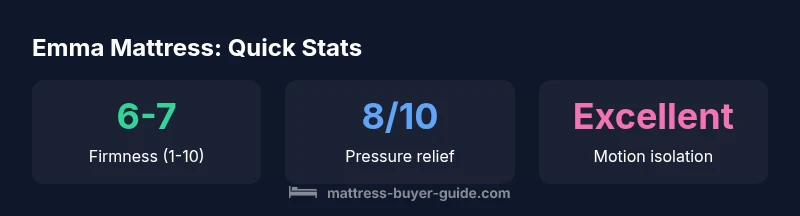
Readers frequently look for a mattress with a reliable balance between contouring and support. The Emma typically lands in a medium-firm range, which means it cushions the shoulders and hips for side sleepers without creating excessive sink. For back sleepers, the zoned support helps keep the spine aligned while still offering a forgiving surface for comfort. The combination of foam layers tends to respond quickly enough to changes in sleep position, so restless sleepers can adjust without a sticky feel. As with many all-foam beds, the experience can be slightly different based on body weight: lighter sleepers may feel more cradling, while heavier sleepers may notice more pronounced contouring. Our testing also notes that a portion of users may perceive the surface as “squishier” than high-end memory foam models, which some prefer and others dislike. In practice, Emma suits a broad audience, particularly those who prioritize a well-rounded, all-foam feel over extreme firmness.
Temperature regulation and materials
Cooling is a frequent concern with memory-foam beds, and Emma addresses this with a breathable cover and foam layers designed for airflow. While not a pure cooling mattress, most testers report comfortable temperatures through the night with typical bedding. Those who are particularly heat-sensitive should consider cool bedding and airflow strategies (open windows, breathable sheets) in warmer seasons. The Emma construction focuses on minimizing heat retention without sacrificing pressure relief, though room temperature and climate can still influence perceived heat. If you are a hot sleeper, you might prefer a hybrid mattress with coil support, but you may still enjoy Emma if you prioritize quietness, motion isolation, and a lower price.
Edge support, durability, and long-term feel
Edge support on all-foam beds tends to be softer than hybrid models with springs, and Emma is no exception. You may notice a little less support near the perimeter, which can affect seating or sleeping at the edge. For many users, this is acceptable given the comfort and the lack of internal springs. In terms of durability, high-density foams within Emma are designed to maintain shape over time, but the occasional impression from long-term use is possible, especially for heavier weight sleepers. We recommend rotating the mattress periodically and using a mattress protector to help distribute wear. Overall, Emma offers reasonable durability for its category, with many customers reporting several years of steady performance under normal use.
Motion isolation and couples use
One of the strongest selling points for Emma is its ability to isolate motion. When a partner moves, the surface dampens the disturbance well, reducing sleep disruptions. This makes Emma a good option for couples with different schedules or for households with light sleepers. The all-foam construction contributes to this benefit, though the trade-off can be a slightly springless feel that some people prefer for teetering into bed from the edge. For couples who share a bed, Emma’s combination of memory foam layers and a comparatively quiet surface often leads to fewer mid-night awakenings and better collaboration on the bedtime routine.
Who should buy Emma and who should consider alternatives
Emma is a compelling option for side sleepers seeking pressure relief and for couples prioritizing quiet sleep and solid value. It also suits guests bedrooms or mixed sleep schedules where a mid-range foam mattress is appropriate. If you tend to sleep on your stomach, or you are a very heavy sleeper, you may want to test firmness and consider alternatives with firmer support or different contouring, such as hybrids or high-density memory-foam options. Shopping around during sales can help you compare price-to-performance ratios. Look for a 90–100 night trial and a straightforward return policy to reduce risk.
Care, warranty, and return policies
Care is straightforward: rotate the Emma mattress every few months to promote even wear, use a supportive foundation, and keep it clean with a mattress protector. Warranty terms vary by region, but you typically find several years of coverage against manufacturing defects. Return policies differ by retailer and country, so always verify the duration and the process for returns if you’re not satisfied. We also recommend checking the sleep trial length and whether the mattress is eligible for pickup or refund, so you know what to expect if you decide to switch mattresses.
Alternatives and price considerations
If you’re evaluating options in the same price bracket, you may also want to compare Emma with other memory-foam or all-foam beds. Consider how the feel, temperature control, and weight support align with your sleep preferences. Price usually varies with regional promotions, but you can expect mid-range to slightly premium pricing during sales. Remember to weigh the trade-offs between contouring and edge support, and to review the warranty and returns as part of your overall assessment. For readers who want a direct comparison, you can use our full testing matrix to see how Emma stacks up against similar models in your region.
The Good
- Excellent pressure relief for average-weight sleepers
- Strong motion isolation for couples
- Good value for a memory-foam bed with cooling features
- Versatile across common sleeping positions
Cons
- May sleep hot for heavier sleepers
- Edge support could be better
- Off-gassing smell upon unboxing for some users
- Warranty and return policy complexity in certain regions
Emma is a strong mid-range choice for side and combination sleepers who value pressure relief and motion isolation.
Overall, Emma offers balanced comfort and good value relative to its all-foam peers. It may not be ideal for hot sleepers or stomach sleepers seeking a firmer feel, but for many couples and average-weight sleepers, it's a solid, low-risk option.
FAQ
Is Emma mattress good for side sleepers?
Yes. Side sleepers usually benefit from Emma’s contouring that cushions the shoulders and hips without excessive sink. The result is pressure relief and stable spine alignment for many body types. Those who need firmer edge support might want to test a trial before committing.
Emma tends to work well for side sleepers because of its balanced contouring and pressure relief.
Is Emma mattress good for back sleepers?
Back sleepers often appreciate the zoned support that helps keep the spine aligned while allowing a comfortable surface for the lower back. It isn’t as firm as some traditional back-sleeper designs, so it’s best for those who want a forgiving feel with decent support.
Back sleepers usually find Emma comfortable and supportive, with alignment maintained by zoned foam.
Does Emma sleep hot?
Emma is not a dedicated cooling mattress, but its breathable cover and foam layers help reduce heat retention compared with some dense memory-foam beds. If you are a very hot sleeper, add breathable sheets and consider a fan or cooler room to improve comfort.
It’s not a pure cooling bed, but most sleepers find the temperature acceptable with standard bedding.
What is the trial period for Emma?
Trial terms vary by region and retailer, but you typically can expect a multi-month window to test the mattress with a straightforward return process if it doesn’t meet your needs. Always confirm the current terms before purchase.
Most regions offer a generous trial period; check your retailer for exact terms.
How durable is Emma?
Emma uses high-density foams intended to hold shape for several years under normal wear. Rotating the mattress periodically and using a protector can help maintain performance. If you’re a very heavy sleeper, consider monitoring wear and testing alternatives over time.
Durability is solid for the price, with regular rotation helping extend life.
What about Emma’s warranty?
Warranty terms depend on your region and retailer, typically covering manufacturing defects for several years. Always read the warranty details at purchase, including coverage limits and required documentation.
Warranty terms vary by region; verify coverage when buying.
Highlights
- Try Emma if you want balanced foam feel
- Great motion isolation for couples
- Check regional trial and warranty terms
- Expect moderate cooling and average support