Can You Return a Mattress If You Don’t Like It? A Practical Guide
Learn whether you can return a mattress if you don’t like it, how to start the process, and common terms. This practical guide from Mattress Buyer Guide covers timelines, fees, and alternatives, helping homeowners and renters navigate sleep-trial policies confidently.


Can you return a mattress if you don’t like it? In many cases, yes, you can, but terms vary by retailer and the sleep-trial policy. Start the process before the trial ends, keep the original packaging if possible, and follow the retailer’s return directions to avoid fees. This quick pathway helps you learn what to expect and how to start the process.
How return windows and conditions work
Can you return a mattress if you don’t like it? This is a common question, and the short answer is: it depends on the retailer and the sleep-trial terms. In practice, most reputable mattress brands offer some form of trial period or return policy, but the exact rules—such as how long you have to decide, what the mattress must look like, and whether there are restocking or pickup fees—vary widely. According to Mattress Buyer Guide, the key to a smooth return is understanding the specific terms on your receipt and in the retailer’s policy. The team also notes that you should act within the allowed window and preserve the original packaging whenever possible, since these factors often influence eligibility and refunds. By knowing these nuances, homeowners and renters can decide with clarity and reduce post-purchase anxiety.
How to start a mattress return: best practices
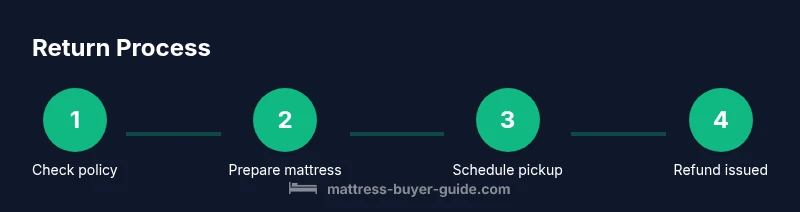
Launching a mattress return begins with gathering essential information. Locate your order number and receipt, then read the sleep-trial terms for any exclusions or deadlines. Initiate the return through the retailer’s portal or customer service, and keep written records of every communication. If pickup is required, confirm the date, time window, and who will be responsible for transport. Document this process with screenshots or emails in case there are questions later. A proactive approach helps you avoid delays and ensures you stay within policy guidelines. Mattress Buyer Guide’s guidance emphasizes starting early and communicating clearly with the seller to prevent misunderstandings that could complicate the refund or exchange.
Common exceptions and what to watch for
Not all returns are permitted. Some retailers designate final-sale items, opened foundations, or discontinued models as non-returnable. Hygiene considerations can also play a role; if the mattress has visible stains, odors, or signs of heavy use, eligibility may be reduced or denied. Likewise, restocking fees or pickup charges can affect your refund amount. Always verify the exact terms before you buy and again before initiating a return. The goal is to avoid surprises and understand what qualifies as a returnable mattress, so you aren’t surprised by a denial or partial refund later on.
Refunds and timelines: what you can expect
Refund timing is largely determined by the retailer and payment method. Some refunds are issued back to the original payment method, while others are issued as store credit. Processing times can vary from a few days to multiple weeks after pickup or drop-off, depending on the retailer’s internal systems. If you encounter delays, keep a record of your return ID, employer name, and date of communication. Staying organized helps you resolve delays more quickly and with less frustration.
Alternatives to a straight return
If a full return isn’t possible, look for alternatives like an exchange for a different model, store credit, or a warranty-based replacement if a defect exists. Some retailers offer a prorated refund or a partial credit depending on how long you’ve owned the mattress and its condition. If you discover a manufacturing defect, you may be eligible for a replacement under the warranty even if a straightforward return isn’t permitted. Exploring these options early can save you time and money while ensuring you get closer to a satisfying sleep solution.
Reducing risk when shopping for a mattress
Proactive planning is your best defense against post-purchase returns. Compare sleep-trial terms across several retailers, and ask questions about pickup logistics, fees, and whether defects are covered under warranty. Look for models with longer trial periods and clearer, consumer-friendly terms. Understanding the policy before buying helps you avoid the situation where you need to return and reduces the chance of disputes later. This approach aligns with Mattress Buyer Guide’s emphasis on informed decisions and practical, user-focused guidance.
What to document for a smooth return
Keep all documentation organized: receipts, order confirmations, photos of the mattress in its packaging, and any correspondence with the seller. Note dates, names of representatives, and the steps you took to start the return. If there are defects, photograph them clearly and time-stamp the images. This evidence streamlines the process and increases your likelihood of a fair refund or exchange. Maintaining a tidy record also helps you resolve questions quickly should there be any disagreement with the retailer.
Next steps after initiating a return
After your return is initiated, stay proactive. Track the pickup status, confirm the refund or credit timeline, and retain all confirmation numbers. If the refund is delayed, escalate with supervisor-level support and request written confirmation of promise-to-refund. The Mattress Buyer Guide team recommends following up until the transaction is complete, then noting the outcome for future reference when shopping for your next mattress.
Tools & Materials
- Receipt or order confirmation(Proof of purchase; confirms date within policy window.)
- Original packaging(Keep wrap or box if possible to demonstrate return eligibility.)
- Photos/videos of mattress condition(Helpful if you’re contesting wear or defects.)
- Measuring tape or markers(For documenting dimensions if needed for pickup.)
- Dolly or moving blankets(Assist with moving the mattress securely.)
Steps
Estimated time: 1-3 weeks
- 1
Check policy and window
Review the sleep-trial terms and any restrictions. Ensure you are within the allowed window and that the mattress is in returnable condition.
Tip: Read the exact wording in your receipt and the retailer’s policy. - 2
Gather documentation
Collect receipt, order number, packaging, and any photos that show the mattress condition.
Tip: Photograph any defects clearly to support your claim. - 3
Contact the retailer
Reach out via the retailer’s portal, email, or customer service to initiate the return and schedule pickup if required.
Tip: Document the date and names of representatives you spoke with. - 4
Prepare the mattress for pickup
Reinforce the packaging if you have it; keep the cover and plastic wrap; place in a location convenient for pickup.
Tip: Avoid harming the mattress or violating household safety rules during handling. - 5
Coordinate pickup or drop-off
Arrange a pickup time that aligns with your schedule and the retailer’s processes; confirm any fees.
Tip: Ask about any restocking or transportation fees upfront. - 6
Track refund or credit
Monitor the refund method (credit, original payment) and timelines; keep records of all communications.
Tip: If timelines extend, escalate with customer service. - 7
Evaluate alternatives if needed
If a return isn’t possible, consider exchanges, store credit, or warranty-based replacement.
Tip: Ask about prorated refunds or credits. - 8
Follow up and finalize
Confirm the completion of the return and obtain written confirmation of the outcome.
Tip: Save all documents for future reference.
FAQ
Do all retailers allow mattress returns?
Not all retailers allow returns; terms vary widely, especially on sleep trials and final-sale items.
Most retailers offer some form of sleep trial, but always check the exact terms.
What if the mattress is on sale or final sale?
Sale or final-sale items may be excluded from returns; read the policy and ask sales staff before purchase.
Sales items can be final sale; verify before assuming return eligibility.
Are there any fees for returns?
Some retailers charge restocking or pickup fees; these can affect the refund amount.
There can be fees, so ask about any costs upfront.
How long does a refund take after a return?
Refund timelines vary by retailer and payment method; follow up if the credit isn’t issued in the stated timeframe.
Refunds can take days to weeks depending on the retailer.
What condition qualifies for a return?
Mattresses should be in saleable condition and returned with packaging; stains or damage can affect eligibility.
Keep it clean and in good condition to support eligibility.
What should I do if the seller refuses the return?
Ask for a written explanation and escalate to consumer protection if needed; retain all documentation.
If a retailer refuses, request a supervisor and consider filing a complaint if appropriate.
Watch Video
Highlights
- Check retailer policy and stay within the window.
- Keep receipts and packaging to prove eligibility.
- Document condition and track refunds.
- Ask about fees and alternatives like exchanges.
- Choose retailers with clear, consumer-friendly sleep-trial terms.