Difference Between a Mattress and a Mattress Topper
Explore the difference between a mattress and a mattress topper, including construction, comfort, lifespan, and when to choose each for better sleep quality. Practical guidance from Mattress Buyer Guide.


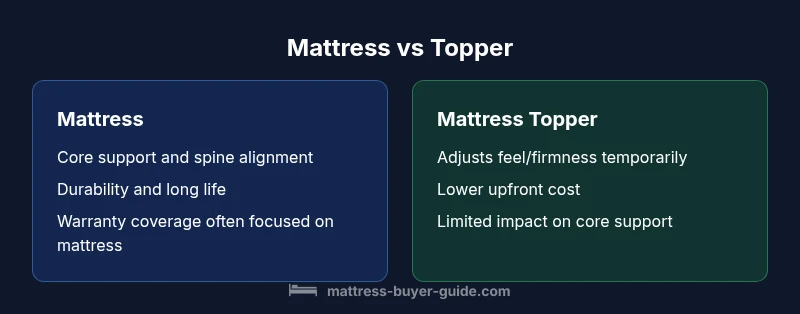
The difference between a mattress and a mattress topper is that a mattress provides the primary support and long-term structure, while a topper sits on top to alter feel. For lasting comfort, replace a worn mattress; toppers are best for temporary fixes or minor adjustments. Use toppers to fine-tune firmness or temperature, not as a substitute for a poor mattress.
What is the difference between a mattress and a mattress topper? Definitions and roles
At the core of any sleep setup, the mattress is the foundation. It provides the main support for your spine, hips, and shoulders and bears the load over years of use. A mattress topper, by contrast, is a relatively thin layer placed on top of an existing mattress to adjust firmness, add a layer of comfort, or address temperature concerns. The phrase difference between a mattress and a mattress topper is not just a semantic distinction; it reflects two different strategies for achieving a better night’s sleep. When you encounter the phrase difference between a mattress and a mattress topper in consumer guides, you’ll see emphasis on long-term support versus short-term feel adjustments. Mattress Buyer Guide’s analyses emphasize that most people should treat a topper as a supplement—not a substitute—for a worn or sagging core, because toppers cannot fully restore the foundational support of a tired mattress.
Why this distinction matters for sleep quality and health
Your sleep quality hinges on proper spinal alignment and pressure distribution. A bed that lacks adequate support can lead to morning pain and disrupted sleep cycles. In the context of the difference between a mattress and a mattress topper, the mattress is responsible for baseline support, while a topper can modify feel and pressure relief. A topper might help if you’re in-between mattress feels, if your bed is still structurally sound but you want to experiment with firmness, or if you’re dealing with a night-sweat issue and need a cooling surface. Mattress Buyer Guide notes that the decision should be guided by core condition, budget, and long-term sleep goals, with toppers serving as a transitional tool rather than a replacement.
Reading the landscape: common scenarios where each option makes sense
Many shoppers begin by considering a topper as a low-risk, low-commitment test. If your current mattress is reasonably new and shows limited sagging, a topper can fine-tune comfort without a full mattress replacement. Conversely, if you wake with stiffness, notice pronounced sagging, or if sleep quality has deteriorated after many years, replacing the mattress often yields greater value and better health outcomes. This framing—topper for adjustment, mattress for foundational support—helps clarify when to invest in each option and when to combine them carefully under proper conditions.
Comparison
| Feature | Mattress | Mattress Topper |
|---|---|---|
| Core purpose | Provides long-term support and spinal alignment | Sits atop the mattress to change feel or add a layer of comfort |
| Materials and construction | Full mattress construction with springs, foam, latex, or other core materials | Thin layer, usually memory foam, latex, or polyfoam; thickness varies |
| Impact on longevity | Typically longer lifespan; wear is tied to overall mattress health | Dependent on topper quality; does not restore a worn foundation |
| Best for | Foundational support needs; chronic aches from mattress wear | Testing firmness changes; addressing minor comfort gaps on a good mattress |
| Maintenance and care | Follow mattress care guidelines; rotate, protect with a cover, air periodically | Requires topper-specific care; ensure it stays in place and lint-free |
| Temperature control | Broad range of materials; can include zoned support and cooling features | Depends on topper material; some cooling foams exist but are secondary |
| Installation ease | One-piece product; bed setup remains unchanged | Easy retrofit; simply place on top of existing mattress |
| Cost and value | Higher upfront cost for a full replacement; value accrues with years of use | Lower upfront cost; value depends on topper thickness/material |
| Warranty and returns | Matters more for the mattress; toppers may have separate terms | Warranty often varies by brand; verify terms for both components |
The Good
- Allows customization without replacing the entire sleep surface
- Low upfront cost to test new feels before buying a new mattress
- Can extend the life of a mattress with proper protection
- Useful for transitional periods (e.g., in-between moves or budgets)
Cons
- Does not fix a worn or sagging mattress core
- Comfort gains may diminish over time as underlying wear continues
- Can create an uneven feel if not matched to the mattress and bed frame
- Thicker toppers may require deeper sheets or bed fittings
Upgrade the mattress for lasting support; toppers suit short-term tweaks
For long-term health and sleep quality, replacing a worn mattress is typically the better value. A topper is ideal for testing firmness changes, customizing feel, or delaying a full mattress purchase while you observe how you sleep.
FAQ
What is the main difference between a mattress and a mattress topper?
The mattress provides primary support and structure, while a topper sits on top to adjust feel. A topper is not a substitute for a sagging or worn mattress.
A topper changes feel, but the mattress does the heavy lifting for support. If you notice sagging, consider replacing the mattress.
Can a topper fix a sagging mattress?
A topper can offer temporary relief, but it cannot restore the structural support of a sagging mattress. Replacing the mattress is usually the better long-term solution.
A topper might help a little, but if the mattress sags, you’re better off with a new mattress.
How thick should a topper be for optimal comfort?
Topper thickness depends on your sleep needs and current mattress feel. Common ranges are 2-4 inches, with thicker options offering more dramatic changes.
Think of it as a dial: thicker toppers change the feel more, but you still need a solid mattress underneath.
Are toppers covered by mattress warranties?
Warranty coverage varies by brand and product. Always check the specific terms for both the topper and the underlying mattress.
Warranties vary—read the terms for both topper and mattress before buying.
When should I replace my mattress rather than relying on a topper?
If you experience chronic pain, noticeable sagging, or nights of poor sleep despite adjustments, a full mattress replacement is generally the best long-term choice.
If sleep quality stays poor even after adjustments, it’s time for a new mattress.
How should I care for a mattress topper?
Follow the topper’s care instructions, usually involving regular rotation, protective covers, and spot cleaning as needed. Ensure it stays aligned with the mattress surface.
Clean and rotate it as directed; keep it covered to extend life.
Highlights
- Upgrade when persistent discomfort and sagging persist
- Use toppers to test firmness or address temporary comfort gaps
- Match topper thickness to underlying needs and bed setup
- Budget-conscious shoppers can start with a topper but beware of over-reliance