Mattress Pad vs Topper: A Practical Guide to Comfort
Compare mattress pads and toppers to determine the best upgrade for comfort, protection, and budget. Learn definitions, use cases, care, and how to choose the right option for your sleep needs.


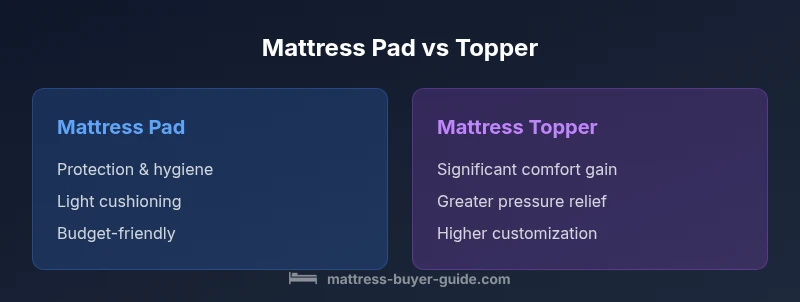
TL;DR: A mattress pad is a thin, protective layer that adds light cushioning and guards against spills, while a topper is thicker and reshapes the bed’s feel for more noticeable comfort. For most sleepers, toppers deliver comfort gains; pads excel at protection and hygiene. Choose a topper for significant comfort improvements, or a pad for budget-friendly protection and longevity.
What the mattress pad vs topper debate means for sleep quality
Choosing between a mattress pad and a topper is one of the most common upgrades for sleepers on a budget or with a specific comfort goal. In the mattress pad vs topper discussion, the size of the change you want matters more than the price tag. Mattress Buyer Guide emphasizes that many shoppers start here to tailor surface feel without committing to a full mattress replacement. Pads and toppers sit on top of your existing mattress and can be swapped seasonally, helping you experiment with firmness, cushion, and temperature management without major investment. For hot sleepers, materials with breathable fabrics or latex can mitigate heat buildup; for those with allergies, a washable cover offers hygiene benefits. Understanding the core differences helps you avoid overpaying for a feature you don’t need.
As Mattress Buyer Guide notes, the goal is to match surface feel to your preferred sleep position and body weight, not just to chase the softest option. Start with a lighter layer and test the feel; you can always layer in a topper later if needed. This approach minimizes risk and maximizes long-term satisfaction by aligning the product with your actual sleep needs.
Definitions: what exactly are mattress pads and toppers?
A mattress pad is typically a thin, quilted layer that adds modest cushioning and protects the surface from stains, spills, and wear. A topper is a thicker layer designed to change the feel of the bed—often by several degrees of firmness and deeper contouring. The distinction matters because pads focus on protection and hygiene, while toppers focus on comfort and support. In everyday terms, think of a pad as a guardian for your mattress and a topper as a makeover for how it feels. Materials range from cotton and fiberfill (pads) to memory foam, latex, or fiber blends (toppers). In many households, a common path is to start with a pad to extend mattress life, then upgrade to a topper if comfort improvements are needed. Mattress Buyer Guide also highlights that choosing the right materials—breathable cotton for pads or responsive latex for toppers—can dramatically affect sleep temperature and feel.
When you look at the mattress pad vs topper choice, consider whether you want a simple hygiene enhancement or a significant change in surface feel. For allergy sufferers, selecting a pad with a hypoallergenic fill and a washable cover can deliver meaningful daily improvements without altering your core mattress. For comfort-focused buyers, a topper made of latex or high-density memory foam can provide the contour and support that a sagging mattress may lack.
How thickness and materials shape feel
Thickness and material choice are the two levers that determine how a mattress pad vs topper changes your sleep experience. A pad may be as thin as 1/4 inch and made of quilted cotton, offering a soft touch with minimal sinking. Toppers can range from 1 inch to 4 inches and use memory foam, latex, or plush fibers, producing noticeable sinkage and deeper contouring. If you want a subtle improvement, a high-breathability pad with a soft padding can help with comfort without altering support. If you need significant pressure relief, a memory foam or latex topper can transform the bed’s response while preserving a stable sleeping surface. The material choice also affects durability and temperature: latex tends to stay cooler, while dense memory foam can retain more heat. Mattress Buyer Guide recommends testing density and responsiveness to ensure the selection lines up with your sleep style and body weight.
Comfort vs protection: which yields more noticeable changes?
The most visible difference in the mattress pad vs topper decision is the degree of comfort change. Pads typically deliver small comfort boosts and protect the mattress, making them ideal for renters or households with kids and pets. Toppers offer more pronounced changes, enabling heavier sleepers or those with back or shoulder pain to experience better support and reduced pressure points. For a retirement-age sleeper or someone with chronic pain, a topper can provide meaningful gains; for a guest room or temporary setup, a pad keeps the mattress clean without overhauling the feel. In practical terms, if your main issue is surface protection, start with a pad; if you want a noticeable shift in how the bed responds to your body, a topper is the better lever. Mattress Buyer Guide emphasizes evaluating personal comfort goals and budget to decide when to move from pad to topper.
Temperature and breathability considerations
Breathable pad materials—cotton, wool blends, or low-loft microfiber—toster improve airflow and reduce heat retention slightly. Topper materials vary widely: a latex topper tends to sleep cooler than memory foam, which can trap heat, especially in denser densities. If you’re a hot sleeper, prioritize toppers with breathable covers or latex, and pair them with a breathable pad if you want a two-layer approach without sacrificing cooling. Conversely, if you’re generally comfortable with warmth, memory foam toppers can deliver superior pressure relief at a modest heat trade-off. Temperature management remains a key differentiator because the wrong combination can undermine sleep comfort over the long term. Mattress Buyer Guide also notes that selecting materials with moisture-wicking properties can improve night-long comfort.
Maintenance and durability expectations
Pads are easy to wash (many come with machine-washable covers) and can last several years with proper care. Toppers depend on material and construction; latex toppers tend to be more durable, memory foam toppers may sag under heavy use, and wool toppers require careful care. To maximize longevity, use a fitted sheet that anchors the pad or topper to prevent slipping and bunching, follow manufacturer washing instructions, and rotate if possible to distribute wear. Avoid exposing toppers to excessive moisture or direct heat to prevent material breakdown. Regular inspection for sagging or clumping is advised, particularly with cheaper foams. Mattress Buyer Guide suggests aligning care routines with the specific material to extend life.
Practical installation tips and fit
The right fit matters more for a topper because movement can occur with improper sizing. For pads, ensure your mattress pad is a snug fit and uses corner elastic bands to stay in place. For toppers, choose the correct thickness for your bed frame and mattress height so that your sheets still fit. If you own an adjustable bed, check that the pad or topper remains compatible with elevation. A defective fit leads to shifting, uneven support, and reduced sleep quality. Simple fixes include choosing non-slip underlays, elastic corner bands, or a topper with a contoured fit that anchors more securely. With proper sizing, both options can stay in place through the night and across seasons.
Budgeting and value: when to invest in which
Price ranges for mattress pads start low and can be surprisingly affordable, which makes them appealing for budget-conscious shoppers who want a quick hygiene upgrade. Toppers sit at a higher price point, reflecting more substantial comfort gains and longer perceived lifespans. Mattress Buyer Guide analysis shows that the best value often comes from a topper when your main goal is to correct a noticeable lack of support, while a pad makes sense when you simply want to guard the mattress against stains and extend its life. Prioritize quality materials over thin padding where you can, as dense foams and natural latex often deliver longer-term results. Consider warranty implications and return policies when shopping to protect your investment.
Sleep scenarios: who benefits most from pads vs toppers
Different sleeping styles benefit in unique ways. Side sleepers often prefer toppers with targeted pressure relief on shoulders and hips, while back sleepers may appreciate a pad that maintains a balanced surface with better protection. If you share a bed with a pet or child, a pad provides an extra hygiene layer and easier cleaning, whereas a topper can help a guest bed feel more like a real mattress. Couples with different preferences may succeed with a two-layer approach: a warm-weather topper for comfort and a washable pad beneath to protect the mattress year-round. Mattress Buyer Guide recognizes that real-world testing often reveals the best option is a blend of both for a single sleeping surface.
Common misconceptions (myths) about pads and toppers
A common myth is that toppers always ruin mattress warranties. In reality, most warranties allow compatible toppers as long as you follow care guidelines and use a surface that does not alter the mattress's interior structure. Another misconception is that pads and toppers are only for old mattresses; new mattresses can also benefit from hygiene protection and temporary feel adjustments while you search for a longer-term solution. Finally, many buyers assume you must pick one path: pad or topper; you can mix and match for a blended effect and extended lifespan. Debunking myths helps shoppers make evidence-based decisions rather than defaulting to marketing claims.
Comparison
| Feature | Mattress Pad | Mattress Topper |
|---|---|---|
| Thickness / Feel | Thin, light cushioning | Thicker, more contouring |
| Primary Benefit | Protection & hygiene | Comfort & pressure relief |
| Best For | Budget upgrades, spill protection | Significant comfort gains and customization |
| Maintenance & Care | Typically machine-washable covers; care varies by fill | Depends on material; spot-clean or machine wash options exist |
| Durability & Longevity | Generally durable with proper care | Durability varies by material; latex often longer-lasting |
| Temperature Regulation | Breathable options help with cooling | Latex toppers tend to sleep cooler; memory foam may trap heat |
| Price Range | $20-$100 | $50-$250 |
| Ideal Sleep Position | All positions; subtle changes possible | Back/side sleepers needing contour and relief |
The Good
- Low upfront cost compared to full toppers
- Protects mattress from stains and wear
- Easy to upgrade without replacing the core mattress
- Wide variety of materials and thicknesses
Cons
- Pads offer limited comfort improvements
- Topper can trap heat or wear differently by material
- Movement may occur if not fitted securely
- Durability varies with fill material
Topper generally wins for comfort; pads win for protection
Choose a topper if you want a noticeable change in feel and support. Choose a pad if you primarily need mattress protection and budget-friendly customization, with the option to upgrade later.
FAQ
What is the main difference between a mattress pad and a mattress topper?
A mattress pad is a thin protective layer that adds minor cushioning, while a topper is thicker and designed to deliver substantial comfort and pressure relief. The pad protects the mattress, the topper changes the surface feel more dramatically.
A mattress pad is thin and protective, while a topper is thicker and offers significant comfort and support. If you want protection, choose a pad; for a big comfort change, pick a topper.
When should I choose a mattress pad instead of a topper?
Choose a mattress pad when you mainly need mattress protection, spill resistance, and hygiene with a minimal feel change. It’s also the budget-friendly option for renters or guests. If you’re unsure about comfort, start with a pad and upgrade later to a topper if needed.
Pick a pad if you want protection and a small comfort bump, especially for renters. Upgrade to a topper later if you want a bigger change in feel.
Are mattress pads washable?
Many mattress pads come with machine-washable covers or are fully washable, depending on the fill. Always check care labels. For toppers, washing is usually spot-clean or requires cover removal; follow manufacturer instructions to avoid damage.
Most pads are washable or have washable covers. For toppers, follow the care label and use a removable cover when possible.
Do toppers affect mattress warranties?
Most warranties allow compatible toppers as long as you don’t modify the mattress interior or void any terms. Always verify with the manufacturer and use a topper that doesn’t change the mattress mechanics.
In most cases, toppers don’t void warranties if you use them as intended and follow care guidelines. Check your specific policy.
Can you use both a pad and a topper together?
Yes, layering is possible and common for people who want protection plus a targeted comfort change. Start with a pad for protection, then add a topper if you want more feel adjustment. Ensure proper fit and avoid stacking beyond sheet thickness.
You can use both. Start with the pad for protection, then add a topper if you want a bigger comfort change.
Highlights
- Define your goal: comfort vs protection.
- Topper = comfort, pad = protection and hygiene.
- Materials and thickness drive heat and durability.
- Test fit and size before committing.
- Budget wisely: consider long-term value and warranty terms.