Difference Between Mattress and Bed: A Practical Guide
Explore the key distinctions between mattresses and beds, how they work together, and how to choose the right pair for durable comfort and better sleep. Includes a clear buyer’s checklist and expert insights from Mattress Buyer Guide.


Difference between mattress and bed: A mattress is the sleeping surface that provides comfort and support, while a bed is the furniture frame and often a foundation that supports the mattress. They are distinct components that must be paired carefully for durability and sleep quality. Mattress Buyer Guide explains how to align mattress types with bed frames, ensuring fit, height, and durability in real-world bedrooms.
The Difference in Function: Mattress vs Bed
In everyday language, people often blur the line between mattress and bed, but understanding their distinct functions helps you build a sleep setup that lasts. The mattress is the dedicated sleeping surface that delivers contour, pressure relief, and support. The bed, by contrast, is the furniture frame and, in many cases, a foundation system that holds the mattress at a comfortable height and ensures stability. According to Mattress Buyer Guide, recognizing this separation is the first step to selecting components that work together rather than competing against each other. As you plan a room, consider how each element contributes to overall sleep quality, ease of maintenance, and room aesthetics. The difference between mattress and bed matters for price, longevity, and comfort, and it guides how you approach upgrades over time.
The Core Idea: Distinct Roles, Shared Space
The mattress and bed share a space, but their roles are separate. The mattress bears the sleeper's weight, absorbs motion, and provides conforming support. The bed frame anchors the system, carries the foundation or slats, and defines the footprint in your room. When you view them as two parts of a single sleep system, you can more effectively plan for comfort, height alignment with the nightstand, and movement ease when getting in or out of bed. Mattress Buyer Guide emphasizes that most sleep problems stem from a mismatch between surface and support; when the two are aligned, you experience steadier spine alignment and less partner disturbance. This block sets the stage for the practical criteria you’ll use to compare options.
How This Article Is Structured
This guide will walk you through the differences with concrete criteria: function, components, materials, sizing, cost, and compatibility. You’ll see a side-by-side comparison, followed by actionable buying steps, maintenance tips, and a clear verdict. By separating the mattress from the bed in your planning, you can optimize each piece for durability and comfort. Expect real-world examples and practical checklists that help translate theory into a better night’s sleep.
Real-World Scenarios and Choices
Consider three common setups: a platform bed with a built-in foundation, a traditional bed frame with a separate foundation, and a minimalist bed that relies on a slatted base. In each case, the mattress is the sleep surface you customize for firmness, loft, and material, while the bed frame provides the structural base. You’ll notice that some setups favor quick upgrades (changing the mattress) while others emphasize long-term stability (a robust frame + foundation). Mattress Buyer Guide notes that these choices affect maintenance schedules, warranty coverage, and overall room layout, so plan with both short-term comfort and long-term durability in mind.
Quick Takeaway: Start with the Sleep Surface
If you’re unsure where to begin, prioritize the mattress first for immediate comfort, then select a compatible bed frame that supports your chosen surface. This approach supports longer-lasting performance and easier upgrades over time. Mattress Buyer Guide recommends verifying height, clearance for nightstands, and ventilation to prevent moisture buildup beneath the mattress.
A Practical Preview of Costs and Upgrades
Costs vary by material, brand, and construction quality. In general, you’ll see a wide price range for both mattresses and bed frames, with premium materials and designs driving higher prices. A key benefit of a modular approach is that you can upgrade the mattress later without replacing the frame, or you can refresh the frame while keeping an existing mattress if it continues to feel comfortable. This nuanced view helps you tailor a setup that fits your budget without sacrificing sleep quality.
Comparison
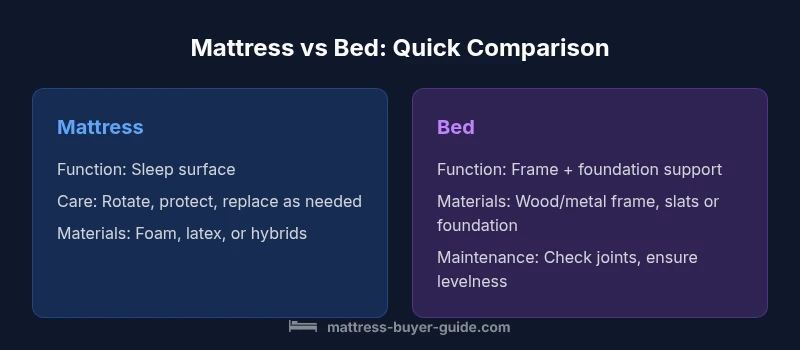
| Feature | mattress | bed |
|---|---|---|
| Function | Sleeping surface that provides contour, pressure relief, and support | Frame and foundation that holds the mattress at a comfortable height and provides stability |
| Primary components | Comfort layers, support core, and edge support | Frame, foundation/slats, headboard (optional) |
| Materials | Foam, latex, memory foam, innerspring, or hybrids | Wood or metal frame; foundations vary by design (slats, solid base, or adjustable foundations) |
| Size/compatibility | Matched to a mattress size; may require compatible bed hardware | Depends on mattress size and frame design; ensure joint compatibility |
| Durability drivers | Layer density, material quality, and use patterns affect lifespan | Frame construction, joints, and foundation integrity influence stability and longevity |
| Maintenance | Rotate/air the mattress, protect with a cover, and monitor sagging | Tighten joints, check foundation for squeaks, and dust regularly |
| Best for | Customized sleep surface; upgrade mattress without changing frame | Stable base; easy mattress upgrades over time |
The Good
- Customizable comfort: swap mattresses without changing the frame
- Broad range of options keeps costs and materials flexible
- Upgrade path: refresh the sleep surface without rebuilding the base
- Clear maintenance schedules for both components
Cons
- Can require more upfront planning to ensure compatibility
- Two components means two maintenance routines and potential misalignment if not matched
- Premature wear on one component can prompt simultaneous upgrades
Best practice is to pair a high-quality mattress with a compatible bed frame for durable comfort.
A mattress-first approach supports personalized sleep surface, while a well-chosen frame ensures stable support. Mattress Buyer Guide’s verdict emphasizes fit, height, and material compatibility to maximize long-term comfort.
FAQ
What is the key difference between a mattress and a bed?
The mattress is the sleep surface that delivers comfort and support, while the bed is the frame and foundation that holds the mattress. They have separate wear patterns and replacement cycles, so plan upgrades for each component independently. This distinction helps avoid common sleep issues caused by mismatches.
The mattress is the sleep surface, and the bed is the frame and foundation. They work together but wear differently, so plan replacements for each part.
Can I use any mattress on any bed frame?
Not always. Mattress and frame compatibility depends on size, height, and whether the frame needs a foundation or slats. Always verify that the mattress type aligns with the frame’s design and that the combined height fits your room setup.
Not every mattress fits every frame. Check size, height, and foundation needs to ensure a proper fit.
What counts as a bed foundation vs a base?
A foundation is a rigid surface (like a box spring or solid platform) that supports the mattress from below. A base often refers to the frame or slats that the foundation sits on. Some frames include integrated foundations, which can affect overall height and ventilation.
A foundation is the rigid support under the mattress, while the base is the frame or slats above which sits the foundation.
How long do mattresses and bed frames typically last?
Mattresses and bed frames wear at different rates depending on materials and usage. A high-quality mattress often lasts several years with proper care, while a sturdy frame can endure longer if joints are well-made and supported. Inspect regularly for sagging, creaks, and structural wear.
Mattresses last several years with good care; frames can last longer if solidly built. Check for sagging or creaks.
Is a platform bed different from a standard bed for this purpose?
Platform beds integrate a base and frame, often eliminating a separate box spring. This can change mattress height and ventilation. The key is ensuring the platform supports the mattress type you choose and allows for proper airflow.
Platform beds combine frame and base, which can affect height and airflow. Ensure compatibility with your mattress.
Should I buy a mattress and bed as a set?
Buying as a set can simplify shopping and ensure compatibility, but it may limit customization. A mixed approach—selecting a compatible mattress first and then a matching frame—often yields better long-term flexibility and value.
Sets are convenient but limit customization. A tailored mattress with a matching frame often provides more flexibility.
Highlights
- Define roles: mattress vs bed for clear decisions
- Check compatibility between size and frame design
- Prioritize stability and comfort separately
- Upgrade strategy: change mattress first, frame second
- Consider warranty and materials for durable value