How Mattress Foam Is Made: A Step-by-Step Guide
Explore the science and steps behind polyurethane mattress foam production, from raw materials and reaction chemistry to curing, testing, and safety. Learn how the foam you sleep on is crafted for comfort, durability, and health.


Foam mattress foam is made by reacting polyols with diisocyanates to create polyurethane foam. The formulation includes catalysts and blowing agents to control cell size and resilience. The liquid foam is poured into molds, expands as it cures, and then is trimmed, layered, and tested for density and durability before final covers are added. This process varies by product type, but the core chemistry remains polyurethane-based.
What is mattress foam made of?
Understanding how mattress foam is made begins with the chemistry of polyurethane. The main ingredients are polyols and diisocyanates, which react to form polyurethane foam. Additives such as catalysts, surfactants, blowing agents, and flame retardants tune density, firmness, and cell structure. In flexible foams used for comfort layers, the cell structure is mostly closed, giving support and durability, while open-cell foams offer breathability.
The exact recipe varies by product type—memory foam, standard polyurethane foam, and high-resilience foams all rely on the same basic reaction but differ in additives and the proportion of ingredients. In memory foam, for instance, viscoelastic properties are achieved through specific polymers and crosslink density. The phrase how mattress foam is made appears again here to emphasize the core idea: it is the ratio of polyol to diisocyanate and the chemistry of the blowing system that sets texture, resilience, and longevity. This is why two foams labeled with similar densities can feel very different. Quality begins in formulation, but its behavior is also shaped by the curing conditions and subsequent lamination with other materials.
The chemical reaction behind polyurethane foam
Polyurethane foam is formed by a controlled reaction between a polyol and an isocyanate. When these two reactive groups meet, they form urethane linkages that build a long polymer chain. The reaction is exothermic and is influenced by catalysts that accelerate the process and surfactants that stabilize bubble formation. A blowing agent creates gas bubbles, producing a cellular structure that defines firmness and resilience. In memory foam, additional polymers and crosslinks add viscoelastic behavior, so the foam gradually softens under load and returns slowly to shape.
The overall result is a foam with varying cell sizes and densities, which producers call density and ILD (indentation load deflection). A finer cell structure generally yields a smoother feel and longer-lasting support, while larger cells can feel springier. The precise balance of ingredients determines how the foam behaves under different sleep positions and temperatures. Understanding how mattress foam is made at this level helps you compare foams across brands that use similar densities but different chemistry.
Raw materials and sustainability considerations
Most mattress foams start with petrochemical-derived polyols and diisocyanates such as MDI or TDI. Some manufacturers are moving toward bio-based polyols, recycled content, and low-VOC formulations to reduce environmental impact. Isocyanates require careful handling and engineering controls to protect workers, and finished foams are tested for emissions and safety. Blowing agents have shifted over time toward more eco-friendly options, including water-based blowing or low-global-warming-potential gases. When evaluating foams, look for certifications like CertiPUR-US, which assess content and emissions, though they do not guarantee comfort, durability, or sleep health alone. The goal is to balance performance with safety and sustainability without compromising comfort. Mattress foam suppliers also report supply-chain considerations, such as resin availability and regulatory compliance, that can influence price and option selection for consumers.
The manufacturing process: from liquids to layers
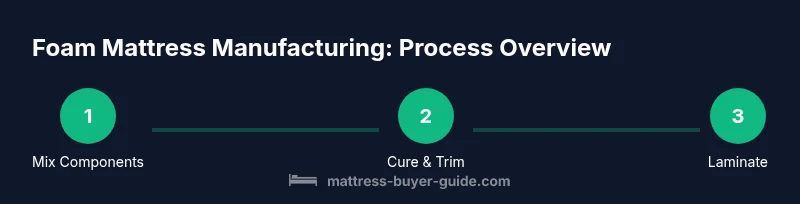
The journey from liquid chemistry to a finished foam layer involves several stages. First, the polyol and diisocyanate blends are prepared in precise ratios and mixed with catalysts, surfactants, and blowing agents. The liquid mix is then introduced into a heated mold or conveyor system where it expands, foam cells form, and curing begins. After initial set, the foam may be trimmed to target thickness and combined with other layers, such as transitional foams or memory foam layers, to create a multi-layer comfort system. The lamination process, trimming, and quality checks ensure uniform density and firmness across the panel. Finally, the foam is tested for mechanical durability and emissions, and the finished assembly receives its cover and finish materials. The entire sequence is designed to produce predictable performance, with each batch tested for consistency in density, ILD, and resilience. The phrase how mattress foam is made recurs here to show how each step connects to the final feel.
Different foam types and their impact on feel
In mattress construction, polyurethane foam comes in several forms. Standard polyurethane foam provides core support and durability, while memory foam relies on viscoelastic properties to slow the return after compression. High-resilience foams offer bounce with resilience for broader support. The way a foam feels—soft, medium, or firm—depends on its density, cell structure, and additives. Layering different foams is a common approach to balance comfort and support. For example, a memory foam comfort layer atop a firmer polyurethane base can reduce motion transfer while preserving overall support. When comparing products, pay attention to density (kg/m3) and ILD ratings, as these influence whether how mattress foam is made will feel plush or supportive across different sleepers and temperatures.
Safety, certification, and quality control
Safety and quality are essential in foam manufacturing. Finished foams are tested for emissions, leaving low levels of VOCs, and for mechanical durability to ensure long-lasting support. Certifications such as CertiPUR-US and similar programs indicate compliance with consumer-safety standards for content and emissions, though they do not assess comfort. Sleep health research emphasizes that product safety and consistent performance contribute to better sleep over time. Brands may disclose foam source regions and raw material suppliers, helping consumers evaluate durability, temperature control, and longevity—key factors tied to how mattress foam is made.
Tools & Materials
- Safety gear (gloves, goggles, respirator)(Essential for handling diisocyanates and blowing agents)
- Mixing vessels and agitators(Stainless steel or non-reactive materials; keep surfaces clean)
- Temperature-controlled curing area(Maintains consistent foam properties and prevents hotspots)
- Molds and conveyors(Shaping and transporting foam through the line)
- Blowing agents and catalysts(Control cell structure and reaction rate)
- Quality testing equipment (density gauge, indentation tester)(Verify batch consistency and performance)
- Ventilation and fume hood(Critical for worker safety during formulation)
Steps
Estimated time: 60-120 minutes
- 1
Prepare raw materials
Weigh polyols, diisocyanates, catalysts, surfactants, and blowing agents in precise ratios. Ensure PPE and ventilation are in place before handling any chemicals. This step establishes the baseline for reaction control.
Tip: Double-check batch records and confirm safety gear is worn before mixing. - 2
Pre-mix reactive components
Combine polyol and diisocyanate with catalysts in a controlled mixer. The goal is a uniform blend to promote even cell formation and predictable curing.
Tip: Avoid over-mixing to prevent premature heat buildup. - 3
Introduce blowing agents and stabilizers
Add blowing agents to generate gas cells, and incorporate surfactants to stabilize cell walls. This step determines the foam’s texture and density.
Tip: Follow manufacturer guidelines for max allowable blowing agent exposure. - 4
Pour into molds and initiate cure
Transfer the liquid foam into molds or onto a conveyor where it expands and begins curing. Temperature control is essential for uniform cell structure.
Tip: Monitor ambient temperature and foam height during expansion. - 5
Trim and laminate layers
Once set, trim excess foam to target thickness and assemble with additional layers to create a multi-layer comfort system.
Tip: Ensure alignment to prevent edge gaps that affect durability. - 6
Quality testing and emissions check
Test density, ILD, and resilience; conduct emissions tests to verify safety. Document results for traceability.
Tip: Reject any batch that fails critical safety specs. - 7
Finalize with cover and packaging
Apply protective covers, perform final inspections, and prepare products for shipment. Visual and tactile checks confirm the intended feel.
Tip: Tag batches with lot numbers for traceability.
FAQ
What is the difference between memory foam and standard polyurethane foam?
Memory foam is a viscoelastic polyurethane with added polymers that slow recovery, offering contouring support. Standard polyurethane foam is firmer and more resilient, with faster recovery. The key differences are density, ILD, and heat retention.
Memory foam contours more and returns slowly, while standard polyurethane foam is firmer and bounces back quicker.
Is mattress foam safe for sleep health?
Most foams sold for mattresses meet emissions and content standards, and many carry certifications. However, safety is just one part of the equation; consider comfort, durability, and fit to your sleep needs.
Yes, many mattress foams meet safety standards, but check certifications and layer construction for comfort.
What does CertiPUR-US certification mean?
CertiPUR-US certifies foam content and emissions to certain standards; it does not rate comfort, durability, or sleep outcomes. Look for other performance specs when comparing products.
CertiPUR-US shows the foam meets safety emissions standards, but it doesn’t say how it feels.
How is foam firmness controlled during manufacturing?
Firmness is controlled by foam density, ILD, and layer composition. Production parameters such as temperature and curing time also influence the final feel.
Density, ILD, and the way layers are combined determine firmness.
Can foam be eco-friendly or bio-based?
Some foams use bio-based polyols or recycled content, and manufacturers seek lower-VOC formulations. Availability varies by product and brand.
There are eco-friendly options, but check certifications and full material disclosures.
How can I tell if a foam is high quality?
Look for density and ILD specs, independent certifications, and third-party testing. Warranties and transparent ingredient sourcing also help.
Check density, certifications, and test results to judge quality.
Watch Video
Highlights
- Understand the core chemical reaction that forms polyurethane foam
- Recognize how density and ILD shape the final feel
- Look for certifications like CertiPUR-US for safety content
- Acknowledge sustainability trends in raw materials and blowing agents