How to Know When a Mattress Needs Replacing
Learn how to evaluate your mattress for wear, sagging, and comfort changes. Follow a clear, step-by-step approach to decide whether to replace or maintain, with maintenance tips and practical signals to watch for.


You’ll learn to decide if your mattress needs replacing by checking sagging, wear, and comfort changes. Assess your sleep quality, persistent pain, and allergy symptoms. Consider the mattress type and age, then use a simple decision framework to choose replacement versus maintenance. This quick guide gives you a clear path with minimal tools.
Signs your mattress may need replacing
A mattress should support your spine in a neutral alignment and feel comfortable across the night. Look for clear indicators of wear that affect comfort and support:
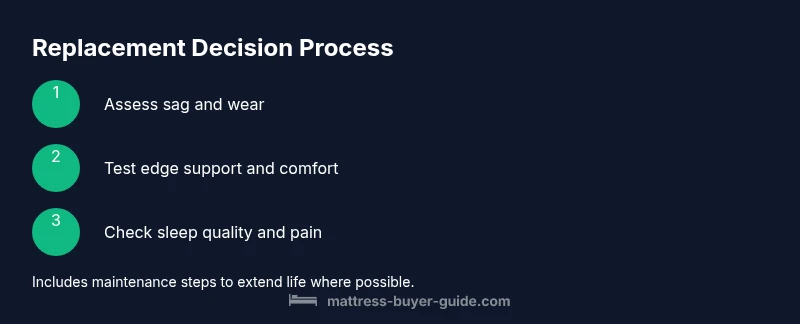
- Visible sagging, deep indentations, or lumps that don’t recover after waking. These deformities can alter sleep posture and contribute to morning pain.
- Edges that collapse or feel unstable, making it hard to sit or sleep near the edge.
- Persistent pain after sleep, especially in the back, shoulders, or hips, which often signals insufficient support.
- Ongoing allergy symptoms or difficulty breathing that seem tied to trapped dust mites or other irritants within the mattress.
- Unusual odors, moisture, or signs of staining that you can’t fully clean—these may indicate hygiene issues and material breakdown.
If several of these signs appear, it’s worth considering replacement. The Mattress Buyer Guide team notes that comfort loss and poor support are the strongest cues to re-evaluate your bed (Mattress Buyer Guide Analysis, 2026).
How age, materials, and wear affect lifespan
Mattress longevity depends on construction and how you sleep, not just a calendar age. Different materials naturally wear differently, and usage patterns matter as well:
- Memory foam tends to soften and lose its ability to contour over time, which can reduce support and increase motion transfer.
- Latex and high-density foam often hold shape longer and resist sag, but heavier use can still create soft spots.
- Innerspring and hybrid models may exhibit coil fatigue, edge softness, or increased bounce that dulls over years of use.
The key takeaway is to evaluate how your current sleep feels rather than relying on a fixed age. The Mattress Buyer Guide recommends factoring in both material quality and real-world performance when deciding whether to replace.
The practical test you can perform at home
A structured at-home assessment helps you quantify comfort and support without professional gear:
- Prepare a flat, firm surface and lie on your typical sleeping position for 10–15 minutes to judge spinal alignment and comfort.
- Test edge support by sitting on the mattress edge for several minutes; if you sink noticeably or feel unstable, note it as a concern.
- Do a turning test: roll from back to side to see if changes in pressure points cause pain or stiffness.
- Check for motion transfer by having a partner move on the mattress; excessive movement transfer can indicate foam or spring fatigue.
Document impressions in a notebook to compare with future nights and guide whether to replace or maintain. The data from these checks can be more telling than age alone.
Sleep quality, pain signals, and daily symptoms
Quality sleep is the most direct signal of mattress performance. If you wake up stiff, achy, or with mimic symptoms across multiple nights, it may reflect insufficient support or pressure relief. Also watch for:
- Frequent tossing and turning due to discomfort in hips or shoulders.
- Numbness or tingling after waking, which can indicate pressure points.
- Increased allergy symptoms that persist despite cleaning, suggesting inner mattress materials are breaking down.
These are not only about comfort; they affect daily energy, mood, and productivity. A mattress that consistently undermines restorative sleep warrants serious consideration for replacement.
Maintenance practices that extend mattress life
Before rushing to replace, you can often extend life with targeted care:
- Rotate or flip (if supported by design) every 3–6 months to distribute wear evenly and preserve support.
- Use a high-quality mattress protector and address spills promptly to avoid stains and moisture buildup.
- Keep the sleeping environment cool and dry to slow material degradation and improve longevity.
- Vacuum the mattress surface periodically to reduce dust and allergen buildup without using harsh cleaners.
- Follow manufacturer care instructions, as improper cleaning can hasten deterioration.
While maintenance helps, it can’t restore a mattress with significant sag or persistent pain. In that case, replacement is often the best long-term investment for sleep health.
When to decide to replace vs. repair
Replacement decisions hinge on comfort, support, and overall sleep quality, balanced against cost and misuse. Consider:
- If you notice persistent pain, increasing sag, or reduced sleep quality despite maintenance, replacement is usually warranted.
- If the mattress has a finite warranty and visible manufacturing defects align with warranty terms, you may pursue a replacement or repair under coverage.
- If you share a bed, consider whether your partner’s comfort aligns with yours; a mismatched experience can justify a new mattress paired with a separate bed setup.
A practical framework is to compare the ongoing cost of diminishing sleep quality against the price and benefits of a new mattress. Mattress Buyer Guide’s verdict emphasizes prioritizing long-term sleep health over short-term savings.
When to consult a professional and warranty considerations
If you’re unsure, consult a sleep or bedding professional who can assess spine alignment and pressure distribution. Check your mattress warranty for coverage on sagging, indentations, and manufacturing defects—these can influence replacement decisions. When filing a claim, document wear patterns, age, and care history to support your case. Remember that most warranties require normal use and proper upkeep to remain valid.
Final thoughts: building a replacement plan
Create a practical replacement plan that aligns with your budget and sleep needs. Start with a readiness checklist: current sleep quality, pain level, visible wear, and the availability of a suitable replacement option. If you decide to replace, consider a trial period and a solid returns policy to ensure the new mattress meets your expectations. This structured approach keeps you focused on sleep health rather than impulse purchases.
Tools & Materials
- Measuring tape(To measure sag depth and edge drop during the assessment)
- Flat, firm surface(Place mattress on a sturdy bed frame or floor for accurate testing)
- Notepad and pen(Record observations, times, and any patterns in sleep quality)
- Mattress protector (optional)(Useful for maintenance and spill prevention during testing)
- Pillow(s) and comfortable clothing(Helps replicate typical sleeping conditions while testing)
- Smartphone or camera (optional)(Capture photos of sag patterns or edge deformation for comparison)
Steps
Estimated time: 60-90 minutes
- 1
Prepare the testing setup
Clear the area around the bed, ensure the mattress is clean and dry, and place it on a stable surface. Gather your notebook and measuring tape to document observations. This step ensures your measurements are reliable and repeatable.
Tip: Use a helper to hold the mattress edge steady for more accurate edge tests. - 2
Baseline comfort check
Lie on your usual sleeping position for 10–15 minutes and assess comfort, support, and alignment. Note any waking stiffness or changes in pressure points.
Tip: Record comfort on a simple 1–5 scale to compare over time. - 3
Edge support and deformation
Sit at the edge for several minutes to test support. Check for excessive sinkage or instability that would affect getting in and out of bed.
Tip: If you noticeably dangle or feel unstable, edge support is weak. - 4
Sag and indentations test
Use the measuring tape to gauge visible sag and indentations when lying flat and then roll to a side position. Assess whether the surface returns to shape promptly after movement.
Tip: Document any slow rebound or persistent depressions. - 5
Motion transfer and partner test
Have a partner move on the mattress while you lie nearby to observe motion transfer and disturbance. Excess movement can disrupt sleep.
Tip: High motion transfer is common in older foams and worn coils. - 6
Assess sleep quality and symptoms
Compare recent nights’ sleep quality, pain levels, and allergy symptoms. Determine if sleep improvement would likely come from replacement or maintenance.
Tip: If symptoms persist for weeks, replacement is worth considering. - 7
Decision and next steps
Weigh comfort, support, and cost against replacement. If you choose to replace, explore models with strong support and trial periods.
Tip: Keep a notes file to compare options and track outcomes after purchase.
FAQ
What signs indicate I should replace my mattress soon?
Look for significant sag, visible wear, persistent pain after sleep, and reduced sleep quality over weeks. If these signs appear, replacement is often the best option for restoring comfort and support.
Watch for sagging, wear, and ongoing pain after sleep as the main signals to consider replacement.
Can I replace only one side of a split mattress?
If you have a split setup, assess both sides for wear. Replacing only one half is sometimes possible, but ensure compatibility and balanced support for your sleeping partner.
Sometimes only one side can be replaced, but check compatibility and overall comfort for both sleepers.
I sleep well most nights. Is replacement still needed?
Occasional good nights don’t guarantee long-term support. If you notice new stiffness, pressure points, or disturbed sleep, replacement may be warranted despite short-term comfort.
Even if you sleep well now, watch for changes in support and comfort over time.
How does warranty affect my replacement decision?
Warranties cover certain defects and may offer a replacement option. Review terms carefully and document wear patterns, age, and care history to determine eligibility.
Check the warranty terms and document wear to see if you qualify for a replacement.
How often should I rotate or flip my mattress?
Rotate every 3–6 months if the mattress design allows it. Flipping may not be recommended for all models; follow the manufacturer’s guidance to avoid damage.
Rotate regularly as advised by the maker to keep wear even.
What should I do with an old mattress?
Check local discard programs or recycling centers. Some manufacturers offer take-back options, and many retailers provide haul-away services with new purchases.
Look for local disposal or recycling options when replacing your mattress.
Watch Video
Highlights
- Evaluate sag, wear, and comfort changes regularly.
- Consider mattress type and real sleep quality, not just age.
- Use home tests to guide replacement versus maintenance decisions.
- Maintenance can extend life, but major pain or persistent sag usually means replacement.
- Plan replacements with trial periods and understanding of warranty coverage.