Mattress Full vs Double: A Comprehensive Sizing Guide
A detailed, analytical comparison of mattress full vs double sizing across regions, including dimensions, bedding compatibility, frame fit, and practical buying tips from Mattress Buyer Guide.


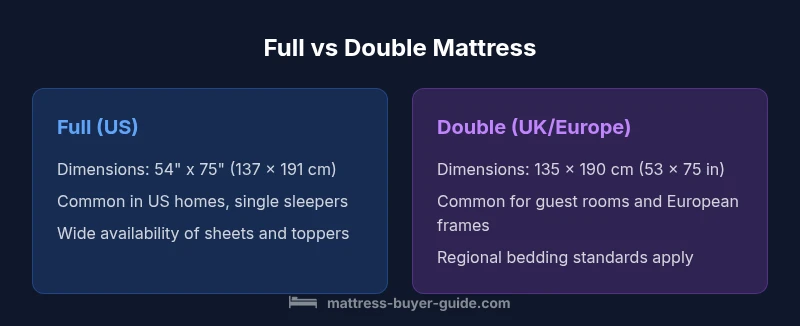
Full and Double refer to the same footprint in many markets, but regional naming can create confusion. In the US, a full typically means 54 by 75 inches, while in the UK/Europe, a double generally corresponds to about 135 by 190 cm. For most buyers, the choice hinges on bed frame compatibility and bedding availability, not the label itself.
What 'Full' and 'Double' Really Mean Across Regions
When shoppers encounter the terms mattress full and mattress double, the first hurdle is regional naming. In the United States, the term full is commonly used to describe a 54 by 75-inch mattress. In contrast, the United Kingdom and much of Europe typically use double to denote a very similar footprint, around 135 by 190 cm. Mattress Buyer Guide notes that while the footprints are close, the nomenclature can mislead cross-border purchases or online orders. This article uses the keyword mattress full vs double to ground the discussion and help you translate labels into actual dimensions and bedding needs, so your purchase aligns with your space and sleep style.
Across regions, the practical takeaway is simple: measure your bed frame and check sheet sizes before buying. The most important factor is whether the mattress will fit your frame and your sheets—labels rarely tell the full story. Mattress Buyer Guide analysis shows that region-specific naming can lead to buying mistakes if you assume identical dimensions based on the name alone.
In this guide we’ll unpack the sizing nuance, explain bedding implications, and offer a clear decision framework. This is especially useful for homeowners and renters who need to optimize guest rooms, kids’ rooms, or small bedrooms without sacrificing comfort. By focusing on actual measurements and compatibility, you’ll navigate the full vs double decision with confidence.
Regional Naming Conventions and Why They Matter
The mattress industry uses regional labels that reflect local markets rather than universal standards. In the US, “full” is a standard size that fits most twin- or full-size bed frames and offers a practical balance for single sleepers who want extra space without moving up to a queen. In the UK and many parts of Europe, the term “double” is used for a shoulder-to-shoulder sleeping footprint that often aligns with the 135x190 cm measurement. The difference in naming can cause confusion when shopping online across borders or when researching international brands. Mattress Buyer Guide emphasizes verifying exact dimensions rather than assuming equivalence by name. For a precise fit, always cross-check the numeric dimensions against your bed frame and bedding.
This distinction also affects bedding purchases. If you buy sheets based on the label alone, you might end up with a size that is too snug or too loose. Always confirm the sheet corner fit (elasticized corners vs. pockets) and the pocket depth to ensure a proper seal around the mattress border. In short, knowing the local convention can prevent mismatches and improve sleep quality by ensuring your setup matches your actual measurements.
Dimensions and What They Mean in Practice
The most reliable way to compare full vs double is to look at the actual numbers. A typical US full mattress measures 54 inches wide by 75 inches long (137 cm by 191 cm). By contrast, a UK double mattress commonly measures about 135 cm wide by 190 cm long (53 inches by 75 inches). While the two sizes are similar in length, there is a modest difference in width that can affect frame fit and sheet availability. When planning a room layout, you’ll want to know the footprint you’re working with and how that footprint aligns with your bed frame, headboard, and nightstand spacing. If you’re sharing a bed, note that the 9–10 inch difference in width can impact side-space and comfort, especially for couples.
If you’re shopping online, the best practice is to measure both the frame and the mattress space, then compare those dimensions to the product specs. If dimensions are unclear, contact the retailer’s support team to confirm. Mattress Buyer Guide recommends using a soft measuring tape and recording width, length, and corner clearance to avoid surprises at delivery and installation.
Bedding Compatibility: Sheets, Protectors, and Fitted Covers
Bedding readiness is a practical concern when deciding between full and double. In the US, you’ll find a wide range of fitted sheets labeled for full size, while UK retailers use double-size terminology for sheets that fit roughly the same footprint. The exact pocket depth and elastic fit matter more than the label. If you’re ordering online, check the product page for pocket depth (for example, 12–15 inches) and the fabric content to ensure a snug fit. Mattress protectors and toppers should align with standard full or double dimensions, but always verify corner shapes and edge configurations, as some mattress toppers are optimized for particular profiles. Mattress Buyer Guide highlights that mismatched sheets are a common source of friction for new owners, so measure and verify before checkout.
For households that rotate between regional suppliers (e.g., when moving between North America and Europe), consider purchasing sheet sets that explicitly state compatibility with both full and double labels or investing in adjustable sheet options that accommodate minor dimensional varations.
Frames, Foundations, and Support: The Structural Side of the Equation
Frame compatibility is often overlooked, yet it determines long-term mattress performance. A full mattress will fit most standard full frames, foundations, and platform beds in the US. In Europe, a double-sized bed frame is more common, but frames labeled as double may correspond to slightly different tolerances depending on the manufacturer. If your bed uses slats, ensure the slat spacing and total frame width align with the mattress margin. A tight fit can cause edge compression or a wobbly surface, undermining comfort. If you plan to use a box spring or a hybrid foundation, verify the weight rating and height—these components interact with the mattress height to influence bed aesthetics and accessibility. Mattress Buyer Guide advises confirming the compatible foundation type with the retailer to prevent returns and compatibility issues later on.
Comfort, Thickness, and Sleep Style Beyond Size
Size is only one axis of comfort. Full/double mattresses come in a variety of thicknesses—often ranging from around 8 to 14 inches—affecting contour, support, and feel. Thicker models offer more cushioning and can accommodate heavier sleepers or couples who share a bed. However, thicker mattresses require higher bed frames and may impact access to stairs or lower ceilings in some rooms. When evaluating a full vs double option, consider your preferred sleep position, weight distribution, and whether you prefer a firmer or softer feel. If you have back pain or a specific sleep health concern, prioritize models with targeted support zones and durable materials, such as high-density foams or pocketed coils. Mattress Buyer Guide notes that the right choice balances space, comfort, and support for your body, rather than chasing a single metric like thickness.
Price, Availability, and Value Across Regions
Price and availability for full and double sizes can vary by region, retailer, and promotional cycles. In general, pricing is influenced by materials, brand, and inclusions (like toppers or protective covers). While the footprint is similar, regional demand and supply can shift the value equation. The key takeaway is to compare apples to apples: look at the total value, including warranty terms, return windows, and delivery options, rather than just the sticker price. Mattress Buyer Guide emphasizes looking for robust warranties and reasonable return policies, especially when buying cross-region or from unfamiliar retailers. Consider waiting for sales calendars or bundled offers to maximize value without compromising quality.
Quick Decision Framework: When to Choose Full vs Double
- Choose Full if you want more personal space in a solo setup and your US bed frame aligns with standard full dimensions. It’s a practical, space-saving choice for smaller bedrooms and guest rooms where a queen would feel overwhelming.
- Choose Double if you’re in the UK/Europe or plan to relocate, and you want a footprint that fits common European frames and bedding. It’s often the default for guest rooms and homes with standard European single or twin configurations. In both cases, verify exact dimensions, bedding compatibility, and frame fit before buying. Mattress Buyer Guide recommends aligning the label with actual measurements to avoid sizing errors.
Care, Longevity, and Maintenance for Both Sizes
Maintenance is size-agnostic, but longevity is influenced by usage and care. Rotate or flip as recommended by the manufacturer and use a quality foundation to maintain even support. Regularly vacuum the mattress top to remove dust and use a washable protector to reduce staining. If you share a full or double with a partner, rotating the mattress every few months helps distribute wear and maintain comfort. If you notice persistent sagging or contouring, consider switched to a higher density support or a new mattress with reinforced edge support. Mattress Buyer Guide highlights these maintenance strategies as essential for maximizing the life of any size.
Comparison
| Feature | full (US) mattress | double (UK/Europe) mattress |
|---|---|---|
| Dimensions | 54 x 75 in (137 x 191 cm) | 135 x 190 cm (53 x 75 in) |
| Bed Frame Compatibility | Widely compatible with US full frames | Common with UK/Europe double frames; verify exact tolerances |
| Sheet Availability | Full sheets widely sold in US retailers | Double sheets standard in UK/European retailers |
| Price Range | Similar across regions for comparable materials | Similar ranges, depending on brand and materials |
| Best For | Solo sleepers, compact bedrooms | Guest rooms, shared spaces in Europe/UK |
The Good
- Identical footprint in many markets facilitates cross-region swaps
- Space-saving option for small bedrooms
- Broad availability of accessories and bedding
Cons
- Regional naming can still cause ordering confusion
- Minor dimensional tolerances may affect sheet fit or frame clearance
- Cross-border shopping may require careful dimension verification
Full and Double are essentially the same footprint; choose by regional naming, frame fit, and bedding availability.
In practice, the choice between full and double hinges on locale and compatibility rather than a meaningful difference in sleeping space. Verify actual dimensions and bedding before purchase, and align with your bed frame and sheet options. The Mattress Buyer Guide Team recommends confirming exact measurements to avoid mismatches.
FAQ
What is the practical difference between a mattress full and a double?
Practically, full and double often describe the same footprint (54x75 inches in the US vs roughly 135x190 cm in the UK/Europe). The main distinction is regional naming, so always confirm exact dimensions before purchasing.
Generally, full and double refer to the same size, but double-check the exact measurements when shopping abroad.
Are full and double compatible with the same bed frames?
Most US full frames will fit a full mattress, while UK/European double frames require matching dimensions. Always verify frame width and any bed rail tolerances to ensure a snug fit.
Yes, but verify exact widths and frame specs before buying.
Where can I buy sheets for a full or double mattress?
Sheets labeled for full or double are widely available in their respective regions. If you shop online, double-check the product description and ensure pocket depth matches your mattress height.
Look for sheets labeled for full or double, and double-check pocket depth.
Do full and double differ in depth or thickness?
Depth varies by model, not by label. Both sizes can come in the same range of thicknesses (for example, 8–14 inches). Consider your comfort preference and frame height when choosing thickness.
Depth varies by model; check the product specs for thickness.
Is there a price difference between full and double sizes?
Price typically reflects materials and brand more than size alone. Full and double sizes often sit in similar price ranges within the same brand and materials.
Prices are usually similar; focus on materials and warranty instead.
Which size is better for a guest room?
For guest rooms, a full or double is a practical compromise between space and comfort, depending on the room dimensions and expected guest profiles. Consider whether solo guests or couples are the typical guests.
Great for guest rooms when you want comfort without sacrificing space.
Highlights
- Measure your bed frame before buying
- Know local naming conventions to avoid sizing mistakes
- Check sheet sizes and pocket depth for a proper fit
- Prioritize frame compatibility and warranty terms over label