Purple Mattress vs Tempur-Pedic: Comprehensive Comparison
An objective, evidence-based guide comparing Purple and Tempur-Pedic mattresses across feel, cooling, support, durability, and value to help homeowners decide which bed suits their sleep.


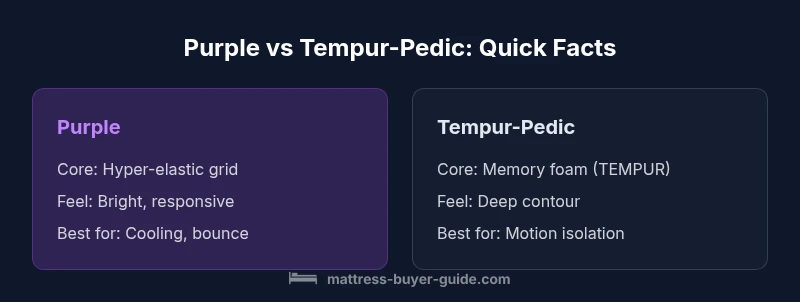
Purple vs Tempur-Pedic compares two distinct sleep philosophies. Purple emphasizes cooling and a responsive feel, while Tempur-Pedic prioritizes deep contouring and motion isolation. If you want breathable comfort at a mid-to-premium price, Purple often shines. If you value precise body-hugging support and minimal partner disturbance, Tempur-Pedic can be a better fit. A deeper analysis follows.
Why Purple Mattress vs Tempur-Pedic Matters
In the crowded mattress market, Purple and Tempur-Pedic represent two distinct design philosophies. Purple uses a hyper-elastic polymer grid layered over comfort foam to deliver a responsive, breathable sleep surface. Tempur-Pedic relies on memory foam infused with TEMPUR material to create a lasting contour and quiet atmosphere. For homeowners evaluating sleep quality, durability, and value, understanding these differences helps align a mattress with sleep position, weight, climate, and budget. According to Mattress Buyer Guide, this comparison aims to unpack feel, cooling, support, and ownership costs without marketing fluff. This article uses independent criteria to help you decide based on real-world performance rather than brand hype.
Materials and Feel: What’s Under the Cover
Purple's comfort starts with the grid layer—the open, bouncy structure that compresses under weight but springs back quickly. This grid is supported by a base foam that keeps edges usable and stabilizes the surface. The result is a surface that feels breathable and buoyant, with a quicker response to movement. Tempur-Pedic models depend on memory foam infused with TEMPUR material, delivering slow, progressive sinkage and a dense, quiet feel. The choice affects not only feel but durability and temperature behavior. Sleepers who weigh more or prefer a firm, grounded feel may lean toward Tempur-Pedic, while lighter sleepers or those who overheat at night may prefer Purple's ventilated design.
Comfort, Pressure Relief, and Support Profiles
Comfort and pressure relief hinge on weight distribution and personal preference. Tempur-Pedic’s memory foam layer can deliver pronounced pressure relief for hips and shoulders, especially for side sleepers and those with higher body mass. However, this can also translate into deeper sinkage, which some users find reduces overall support, particularly around the lower back if the underlying support isn’t strong. Purple, with its grid structure, tends to provide a more even distribution with less total sinkage, resulting in a lighter, more buoyant feel. For back sleepers, the balance between surface conformity and core support becomes critical, and model choice within each brand matters greatly.
Temperature Regulation and Cooling Technologies
The temperature story is a primary differentiator. Purple’s grid design exposes more air and allows heat to dissipate quickly, often resulting in a cooler sleeping surface for many people. The open-cell grid also reduces the sinking depth for lighter weight sleepers. Tempur-Pedic relies on dense memory foam that can retain heat for some users, though newer TEMPUR formulations have been engineered for improved cooling. The key takeaway: cooling performance is highly model-dependent within each line; thus, a side-by-side test is valuable, especially if you sleep hot or have a warmer room.
Motion Isolation, Partner Sleep, and Disturbance
Motion transfer is a central concern for couples. Tempur-Pedic’s memory foam tends to isolate motion very effectively, minimizing partner movement from waking the other person. Purple’s grid can still offer solid motion control, but its bounce and quicker response can allow light partners or restless sleepers to feel more movement transferred than on a dense foam layer. If you share a bed with a restless sleeper or a heavy partner, Tempur-Pedic may provide stronger isolation, though some sleepers prefer Purple’s lighter, more buoyant feel for easier nighttime repositioning.
Durability, Support Longevity, and Warranty Framing
Durability is nuanced and depends on model specifics as well as care. Tempur-Pedic models tend to hold their contour for a longer period in some lines, especially where thicker memory foam is used and the support core is substantial. Purple’s grid layer is resilient and designed to compress and rebound regularly, but risk of indentation can be more model-dependent. Warranty language on both brands covers manufacturing defects and certain comfort-related issues; reading the warranty terms carefully is essential to understand coverage, transferability, and return policies.
Price, Value, and Ownership Costs
Price positioning varies by model and line, but Purple generally targets mid-to-premium segments with a focus on cooling and bounce, while Tempur-Pedic sits in the premium-to-luxury tier with strong contouring and motion isolation. Ownership costs—such as trial periods, returns, and long-term durability—should factor into the decision. As with any mattress, the true value emerges after you test the product in your own bedroom and compare it against your sleep goals, room conditions, and budget over several months of use.
How to Decide: Matching Your Sleep Priorities
Start by identifying your top sleep priority: cooling, bounce, contouring, or motion isolation. If heat retention and a lighter, breathable surface are most important, Purple is often a strong choice. If contouring support and the quietest motion transfer are paramount—especially for couples—the Tempur-Pedic line may win. Sleep position matters too: back sleepers may prefer a more balanced surface; side sleepers often benefit from deeper contouring at pressure points. Finally, consider your budget and willingness to test; a solid sleep trial can clarify which brand delivers the best long-term satisfaction.
Practical Testing: At-Home Trials and Sleep Testing Tips
Always use a structured testing plan during the trial period. Test both sides of the bed if possible, sleep in your typical positions, and track comfort, temperature, and movement over several weeks. Prioritize model variants within each brand that align with your main concerns—cooling, contouring, or motion isolation. Don't rely on early impressions alone; sleep for a full cycle to assess how you feel after waking. According to Mattress Buyer Guide, documenting daily impressions helps cancel marketing noise and reveals true sleep satisfaction.
Comparison
| Feature | Purple Mattress | Tempur-Pedic Mattress | |
|---|---|---|---|
| Core material | Hyper-elastic grid over foam | Memory foam (TEMPUR) over supportive base | |
| Feel and bounce | High bounce, buoyant and responsive | Slow, deep contouring with minimal bounce | |
| Temperature regulation | Breathable grid with efficient heat dissipation | Potential heat retention depending on model | |
| Motion isolation | Good isolation with some movement transfer due to bounce | Excellent isolation and minimal partner disturbance | |
| Edge support | Edge support varies by model, generally solid but not universal | Strong edge support from dense foam layers | |
| Best for | Cool sleepers, lighter body types, bounce lovers | Deep contouring, pressure relief, couples with motion | Best for |
The Good
- Clear side-by-side evaluation of two popular options
- Purple emphasizes cooling and bounce for lighter sleepers
- Tempur-Pedic delivers deep contouring and motion isolation
- Helps choose based on sleep position and partner needs
- Supports informed budgeting and sleep-trial decisions
Cons
- Model variability can complicate direct comparisons
- Memory foam may retain heat for heat-sensitive sleepers
- Purple grid feel may feel too buoyant for heavy sleepers
- Some shoppers require extended trials to finalize a choice
Purple is best for cooling and a responsive feel; Tempur-Pedic is best for contouring and motion isolation.
If you overheat at night or want a lighter, more buoyant surface, start with Purple. If you prioritize deep pressure relief and quiet motion transfer for couples, you’ll likely prefer Tempur-Pedic; test both during the trial period to confirm.
FAQ
Which mattress sleeps cooler, Purple or Tempur-Pedic?
Purple typically sleeps cooler due to the breathable grid design, which promotes airflow. Tempur-Pedic can feel warmer for some users, especially on higher-density foams. Your room conditions and bed frame also affect cooling performance.
Purple usually stays cooler thanks to its grid design, though room temperature matters too. Tempur-Pedic can feel warmer for heat-sensitive sleepers.
Is Purple or Tempur-Pedic better for back pain?
Back pain relief depends on body type and sleep position. Tempur-Pedic’s contouring can support the spine for some sleepers, while Purple’s surface can provide balanced support without excessive sinkage. Consider a model with appropriate firmness and zoned support.
Tempur-Pedic can offer strong spinal alignment for many people, while Purple provides balanced support with less deep sinking.
Do these brands offer trial periods?
Yes. Both Purple and Tempur-Pedic offer sleep trials, typically ranging from 90 to 120 nights, with return policies if you’re unhappy. Always verify current terms and any restocking fees.
Most buyers get a risk-free trial. Check the current terms for length and return conditions.
Which is better for couples?
Tempur-Pedic often excels for couples due to superior motion isolation, reducing disturbances. Purple can also work well for couples who prefer a cooler surface and easier repositioning. Weight distribution and bed size both influence the best choice.
Tempur-Pedic tends to win for couples because it isolates motion very well; Purple can still be great if cooling is the priority.
Are there significant differences in durability?
Durability varies by model within each brand. Tempur-Pedic foam tends to hold contour longer in some lines, while Purple’s grid is designed for resilience with proper use. Regular care and a solid foundation help maximize lifespan.
Durability depends on the exact model, but both brands offer long-lasting options with proper care.
What about price and value?
Both brands sit in mid-to-high price tiers depending on model. Evaluate the sleep experience, warranty terms, and trial lengths to determine long-term value rather than just upfront cost.
Prices are high relative to many mattresses, but testing and warranties help you gauge value over time.
Highlights
- Prioritize cooling or contouring as the primary goal.
- Match the surface to your sleep position (back, side, stomach).
- Evaluate budget alongside trial terms and warranty coverage.
- Test both brands in-home during the sleep trial for at least 4–8 weeks.