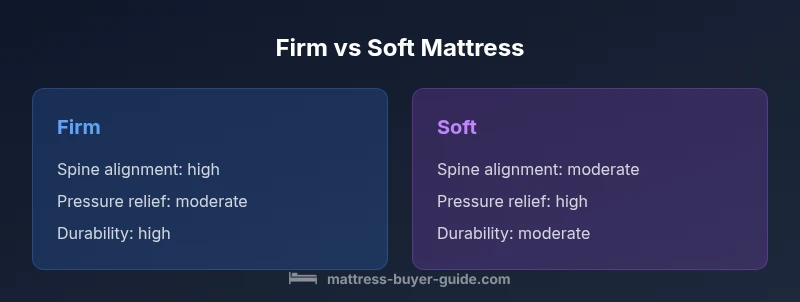
Firm vs Soft Mattress: A Practical Guide to Sleep Comfort
Learn how firmness affects sleep quality, support, and pressure relief. This guide compares firm and soft mattresses, with testing tips to pick the right firmness for your sleep position and weight.


Firmness choice depends on sleep position, body weight, and personal comfort. In general, medium-firm suits most back sleepers, while side sleepers benefit from softer pressure relief and stomach sleepers may require firmer support. Use trial periods to test options and observe wake-up comfort, per Mattress Buyer Guide recommendations.
Why firmness matters for sleep quality
Firmness is not a one-size-fits-all feature. The correct firmness helps maintain spinal alignment while reducing pressure points, which can minimize morning stiffness and aches. According to Mattress Buyer Guide, the best approach is to tailor firmness to your sleep position, body weight, and personal comfort preferences rather than chasing a universal standard. The result should be a mattress that keeps your spine aligned in neutral, supports your shoulders and hips, and reduces restless tossing. In practical terms, this means testing multiple firmness levels during a trial period and paying attention to how you feel after several nights of unbroken sleep. When firmness aligns with your physiology, you’re more likely to experience deeper REM cycles and a more refreshing morning.
How sleep position shapes firmness needs
Different sleeping positions stress the spine differently, which in turn affects firmness needs. Back sleepers typically benefit from medium firmness that supports spinal alignment without creating pressure on the lumbar region. Side sleepers often require softer surface areas to relieve pressure on the shoulders and hips, which can prevent numbness and waking stiffness. Stomach sleepers commonly need a firmer feel to prevent the midsection from bowing and flattening the spine’s natural curve. The takeaway is simple: match the feel to your primary sleep posture. If you share a bed, consider a split or hybrid setup to accommodate both partners’ needs without compromising overall support.
How body weight and anatomy influence firmness perception
Body weight and body composition influence how a mattress feels. Heavier individuals may perceive a mattress as too soft if it compresses quickly under their weight, resulting in sagging and misalignment. Lighter sleepers might find a very firm mattress uncomfortable due to concentrated pressure at points like the hips and shoulders. In each case, the goal is to strike a balance between support and pressure relief. The Mattress Buyer Guide team emphasizes using real-world testing—lying in your typical sleeping position for at least 15–20 minutes—to gauge initial feel, followed by longer trial periods to assess ongoing comfort.
Understanding firmness labels: what soft, medium, and firm really mean
Manufacturers label firmness as soft, medium, or firm, but the actual feel can vary by material and construction. A “soft” memory foam mattress might feel very different from a “soft” latex or innerspring, particularly with contouring and bounce. Similarly, a “firm” innerspring can offer different levels of support depending on coil gauge and comfort layers. The best approach is to test the mattress in-person when possible and, if shopping online, rely on a solid return policy and trial period to confirm whether the advertised feel translates to nightly comfort. This nuanced view aligns with the Mattress Buyer Guide analysis, which cautions against relying on labels alone.
Pros and cons of firm vs soft from a sleeper’s perspective
- Firm mattresses: supportive for neutral spine alignment, potentially longer-lasting with heavier bodies, and often preferred by stomach sleepers. Drawbacks include reduced pressure relief for shoulders and hips and a stiffer initial feel that may cause discomfort for lighter individuals.
- Soft mattresses: excellent pressure relief for side sleepers and lighter individuals, easier initial contouring, and greater initial comfort for some. Drawbacks include the potential for sagging or misalignment with heavier bodies and reduced support for stomach sleepers.
How to test firmness effectively: in-store, at home, and with trials
The most reliable way to gauge firmness is hands-on testing with a realistic sleeping position. When shopping in-store, lie down for several minutes in your typical position, switch sides, and note how your joints feel. If shopping online, look for generous trial periods and easy returns to replicate real sleep conditions at home. A practical test plan includes testing at least three firmness levels within the same overall construction (e.g., same material family) to isolate the effect of firmness itself. Remember to consider partner sleep dynamics—motion isolation and edge support matter in shared beds. Mattress Buyer Guide recommends documenting wake-up comfort and any pain or numbness after a week of testing.
Material differences: memory foam, latex, and innerspring
Material type moderates how firmness feels. Memory foam tends to feel firmer initially and softens with body heat, offering robust pressure relief but potential heat retention. Latex typically provides a responsive, buoyant feel with good bounce and stable support, which can influence perceived firmness. Innerspring configurations vary widely; the coil system can deliver strong support, but the comfort layers determine the actual feel. When choosing firmness, consider how your chosen material interacts with your body: memory foam for pressure relief with careful breathability, latex for a balanced, responsive feel, or hybrids that combine support with contouring. The goal is a balanced interface that keeps your hips and shoulders properly supported while offering comfortable pressure relief where needed.
Temperature, motion, and longevity: does firmness help or hurt?
Firm mattresses can feel cooler because they resist deep contouring, but temperature control still depends on the cover and comfort layers. Conversely, softer surfaces may trap more heat due to increased contouring. Motion isolation matters for couples: memory foam tends to minimize partner disturbance, while some hybrids may transfer more movement if the comfort layers are thin. Longevity interacts with usage: over time, a mattress may soften or compress, altering its effective firmness. Regular rotation and mindful care can help preserve the intended feel longer. Mattress Buyer Guide notes that the right firmness, paired with breathable materials and a solid foundation, supports long-term comfort and sleep quality.
How to approach firmness in a sleep-health plan
Treat firmness as one axis of sleep health, alongside support, temperature, and ergonomics. If you wake stiff or sore, reassess your firmness in light of your current sleep posture and weight changes. Combining appropriate firmness with an ergonomic base, such as a compatible foundation or adjustable base, can optimize spinal alignment. For people with back pain or specific medical considerations, collaborating with a sleep specialist or physical therapist can help tailor firmness in a broader care plan. The Mattress Buyer Guide team emphasizes that a patient, evidence-based approach—guided by trial data and personal feeling—yields the best outcomes for sustainable sleep.
Authority sources and further reading
For those who want to dive deeper, consult authoritative sleep-health resources. The Centers for Disease Control and Prevention (CDC) discusses the fundamentals of healthy sleep and how comfort factors influence sleep duration. The National Institute of Neurological Disorders and Stroke (NINDS) provides insights into how sleep quality can impact neurological health. Reputable consumer sleep publications, such as Sleep Foundation, offer practical guidance on mattress testing and pressure relief. These sources support the practical guidance found in Mattress Buyer Guide analyses and recommendations, reinforcing a methodical approach to choosing firmness.
Next steps: a decision framework you can apply today
Create a short decision framework: identify your sleeping position most often, note your typical body weight range, determine acceptable pressure relief levels, and check trial policies. Start with a medium-firm option as a baseline, then trial softer and firmer alternatives within a consistent construction. Track your wake-up comfort, joint pain, and sleep duration over a two-week window to see which level consistently supports restful sleep. This process aligns with the principle of personalized sleep comfort endorsed by Mattress Buyer Guide and ensures you’re not relying on a single factor like firmness alone.
Comparison
| Feature | Firm Mattress | Soft Mattress |
|---|---|---|
| Overall support | High support with neutral spine alignment for most body types | Lower support that prioritizes pressure relief but may allow sagging with heavier bodies |
| Pressure relief | Moderate relief focused on core support areas | High relief at shoulders and hips, good for side sleepers |
| Durability and feel over time | Tends to retain shape longer with proper materials and higher density | May soften with use, especially under heavier loads |
| Motion isolation | Good to excellent on many memory-foam and hybrid designs | Variable; some springs may transmit more movement unless layered with foam |
| Best for | Back sleepers, heavier individuals, and stomach sleepers who need support | Side sleepers, lighter individuals seeking contouring and pressure relief |
| Price range | Comparable across similar materials and brands; premium features can raise cost | Often similar to firm options, with differences driven by materials and construction |
The Good
- Offers clear guidance based on sleep position and weight
- Supports personalized sleep experiences with various materials
- Trial periods and reputable return policies reduce buyer risk
- Hybrid options enable customized firmness within a single bed
Cons
- Wrong firmness can cause discomfort or pain after weeks of use
- Extreme ends (very soft or very firm) may not suit heavier sleepers
- Perceived firmness varies with materials and cover construction
- Quality and design inconsistencies can blur the 'hard vs soft' feel
Medium firmness is the most versatile starting point for most sleepers.
If you sleep on multiple positions or share a bed, begin with medium-firm and adjust based on waking comfort. Weight, pressure relief needs, and personal preference all influence the final choice.
FAQ
What does mattress firmness mean in practice?
Firmness describes how much a mattress resists compression under your body. It influences spinal alignment and pressure relief. Labels like soft, medium, and firm vary by material, so testing physically or via trial periods is essential.
Firmness is how much a bed resists your weight. Think of it as how hard the bed feels when you lie down, and test several options to find what keeps your spine straight and pressure off your joints.
How should I test firmness at home or in-store?
Spend at least 15–20 minutes in your typical sleeping position while lying on the mattress. Switch positions and check for comfort, shoulder and hip pressure, and spine alignment. Look for a trial period and easy returns when shopping online.
Lie down in your usual position for a good stretch, then switch sides to feel support and pressure. Use trial periods to confirm you love it after a few nights.
Does weight change how firm a mattress feels?
Yes. Heavier sleepers may experience more compression, making a mattress feel softer or cause sagging on a too-soft surface. Lighter sleepers might need less contouring, so a softer bed could feel overly plush.
Your weight can change how firm a bed feels; heavier folks usually need more support, lighter sleepers may crave more pressure relief.
Are memory foam and latex firmness levels comparable?
Memory foam tends to offer deeper contouring and can feel firmer initially but softens with heat. Latex is typically more buoyant and responsive, giving a quicker return to shape. Perceived firmness depends on density and thickness of the comfort layers.
Memory foam contours more and may feel firmer at first, while latex is more buoyant and springy.
Can a mattress feel too firm and cause pain?
Yes, a mattress that is too firm can press on joints and shoulders, causing discomfort for side sleepers or lighter individuals. The goal is even support and comfortable pressure relief across contact points.
A bed that's too firm can press on joints and make sleep uncomfortable; look for even support and relief at hips and shoulders.
How long should I assess firmness before deciding?
Give yourself at least a two-week trial period to evaluate true comfort, including how you sleep through the night and how you wake up. If needed, consult with a sleep professional for personalized guidance.
Give it at least two weeks to decide, with attention to how you sleep and how you feel in the morning.
Highlights
- Test firmness using real-night trials and note wake-up comfort
- Back sleepers often benefit from medium-firm support
- Side sleepers typically need softer surfaces for pressure relief
- Stomach sleepers usually require firmer support to maintain spinal alignment