Twin Bed Mattress Dimensions: A Standard Size Guide
Discover the exact dimensions of twin bed mattresses, including US standard 38x75 and Twin XL, plus EU 90x200 cm. Get practical tips for sheets, frames, and foundations.


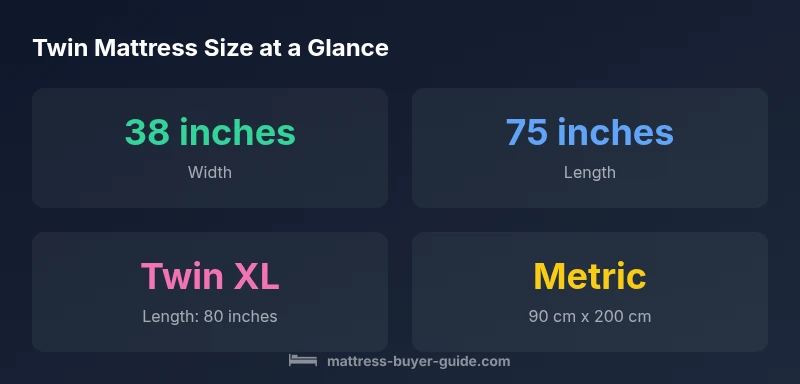
The standard twin bed mattress in the US measures 38 inches wide by 75 inches long. Twin XL adds 5 inches to length, at 80 inches long, while maintaining the same 38-inch width. In Europe, a common twin equivalent is 90 cm by 200 cm. For exact fit, always verify measurements on the mattress label and your bed frame.
What Are Twin Mattress Dimensions?
If you’re wondering what are the dimensions of a twin bed mattress, start with the US standard: 38 inches wide by 75 inches long. This size has been the default for small bedrooms, dorms, and kids’ rooms for decades. The Twin XL variant keeps the same width but extends to 80 inches in length, catering to taller sleepers or bunk-bed setups. In Europe and other markets, you’ll frequently encounter a twin-sized equivalent of about 90 cm by 200 cm. The Mattress Buyer Guide team emphasizes checking both the mattress label and your bed frame to confirm exact measurements because frame tolerances and regional standards can vary slightly.dimension awareness helps prevent purchases that don’t fit and reduces the hassle of returns. The first step is knowing the baseline dimensions, then layering in room constraints, sheet sizes, and foundation compatibility. This knowledge forms the backbone of a confident mattress shopping experience, especially for first-time buyers, renters, and families upgrading from a crib or youth bed.
US Standard Twin vs. Twin XL: Pros, Cons, and Fit
The US market presents two primary twin configurations: standard twin (38x75) and Twin XL (38x80). The longer Twin XL is ideal for taller individuals who would outgrow a standard twin’s length. If you share a bed with a partner but require more legroom, consider whether a full or queen size might be a better fit, as space constraints can influence comfort and sleep quality. Sheet sets, fitted covers, and bed foundations are typically available in both widths, but you’ll find length-specific options more common for Twin XL. When choosing, evaluate ceiling height, under-bed clearance, and the intended mattress foundation (box spring vs. slatted base) to ensure a flush, stable setup. Mattress Buyer Guide’s perspective is to measure your frame, account for headboard/footboard intrusion, and verify that the mattress and foundation align with your room’s dimensions.
Global Variants: EU and Other Markets
In many European markets, a twin analogue is commonly referred to as 90 cm by 200 cm. This translation between inches and centimeters matters when shopping across borders or when comparing international brands. If you’re buying from a global retailer, be mindful of regional labeling like “single,” “twin,” or “small double,” which can vary in size. To avoid confusion, always convert dimensions and compare the product’s stated measurements to your frame’s interior width and length. For renters or travelers, carrying a measuring tape during shopping trips helps you quickly rule out options that won’t fit your space.
How to Measure for a Perfect Fit
Measuring is the most reliable way to avoid fit issues. Start by measuring the bed frame’s interior width and length, then measure the distance from the frame to any headboard, footboard, or side rails. Next, check the mattress label for its listed dimensions, and compare these to the frame measurements. If you’re replacing an existing mattress, bring or photograph its measurements to ensure the new mattress aligns. Don’t forget to factor in the thickness of the mattress and any proposed foundation, because additional height can affect sheet fit and room clearance. Finally, allow 0.5–1 inch of tolerance on each side for sheets and movement.
Bedding and Foundation Compatibility for Twin Sizes
Choosing the right sheets and foundations is essential for long-term comfort. Twin and Twin XL sheets are designed to accommodate the respective widths; however, fit may vary by brand. It’s common for deep-pocket sheets to require taller foundations or extra-coverage sheets; in dorm settings, long-wear, wrinkle-resistant fabrics can simplify upkeep. When pairing with a foundation, ensure the depth of the bed aligns with the mattress height and that the foundation does not extend beyond the headboard’s area. For a crisp, secure setup, consider a well-fitted sheet set with elastic corners that grip under the mattress, and verify warranty coverage for sheets and foundations.
A Practical Room-Planning Checklist
- Map your room footprint and note doorways, windows, and closet access that could affect mattress placement.
- Verify ceiling height and clearance when placing a Twin XL to avoid contact with overhead fixtures.
- Choose a compatible bed frame and foundation that supports your chosen mattress type (coil, foam, latex).
- Plan storage and motion layout so you don’t accidentally press against the bed while walking.
- Select breathable, easy-care bedding to maintain comfort for longer periods.
- If the room doubles as a guest space, consider a dual-use setup, such as a trundle or under-bed storage.
This practical planning reduces surprises during delivery and setup and contributes to better sleep quality over time.
Quick Reference: Choosing the Right Twin Size for Your Space
When space is tight, a standard Twin is often the best choice for maximizing floor area while still offering ample sleeping space for one person. If you’re tall or prefer a more generous length, Twin XL provides longer sleep surface without widening the bed footprint. Always cross-check dimensions with your bed frame and room measurements to ensure comfortable navigation around the bed. The right twin size not only fits physically but also supports proper sleep posture, especially for back or side sleepers.
Twin mattress size quick reference
| Size | Width | Length | Notes |
|---|---|---|---|
| Twin | 38 inches | 75 inches | Most common in US/Canada |
| Twin XL | 38 inches | 80 inches | Longer length for taller sleepers |
| Twin (EU equivalent) | 90 cm | 200 cm | European market standard |
| Notes | N/A | N/A | Always verify with the product label |
FAQ
What are the standard dimensions of a twin mattress in the United States?
In the United States, the standard twin mattress measures 38 inches wide by 75 inches long. Twin XL is 38 by 80 inches. Always check the product label for exact measurements, as some brands offer slight variations.
The standard US twin size is 38 by 75 inches, with Twin XL at 38 by 80 inches. Always confirm the exact measurements on the label.
What is the difference between a twin and a Twin XL?
The width is the same at 38 inches for both, but Twin XL adds 5 inches in length (80 inches total). Choose Twin XL for taller sleepers or longer rooms, otherwise a standard twin suffices.
Twin XL is longer at 80 inches; both share the same width of 38 inches.
Do measurements vary by brand?
Yes. While the standard dimensions provide a baseline, some brands may use slight variations. Always verify the product label and compare it to your frame and sheets.
Yes, check the label; some brands vary slightly in exact dimensions.
Can a twin fit in a full-size bed frame?
A twin mattress is smaller than a full-size frame. It may fit with careful alignment, but there will be extra gaps and alignment issues. If you own a full frame, a full or queen mattress is typically a better match.
A twin can be tricky on a full frame; gaps and misalignment are likely. Best to match sizes.
How should I measure for a mattress?
Measure the frame interior width and length, then compare with the mattress label. Allow a small tolerance for sheets and movement. Always account for any headboard or footboard intrusions.
Measure the frame, compare to the mattress size, and leave a little tolerance for movement.
Are there non-standard twin sizes?
Some brands offer minor deviations such as 39 inches in width or 77–78 inches in length, but these are not common. If you need a non-standard size, check shop-specific dimensions and confirm with the manufacturer.
There are rare, non-standard options, but they’re not common—always verify exact numbers with the seller.
“Understanding standard dimensions helps shoppers avoid misfits and returns. When you pair accurate measurements with room planning, sleep quality improves and sleep-related stress declines.”
Highlights
- Know the standard dimensions: 38x75 inches for US twins.
- Use Twin XL (38x80) for taller sleepers.
- EU twin size commonly measures 90x200 cm.
- Always measure your bed frame before buying.
- Check foundation and sheet depth to ensure proper fit.