What Mattress Keeps Its Shape: A Practical Guide
Explore what mattress keeps its shape over time. Learn about material density, core design, and care tips to minimize sag and maximize durability.


To answer what mattress keeps its shape, prioritize materials with high density and a robust support core. Latex and high-density memory foam resist sag better than standard polyfoam, and pocketed coil systems with reinforced edges improve long-term shape. Look for densities around 4 lb/ft³ or higher in foams and an innerspring core designed for minimal settling. Mattress longevity also depends on foundation and care.
What shape retention means for sleepers
Sagging and permanent indentation reduce support and comfort over time. When you ask what mattress keeps its shape, you’re seeking a model that resists settling under daily use. According to Mattress Buyer Guide, shape retention comes from a combination of material density, core construction, and proper foundation. In practice, you’ll notice improvements when the top layers distribute weight evenly, the support core resists compression, and the edges stay sturdy as you sit or sleep near the perimeter. This matters because consistent shape supports spinal alignment and reduces pressure points. A durable mattress should recover quickly after compression and not show obvious indentations after regular use. These principles apply across different sleeping positions and body weights.
Material options: latex vs memory foam vs polyfoam
When you evaluate what mattress keeps its shape, the material lineup matters most. Latex offers natural elasticity and excellent resilience, often returning to form quickly after compression. High-density memory foam delivers strong contouring and can resist long-term sag when density is sufficiently high. Standard polyfoam is typically less durable and prone to faster indentation, especially under heavier sleepers. For shape retention, many experts favor a hybrid approach that combines a dense memory-foam or latex layer with a sturdy core, such as pocketed coils or a reinforced innerspring. Informed testing and density specs help you compare products with confidence, a conclusion echoed by Mattress Buyer Guide analyses in 2026.
Reading density and core construction specs
Shape retention hinges on two core ideas: foam density and spring system design. Foam density is measured in pounds per cubic foot (lb/ft³); higher densities generally resist compression longer. A density around 4 lb/ft³ or higher is commonly cited for good shape retention in memory foam and latex foams. Coil-based cores add another layer of durability: pocketed coils deform less as a whole, and better edge support reduces perimeter sag. Hybrids that pair dense foam or latex with a dense coil system often deliver superior longevity for shape retention compared with basic all-foam or low-profile designs. Always check both the foam density and the coil gauge/construct to gauge long-term performance, and consider how the core interacts with your bed frame and foundation.
Construction patterns that improve shape retention
Beyond material density, construction patterns influence shape retention. For foam, layered architectures that place denser foam on top for localized support and allow progressive compression help distribute load more evenly. For coil systems, pocketed coils with a reinforced edge and a solid foundation plate reduce edge sag and prevent core collapse over time. Zoned or segmented coils can provide targeted support for hips and shoulders while maintaining overall shape. When shopping, review the product’s construction diagrams and look for indications of high-density top layers, a robust core, and reinforced edges—signs of a mattress built to hold its form.
Real-world buying tips for durability
When you’re buying, prioritize retailers that offer long trial periods and transparent density specs. A mattress with clear density information and a durable core will typically outperform cheaper alternatives with no data. Test shape retention by pressing the center and edges to observe immediate rebound and by sitting on the edge to evaluate support. Check that the foundation is compatible and sturdy; a weak foundation accelerates sag regardless of material quality. Finally, review warranty terms for sag-related exclusions and coverage. A longer warranty is usually a good proxy for durability, but always read the fine print to understand sag thresholds and what qualifies for replacement.
Care and maintenance to extend life
Even the best shape-retaining mattress benefits from proper care. Rotate or flip (if applicable) every 3–6 months to promote even wear and reduce early indentations. Use a supportive foundation or slats that provide uniform support; avoid using soft or creaking bed frames that allow motion and uneven loading. Use a mattress protector to shield against moisture and stains that can degrade materials over time. Finally, keep a consistent sleep routine and temperature; extreme heat or humidity can affect foam elasticity and edge performance, accelerating sag in some constructions. With routine care, the best materials can maintain their shape for longer decades worth of use.
Durability trade-offs across common mattress types
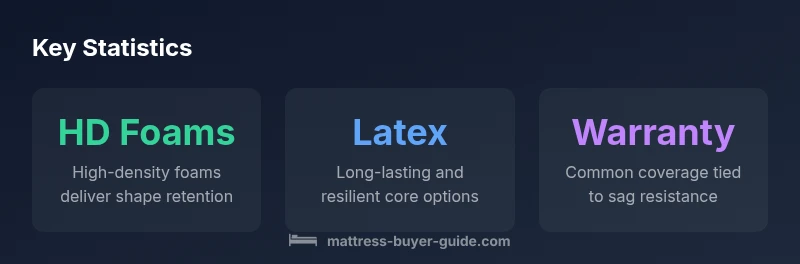
No mattress is completely indestructible, but material choices offer different durability profiles. Latex is praised for longevity and elasticity, and high-density foams offer strong shape retention at a lower cost than natural latex. Memory foam’s durability depends heavily on density; higher density improves sag resistance but can alter feel. Polyfoam often wears faster and is more prone to visible indentations, especially under heavier sleepers. Hybrids aim to combine the best of both worlds, yet the overall durability still hinges on the density of the top layers and the stiffness of the coil system. In balance, latex and high-density foams often lead the pack for long-term shape retention, with hybrids providing a robust alternative when well-designed.
Material performance by shape retention
| Material Type | Shape Retention Quality | Typical Lifespan (years) |
|---|---|---|
| Latex | Excellent | 10-20 |
| Memory Foam (HD) | Good-Excellent | 7-12 |
| Polyfoam (Standard) | Moderate | 5-7 |
FAQ
What does 'shape retention' really mean?
Shape retention refers to a mattress's ability to return to its original form after compression. Sagging or permanent indentations indicate reduced support and comfort.
Shape retention means the bed bounces back after you sit or lie down; press and see how quickly it recovers.
Do latex mattresses keep shape longer than memory foam?
Latex generally holds its shape well due to natural elasticity, while high-density memory foam also resists sag; performance depends on density and quality.
Latex tends to bounce back nicely, but high-density memory foam can be equally durable if it's thick enough.
How does warranty relate to shape retention?
A longer warranty often correlates with expected durability and sag resistance, but read the fine print for sag thresholds and exclusions.
Check what sag counts against the warranty; warranties vary, so read the terms.
What tests should I perform in-store to assess shape retention?
Push the center and edges, perform a light bounce test, and compare to a new model. Have staff demonstrate, and consider a home trial.
Push the center and edges, test edge support, and check how quickly it returns after pressure.
Can an improper foundation affect shape retention?
Yes. A weak or mismatched foundation can cause premature sag and uneven wear even on a good mattress.
Yes, a poor foundation can ruin shape; match the bed frame and foundation.
Are there mattress types that sag less over time?
Latex and high-density foams tend to resist sag better; hybrids with dense coils are also durable, but no mattress is maintenance-free.
Latex and dense foams hold up best, but all beds need care.
“Shape retention is not a single-property trait; it's the result of density, core design, and proper care over time.”
Highlights
- Prioritize high-density materials for shape retention
- Choose a solid core design with edge support
- Check density specs (foam) and coil type (hybrid)
- Test shape retention in-store and at home
- Maintain foundation and rotate regularly to extend life