What Size Mattress Is a Toddler Bed?
Discover the exact toddler bed mattress size, typical variations, and how to verify fit for safe sleep. A Mattress Buyer Guide overview.


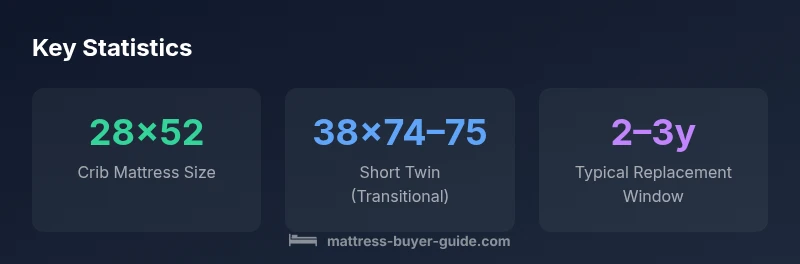
Most toddler beds use a crib mattress sized 28" x 52" (71 cm x 132 cm). This crib-size standard keeps transitions simple, since you can usually move the same mattress from crib to toddler bed. Some models offer a short twin option (roughly 38" x 74–75"), but always confirm the exact dimensions with the manufacturer.
Understanding toddler bed mattress sizing
When parents ask, what size mattress is a toddler bed, the straightforward answer is that most toddler beds use a crib-sized mattress. In the United States and many other markets, the standard crib mattress measures 28 inches wide by 52 inches long (about 71 cm by 132 cm). This size is purpose-built to fit inside the crib’s rails, and most toddler bed frames are designed to accommodate the same footprint. Using a crib-size mattress for the toddler bed helps families avoid an extra purchase during a major sleep transition and reduces the risk of gaps or misalignment. Mattress quality, cover materials, and durability matter just as much as the footprint, so focus on a firm, snug fit that stands up to daily use and curious toddlers.
Throughout the Mattress Buyer Guide analyses, we emphasize consistency and safety. In many regions, the crib-size mattress remains the standard for toddler beds because it’s a familiar size, supports long-term use for a child’s early years, and minimizes the number of different bed sizes a family must manage. Note that international markets can vary—always check local product specs and the manufacturer’s guidance to confirm exact measurements before purchasing.
Sizes you’ll encounter and how they differ
Beyond the crib-size standard, you may encounter two common categories when you explore toddler beds and early-transition furniture: crib-mattress-compatible toddler beds and short-twin transition beds. The crib-mattress option uses the same 28x52 inches footprint, which simplifies buying and reduces waste because you can rotate or reuse the same mattress. Short-twin variants, which some brands offer for transitional beds, are typically around 38x74–75 inches. This size is large enough to accommodate a growing child but still compact enough for a child’s bedroom space. When shopping, always verify the exact dimensions with the model’s specs—even a small variance can lead to a loose fit or pinch points between rails.
How to verify fit and safety
Safety starts with a proper fit. First, measure the interior dimensions of the toddler bed frame or the manufacturer’s specified mattress size. A mattress should sit snugly with no visible gaps at the corners or along the sides. If you can slide more than a finger between the mattress edge and the frame, the fit is too loose. Check that the mattress height allows guardrails to block a rollover and that there are no protruding springs or fabric that could snag clothing. Finally, consider the mattress depth; thinner options can sometimes shift if the bed rails are tall, while overly thick toppers may compress safety rails or reduce protective guard height. In short: pick a mattress that fits tightly, remains stable under movement, and adheres to the bed’s safety guidelines.
Materials, firmness, and care considerations
Mattress materials influence longevity and comfort, so balance durability with cleanability. Foam and hybrid designs often provide good support and durability, while innerspring options can offer robust edge support. For toddlers, a firm, supportive surface helps reduce sinkage and support spinal alignment during sleep. Removable, washable covers are highly practical for accidents and spills, and shredded memory-foam or latex-infused designs can provide comfort without excessive softness. Regardless of material, ensure the cover is easy to clean and the mattress remains dry and mold-free. Mattress protectors and fitted sheets that stay in place contribute to a low-maintenance sleep environment and protect the investment over time.
Transition timing and planning
Every child grows at their own pace, but many families consider moving to a larger bed when the child approaches 3–4 years old or when the crib no longer accommodates a growing child’s needs. Planning the transition gradually can ease anxiety: introduce the new bed with familiar blankets, read bedtime stories about the new bed, and keep the safety rails in place during the early weeks. If a toddler bed uses a short-twin mattress, ensure that the bed frame supports the mattress height and that guardrails remain effective. Regularly assess safety, ensure the mattress still fits tightly, and replace a worn mattress when signs of sagging or wear appear. A thoughtful transition preserves sleep continuity and reduces bedtime battles.
Common mistakes to avoid
- Assuming all crib mattresses fit every toddler bed: always verify model-specific dimensions.
- Skimping on guardrails or using a loose-fitting mattress: this increases the risk of falls or entrapment.
- Overlooking mattress depth: too-thick toppers can compromise guard height and fit.
- Failing to check for moisture issues: a damp mattress fosters mold and odors, affecting sleep quality.
- Not replacing worn mattresses: sagging or uneven surfaces can impact posture and comfort over time.
Common mattress sizes used with toddler beds and transitions
| Size type | Dimensions (inches) | Notes |
|---|---|---|
| Crib mattress (toddler bed) | 28x52 | Standard crib-size mattress used by many toddler beds |
| Short twin (transitional) | 38x74–75 | Used by some transition beds; confirm exact model |
| Standard twin (transition) | 38x75 | Less common for early toddler stages; verify compatibility |
FAQ
What size should I buy for a toddler bed?
Typically a crib mattress of 28x52 inches is used for toddler beds. Always confirm the exact dimensions with the bed manufacturer to ensure a proper fit.
Typically a crib mattress, 28 by 52 inches, works for most toddler beds. Always check your bed’s spec sheet to confirm.
Can I use a short twin mattress in a toddler bed?
Some transitional toddler beds are designed for a short twin mattress (about 38x74–75 inches). Verify the exact dimensions and rail clearances with the manufacturer before buying.
Some toddler beds use a short twin, about 38 by 74 to 75 inches. Check your bed’s specs before purchasing.
How do I know the mattress fits safely?
Measure the interior frame, ensure the mattress sits snugly with no gaps, and verify guardrails are tall enough to prevent rollouts. A mattress that moves or slides indicates a poor fit.
Fit should be snug with no gaps and guardrails that block rollouts. If it moves, it’s not a safe fit.
Are there international size differences I should know?
Yes. While crib sizes are common in many countries, some regions use different standard sizes. Always check local product specs and the bed’s guidance.
Yes, sizes vary by country. Always verify the local specs and the bed’s instructions.
What should I consider beyond size?
Look for a firm, support-focused mattress with a washable, durable cover. Ensure the mattress is compatible with your bed’s safety rails and that it fits tightly.
Beyond size, choose a firm, durable, easy-to-clean mattress that fits your bed securely.
How often should I replace a toddler bed mattress?
Replace when there are visible signs of wear, sagging, or persistent hygiene concerns. Most families reassess every 2–3 years or as the child grows.
Replace when you see sagging or wear, typically every 2–3 years or as your child grows.
Do safety rails affect mattress choice?
Yes. Rails must accommodate the mattress thickness and prevent gaps. Check guardrail height and clearance when selecting a mattress.
Rails matter—make sure the mattress thickness works with guardrails for safety.
“Choosing the right mattress size for a toddler bed is about matching the crib standard while ensuring a snug, safe fit that supports growing kids.”
Highlights
- Use crib-size mattresses (28x52 inches) for most toddler beds.
- Check model specs; some beds support a short-twin option (38x74–75).
- Ensure a snug fit with no gaps to maximize safety.