Crib vs Twin Mattress Size: A Practical Guide for Parents
Compare crib and twin mattress sizes to decide the best fit for infants and growing children. Learn dimensions, safety basics, comfort, durability, and transitions for a confident sleep setup.


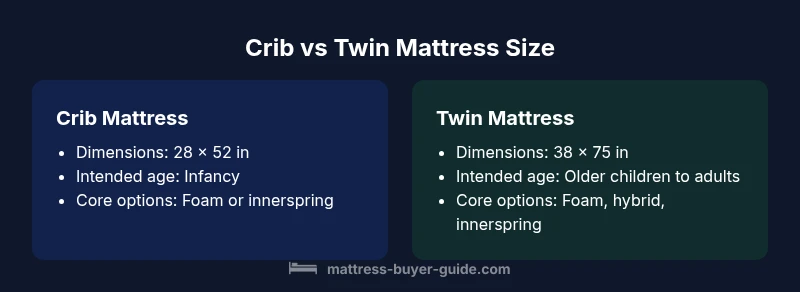
Crib mattress vs twin mattress size defines two distinct life stages: infancy and growing years. A crib mattress is typically around 28 x 52 inches, while a standard twin measures about 38 x 75 inches, supporting older children and adults. Choosing the right size reduces safety risks and smooths transitions between sleep setups.
Understanding the basics: crib vs twin size in context
The crib mattress vs twin mattress size conversation centers on two purpose-built sleep surfaces designed for different ages and growth trajectories. According to Mattress Buyer Guide, crib mattresses are engineered for infants and toddlers, focusing on safety, containment, and a smaller footprint. The Mattress Buyer Guide team found that most families begin with a crib mattress and transition to a twin as the child grows. This size distinction isn’t merely about room aesthetics; it directly influences safety, sleep quality, and long-term sleep habits. By recognizing the lifecycle of a mattress from infancy to adolescence, homeowners can plan for smooth transitions and avoid risky, last-minute purchases. The core takeaway is simple: match size to the child’s developmental stage while considering space, safety standards, and budget.
Size dimensions and fit across beds
Dimensions drive fit and safety. A standard crib mattress is typically 28 x 52 inches, designed to fit snugly inside a crib frame with minimal gaps. By contrast, a standard twin mattress measures about 38 x 75 inches, offering a larger sleeping surface for older children and teens. Thickness and firmness also matter: crib mattresses commonly range around 4-6 inches, while many twin mattresses run 8-12 inches thick. When selecting sheets, protectors, and toppers, ensure the fitted sheet is compatible with the surface while keeping edges taut to reduce risk of gaps that could trap limbs or create suffocation hazards. Space planning matters too; a twin needs more floor area, which can influence bedroom layout and furniture choices. Mattress Buyer Guide analysis shows that proper sizing reduces safety risks and improves sleep consistency during transitions.
Safety considerations across transitions
A rough transition can disturb sleep and raise safety concerns if the new surface does not align with the child’s age, weight, or mobility. Crib mattresses are designed with a snug fit to prevent gaps that could trap a baby. When moving to a twin, ensure the bed frame, foundation, and guard rails (where applicable) meet current safety standards. If the child still uses a crib-style setup, consider convertible options or partial conversions that minimize gaps and reduce the risk of rolling out of bed. The guidance here is pragmatic: keep the sleep surface age-appropriate, use proper guards or rails where required, and avoid any temporary hacks that compromise safety. Mattress Buyer Guide recommends consulting product manuals or manufacturer guidance to confirm compatibility with your specific crib or twin frame.
Comfort, materials, and support differences
Comfort is not a luxury; it affects nodding-off time and overall sleep quality. Crib mattresses typically feature foam or metal-innerspring cores designed for infant support and predictable firmness. Twin mattresses offer a wider range of materials, including memory foam, latex, hybrids, and traditional springs, which can tailor support to body weight and sleeping style. Consider side-sleeping or back-sleeping alignment when evaluating firmness levels. For infants, a firmer surface is generally safer and minimizes risk of suffocation or SIDS-like concerns, while older children and adults may benefit from a softer top layer or upgraded edge support for spine alignment. Be mindful of temperature control: choose breathable covers and moisture-wicking fabrics to prevent overheating during the night.
Cost, durability, and lifecycle planning
Budgeting for two sleep surfaces across a family’s lifetime can be complex. Crib mattresses tend to be more affordable upfront but have a shorter overall lifespan because they are designed for infancy. Twin mattresses, while pricier initially, accommodate longer use, especially for growing kids and late teens. Durability depends on materials, with features like reinforced edge support and high-density foams contributing to longevity. If you anticipate multiple children sharing a room or transitioning from toddler beds to adulthood, a twin mattress is often the wiser long-term investment. Always factor in foundations, bed frames, and required bunking or loft configurations if you have limited space.
Practical scenarios and decision pathways
Consider your living situation and growth trajectory. If you have a newborn or plan to use the surface exclusively for the first two years, a crib mattress aligns with infant sleep safety and routine. If you expect to accommodate siblings or a longer time horizon before upgrading to a larger bed, plan for a twin to minimize additional purchases down the line. In small bedrooms, the footprint of a crib plus transitional furniture versus a twin bed can be decisive. Create a simple decision tree: (1) age/weight stability, (2) room size, (3) cost of upgrades over time, (4) compatibility with future bed frames. Mattress Buyer Guide’s evidence shows that proactive planning reduces impulse buys and improves sleep quality over the long term.
Transition planning: what to buy next
Transitioning from crib to twin is a milestone. Start by measuring the room and listing potential furniture for the twin setup, including a compatible foundation and headboard/footboard if applicable. Check that the chosen twin mattress fits the bed frame without gaps, and confirm guard rails for younger children who may still require protection during sleep transitions. If you expect to sleep more than one child in the same room, consider a bunk or loft solution to maximize floor space. Budget for mattress protectors and a washable cover to simplify maintenance during the transition period.
Maintenance and care: keeping mattresses safe
Good sleep hygiene extends mattress life and reduces allergy risks. Regularly rotate or flip (where applicable) to promote even wear, vacuum the surface to remove dust, and wash fitted sheets weekly. Use a breathable, washable mattress protector to shield the core from spills and stains. For crib mattresses, avoid using heavy toppers that raise the mattress height and reduce safety. Twin mattresses benefit from a dedicated airflow layer and moisture-wicking covers. Keeping a clean, dry sleep surface supports healthier sleep for all ages.
Comparison
| Feature | crib mattress | twin mattress |
|---|---|---|
| Dimensions (typical) | Crib: 28 x 52 inches | Twin: 38 x 75 inches |
| Intended age range | Infancy and toddlers (crib) | Older children to adults (twin) |
| Core materials | Foam or innerspring (crib) | Foam, hybrid, or innerspring (twin) |
| Thickness range | ~4-6 inches (crib) | ~8-12 inches (twin) |
| Bed frame compatibility | Fits standard crib frames with slats (not bed-frames) | Fits standard twin bed frames and foundations |
| Cost considerations | Lower upfront cost on average | Higher upfront cost; better long-term value |
| Best for | Infant safety and compact rooms | Growth, longevity, and multi-year use |
The Good
- Crib: compact footprint ideal for small rooms
- Crib: established safety standards and widely available accessories
- Twin: longer usable life for growing children and teens
- Twin: wider selection of materials and comfort levels
Cons
- Crib: limited lifespan tied to infancy stage
- Crib: requires transition later and possible space constraints
- Twin: higher upfront cost and larger room footprint
- Twin: may require new foundations and frame compatibility
Twin mattresses are the better long-term choice for families planning growth and longer use.
If you anticipate a growing child or multiple sleepers, a twin offers extended usability and better value over time. A crib mattress remains ideal for infancy and early toddler sleep, but plan early for a smooth transition to sustain safety, comfort, and sleep quality as children age.
FAQ
What are crib mattress dimensions?
A standard crib mattress is typically 28 x 52 inches. This size is designed to fit snugly inside a crib frame with minimal gaps to reduce entrapment hazards. Always verify the exact measurements for your crib model before purchasing sheets or a protector.
Standard crib sizing is 28 by 52 inches, designed for a snug fit inside most cribs. Check your crib’s manual for precise measurements.
Can crib mattresses fit on a twin bed frame?
No, crib mattresses are too small for standard twin bed frames and can create dangerous gaps. Use a twin mattress only with compatible twin bed frames and foundations.
No, crib mattresses don’t fit standard twin frames safely. Use them with crib-specific frames only.
When should I transition to a twin mattress?
Most families transition between ages 2 and 3 as the child grows taller and more mobile. Start with a comfortable night routine, measure room space, and ensure the new bed has proper guard rails if needed.
Many switch between ages 2 and 3, depending on height and sleep needs.
Is there safety risk in using a crib mattress later?
Using a crib mattress beyond infancy can pose suffocation or entrapment risks if the baby moves to a larger sleeping surface and gaps form. Avoid long-term use beyond recommended infant/m toddler age ranges.
Yes, there are safety risks if used beyond infancy; switch to appropriate bed sizes.
What factors should I consider when choosing between crib and twin?
Consider age, room size, budget, and growth trajectory. The goal is a safe, comfortable sleep surface that minimizes the need for frequent, costly upgrades.
Think about age, space, and future growth when choosing.
How long will a crib mattress last?
Crib mattresses are designed for infancy and toddler years and typically need replacement as the child grows. Plan for a separate mattress investment when upgrading to a twin.
Crib mattresses usually last through infancy and toddlerhood; plan ahead for a twin later.
Highlights
- Match size to the child’s development stage
- Plan for a future transition when budgeting
- Choose safety-first, snug-fitting options
- Budget for long-term use with twins if growth is likely
- Consider room layout and foundation compatibility