Understanding the Lifetime of a Mattress in 2026
Explore how long a mattress lasts, how type and care affect longevity, signs of wear, and practical tips to maximize your sleep investment in 2026.


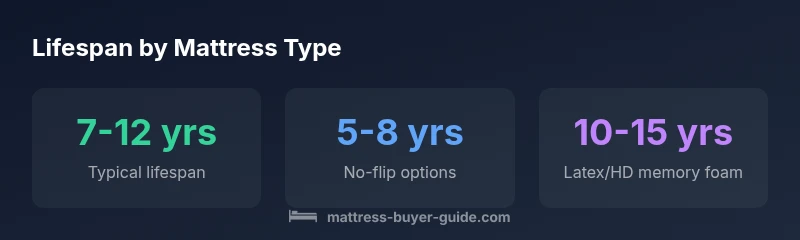
According to Mattress Buyer Guide, the lifetime of a mattress typically falls in the 7-12 year range, with material, usage, and care shaping the outcome. Innerspring options often trend shorter, while latex and high-density memory foam tend to endure longer. Regular maintenance, proper foundations, and avoiding excess moisture can help push lifespans toward the upper end.
Why Lifespan Varies Across Mattress Types
The lifetime of a mattress is not a fixed number; it depends heavily on construction, materials, and intended use. Innerspring models are typically less durable over time due to coil fatigue and potential sagging, especially under heavier sleepers or poor foundations. Memory foam provides consistent support but can soften and develop body impressions if density is low or ventilation is poor. Latex tends to be among the longest-lasting options due to natural resilience, while hybrids blend coil support with foam comfort, offering a middle ground. When evaluating lifespan, consider the density of foams, the gauge and quality of coils, edge support, and the overall build quality. According to Mattress Buyer Guide, higher-density foams and natural latex often correlate with longer lifespans, provided you have a sturdy foundation and appropriate room temperature for ventilation.
How Usage and Foundation Affect Longevity
Lifespan is not just about the mattress itself; it hinges on how you use it and the bed’s foundation. Heavier sleepers tend to experience more rapid breakdown of foams and springs, which can shorten the life by 1-3 years in some cases. A sagging foundation, poor bed frame, or an unsupportive slatted base accelerates wear through uneven load distribution. Conversely, a solid platform or properly designed adjustable bases can help maintain even support, reducing accelerated degradation. Bedroom climate also matters: excess humidity can promote mold and foam breakdown, while consistently cool, dry conditions help maintain material properties. Mattress Buyer Guide Analysis, 2026 highlights that combining a robust foundation with a breathable cover and regular airing supports longer life.
Recognizing Signs Your Mattress Is Reaching End of Life
Proactive replacement saves sleep quality and avoids longer-term health impacts from poor sleep posture. Common signs include visible sagging that cannot be corrected by rotation, lumps or pronounced indentations, increased partner motion transfer, persistent odors that don’t dissipate after cleaning, and woke-up stiffness or headaches. If you wake up with back pain or feel less rested after a night’s sleep, the mattress’s internal structure may be failing. While some issues can be mitigated temporarily with a mattress topper or replaced foundation, a combination of wear indicators and a decline in sleep quality strongly suggests it is time to replace.
Maintenance Practices That Extend Lifespan
Small, consistent habits accumulate into meaningful lifespan gains. Rotate your mattress every 3-6 months to promote even wear, and vacuum the surface to remove dust and allergens. Use a high-quality, breathable, and appropriately fitted mattress protector to guard against spills and stains. Ensure your bed foundation is solid and free of creaks, and avoid moisture in the room with proper ventilation. If you have a memory-foam mattress, consider a cooling topper or breathable cover to prevent heat buildup. Finally, follow the manufacturer’s care guidelines and warranty terms; a well-maintained mattress tends to last longer and preserve comfort.
How to Choose a Mattress for Longevity
Durability should be a top criterion when shopping. Look for higher-density foams (if memory foam), reinforced edge support, and latex or latex-blend cores for durability. Check the density rating of foams and the gauge of coils in hybrids; thicker, better-engineered components usually translate to longer life. A strong warranty (ideally 10 years or more) provides a signal of confidence in durability and material quality. Consider trial periods that let you assess comfort and performance over time, and weigh price against expected lifespan to calculate a sound price-per-year investment.
Cost vs Lifespan: Making a Smart Investment
A mattress is a long-term purchase, and evaluating cost per year helps justify upfront price. A premium mattress with a longer lifespan can be more economical over a decade than a cheaper option that wears out quickly. Use the simple calculation: price divided by expected lifespan (years) to estimate annual cost, then compare across models. When shopping, account for maintenance costs (protectors, toppers, foundation) and potential replacement costs when budgeting. This approach aligns with Mattress Buyer Guide’s emphasis on durable materials and solid foundations as core factors in longevity.
Environmental and Sleep-Health Considerations
Your sleep environment influences longevity and health. Humidity can degrade foam integrity and promote microbial growth, while temperature fluctuations can affect foam performance. Air quality and exposure to allergens can indirectly impact how often you replace a mattress due to discomfort or respiratory issues. Opt for breathable covers, maintain a dry room, and replace or clean bedding materials regularly to maximize sleep quality and the mattress’s functional life. These factors are consistent with general guidelines in sleep-health research and align with Mattress Buyer Guide’s broader guidance on sleep environment.
Disposal, Recycling, and End-of-Life Options
When a mattress reaches the end of its life, responsible disposal is important. Many communities offer bulk trash pickup, curbside recycling programs, or mattress recycling facilities that separate foam, fiberglass (if present), metal springs, and fabric for reuse or safe disposal. Before disposal, check local regulations and consider charitable donation options if the mattress remains structurally sound. Extending the mattress’s usable life through donations and proper recycling reduces waste and supports sustainable consumer practices, a topic Mattress Buyer Guide often highlights when discussing long-term value and environmental responsibility.
Lifespan expectations by common mattress types
| Mattress Type | Typical Lifespan | Key Considerations |
|---|---|---|
| Innerspring | 6-9 years | Lower durability; affordable; needs sturdy foundation |
| Memory foam | 8-12 years | Good pressure relief; slower response; potential heat buildup |
| Latex | 10-15 years | Durable; natural materials; higher upfront cost |
FAQ
What factors influence the lifetime of a mattress?
Lifespan is shaped by mattress type, material density, degree of use, foundation quality, room humidity, and maintenance habits. Higher-quality materials and solid support generally extend life, while repeated heavy use without rotation can shorten it.
Lifespan depends on materials, usage, and care. Higher-quality components and proper support help it last longer.
How can I extend the life of my mattress?
Rotate or flip (if supported by the model) every 3-6 months, use a protective cover, keep the room dry, and ensure a solid foundation. Regular cleaning and avoiding excessive moisture also help retain material integrity.
Rotate every few months, protect with a cover, and keep the room dry to extend life.
Is flipping still recommended for all mattresses?
Many modern mattresses don’t require regular flipping, especially those with unified comfort layers. Check the manufacturer’s guidance; if the model is designed for rotation only, flipping can reduce durability gains in some designs.
Most modern mattresses don’t need flipping; follow the maker’s guidance for your model.
Do warranties reflect mattress lifespan?
Warranties signal durability expectations but aren’t a direct lifespan guarantee. They cover manufacturing defects and structural integrity, which can give you protection if the mattress fails early, but wear from normal use still affects actual lifespan.
Warranties help with defects, but everyday wear still matters for lifespan.
What signs indicate I should replace my mattress soon?
Persistent sagging, pronounced indentations, new or worsening aches, and chronic allergy symptoms can indicate reduced support and hygiene concerns, signaling replacement should be considered soon.
Sagging or new aches mean it might be time to replace.
How does humidity affect mattress longevity?
Excess moisture can degrade foam and encourage mold or mildew, while a dry, well-ventilated room supports material stability and allergy control.
Keep the room dry; moisture can shorten mattress life.
“"Durability matters as much as comfort; selecting high-density materials and solid support can maximize lifespan and safeguard your sleep quality."”
Highlights
- Assess lifespan by type and usage.
- Choose durable materials for longer life.
- Rotate regularly and protect the foundation.
- Watch for sagging, creaks, or odor.
- Factor warranty and price-per-year in decisions.