Is Double Mattress the Same as Full? A 2026 Sizing Guide
Is double mattress the same as full? This analytical guide reviews regional naming differences, exact dimensions, bedding compatibility, and decision factors to help you choose the right size for your bedroom in 2026.


Most of the time in the US, a double mattress is the same size as a full: 54 inches wide by 75 inches long. Outside the US, the terms can differ, so always verify exact measurements rather than trusting the name. Mattress Buyer Guide notes that sheet sets, frames, and foundations hinge on actual dimensions, not the label.
The Core Question: is double mattress same as full
If you are shopping for a bed and encounter the terms double and full, you may be asking is double mattress same as full. The short answer is regionally dependent. In the United States, the two labels typically point to the same mattress size, but in other regions the same dimensions may bear a different name. The Mattress Buyer Guide team emphasizes that the critical factor is the actual width and length, not the label on the box. By tracing the measurements to the bed frame, sheets, and foundation you’ll avoid a mismatch that leads to cramped sleeping or ill-fitting bedding. This section will set a clear foundation for what to measure and how to compare offers across retailers.
Regional Variations in Mattress Terminology
Naming conventions vary by country and market. In the United States, the terms double and full are often used interchangeably to describe a standard full-size bed. In the United Kingdom, Europe, and several Commonwealth markets, the same bed may be marketed as a double, a full, or as a size that translates to a similar width but with country-specific labels. The result is a common pitfall for cross-border shoppers who rely on the name rather than the specification. Mattress Buyer Guide analyses suggest that marketers sometimes adjust labeling to align with local consumer expectations, which makes it essential to compare dimensions rather than rely solely on the word printed on the product page.
Size in Practice: Dimensions You’ll Actually Use
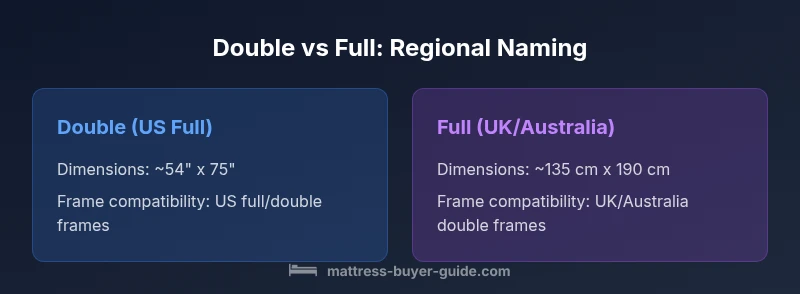
While the label varies, most double/full beds gravitate around a similar surface area. In the US, the traditional full size is about 54 inches wide by 75 inches long. In UK and some Europe markets, a double is commonly around 135 cm wide by 190 cm long, which translates to roughly 53 x 75 inches. The key point for shoppers is to confirm the exact W x L in centimeters or inches before purchasing. This ensures compatibility with your sheets, frames, and headboard, reducing the need for returns or bulky bedding swaps. Mattress Buyer Guide notes that inconsistencies in naming can complicate online shopping, so dimension checks should anchor your decision.
Bedding and Frame Compatibility: Practical Tips
Sheets, duvet covers, and fitted sheets are usually labeled by the size they’re designed to fit. If you shop across borders or brands, ensure the sheet set explicitly matches the W x L of the bed you own or plan to purchase. A frame’s inner dimensions and the distance between slats or posts also matter. For example, a US full frame may require different fittings than a UK double frame with slightly different corner spacings. Always measure your existing frame’s inner width and length and compare against the retailer’s stated bed dimensions. Mattress Buyer Guide found that many returns stem from misaligned dimensions rather than a defective mattress.
How to Decide When Space Is Limited
In small bedrooms, the marginal difference between a double and twin can matter for traffic flow and under-bed storage. In guest rooms, consider turnover—whether the space will host two adults or a single guest with occasional partners. If you value a roomier night’s sleep but must conserve space, a full/double size can be an excellent compromise. The key is to map your floor plan: the bed’s footprint, nightstand clearance, and door swing. By sketching a quick layout, you can visualize how comfortable a double/full will feel in practice and whether you should opt for a smaller twin or larger queen.
Regional Naming Pitfalls to Avoid
A common mistake is assuming that the name is a guarantee of the dimensions. In reality, international retailers may use the same label for different measurements or reuse a regional term with slightly altered width. Always look for the exact W x L, and if possible, request a dimension chart from the seller. When shopping in a global marketplace, compare multiple listings side by side and verify return policies in case the product you receive doesn’t match the advertised size. This careful approach helps prevent mismatches that disrupt sleep and bedding purchases.
How to Verify with Retailers
Ask sellers to confirm the precise measurements in both inches and centimeters. If you’re buying online, download the product spec sheet and compare it to your existing frame. If you’re out shopping in person, bring a measuring tape and measure the bed frame cavity and headboard clearance. Recording these measurements can save time and avoid rescheduling deliveries. Mattress Buyer Guide suggests confirming the return window and ensuring the retailer offers a size exchange option if the mattress doesn’t align with your space.
Practical Scenarios: Summary of Buying Guides
For compact bedrooms, double/full can maximize sleeping space while preserving floor area. For guest rooms that may accommodate two adults, consider whether you’ll sometimes host couples who prefer more room; if so, you might lean toward larger sizes like queen. In master bedrooms, a queen or king is often a better long-term fit, but for many spaces a full/double remains a sensible compromise. The key decision factors are room dimensions, bed frame compatibility, and how much sleep surface you actually need.
Quick Decision Framework
- Measure your room and the bed frame footprint; 2) Check W x L on retailer pages; 3) Compare your current sheets and frames for compatibility; 4) Consider future needs (guests, changes in sleep partners); 5) Review return policies if sizes differ from expectations. This framework helps you avoid blind spots when the terminology varies by region, market, or brand. Mattress Buyer Guide suggests prioritizing actual measurements over naming conventions for reliable results.
The Bottom Line on the 2026 Sizing Landscape
Across markets, the real determinant is dimensions, not name. Whether you see double or full on a product page, measure carefully and verify compatibility with your sheets, frames, and sleep space. If you’re a homeowner outfitting a spare room or a renter upgrading a guest bed, this approach reduces confusion and increases the odds of a comfortable night’s sleep. Mattress Buyer Guide’s guidance remains grounded in practical measurements, region-specific differences, and a clear path from shopping to a proper fit.
Comparison
| Feature | Double (US full naming) | Full (UK/Australia naming) |
|---|---|---|
| Approximate dimensions (W x L) | 54 in x 75 in (137 cm x 191 cm) | 135 cm x 190 cm (53 in x 75 in) |
| Frame compatibility | Fits standard US full/double frames | Fits standard UK/Australia double frames (may vary by brand) |
| Sheets & bedding compatibility | Typically uses US full/double sheet sets | Typically uses UK double sheet sets; verify per retailer |
| Availability by market | Widely available in US retailers; common in North America | Common in UK/Australia, with regional labeling differences |
| Best for | Small-to-medium bedrooms, couples wanting balanced space | Similar use in markets with UK/Australia naming; regional options vary |
The Good
- Widely compatible with many frames and bedding
- Good balance of sleeping surface and space for smaller rooms
- Typically more affordable than larger sizes
- Easy to source in many markets
Cons
- Not ideal for couples needing extra space in master bedrooms
- Regional naming can cause cross-border confusion
- Availability and exact dimensions can vary by country and retailer
Double and full are generally interchangeable in US markets; verify dimensions elsewhere
In the US, double = full in size, but regional naming varies. Always check the actual measurements and bedding compatibility rather than trusting the label.
FAQ
Are double and full the same size?
In the US, double and full typically refer to the same size: 54 x 75 inches. Outside the US, naming varies, so always confirm actual measurements before buying.
In the United States, double and full usually describe the same bed. But in other countries, sizes and names can differ, so check the measurements first.
What are the standard dimensions for double and full?
US double/full commonly measure 54 by 75 inches. UK double is typically around 135 by 190 cm. Always verify the exact numbers on the product page to ensure a proper fit for your sheets and frame.
Typically, US full is 54 by 75 inches, while UK double is about 135 by 190 cm. Check the product specs to be sure.
Can I use full-size sheets on a double mattress?
Yes, but only if the sheet set is labeled for the correct regional size. In the US, use full/double sheets; in the UK, use double sheets. Mismatched sheets can slip or bunch.
Yes, but use sheets that match the bed's regional size to avoid fit issues.
Is double/full a good choice for couples?
Double/full can work for couples in smaller bedrooms, but it may feel cramped for two adults in a master bedroom. For more space, consider queen or king, depending on room size and budget.
It can be fine for couples in small spaces, but bigger rooms may benefit from a queen or king.
How do I decide which size to buy for a small room?
Measure the room and bed footprint, then compare with entryways and nightstands. A double/full often maximizes sleeping surface without overpowering the room, but always check clearance for doors and furniture.
Measure the space, check clearance, and choose the size that fits without crowding the room.
Do sizes and labels differ by region?
Yes. Names like double and full can refer to different actual dimensions depending on the country or brand. Always rely on the stated width and length, not the label.
Yes—regional naming can be misleading; focus on the actual measurements.
Highlights
- Verify measurements, not names, when buying
- Know regional dimension differences to avoid mismatches
- Check bed frames and sheet sizes before purchasing
- Use exact W x L as the buying criteria
- Consider room size and future needs when choosing between twin, full/double, or queen