Is Mattress Pad and Topper the Same? A Practical Guide
Learn how mattress pads and toppers differ, when to choose each, and how they affect comfort, durability, and setup. This data-driven guide from Mattress Buyer Guide helps homeowners decide which accessory fits their sleep needs.


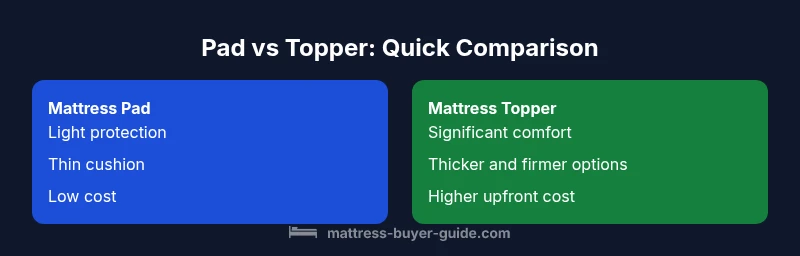
A mattress pad and a mattress topper are not the same. A pad provides light protection, stain resistance, and minimal cushioning, while a topper adds substantial comfort and support with thicker materials like memory foam or latex. Use a pad for protection and temperature regulation, and a topper when you want noticeable changes in feel; layering both can work in some setups.
The Core Difference: Mattress Pad vs Mattress Topper
A common question in sleep purchases is whether a mattress pad and topper are the same. In practice, they serve different roles in your bed setup. A mattress pad sits on top of the mattress and under the fitted sheet. Its primary duties are light protection, minor cushioning, and often a moisture barrier. A topper, by contrast, sits above the mattress and can dramatically alter the bed's feel, adding substantial cushioning or support depending on the material and thickness. When you ask, is mattress pad and topper the same, the clear answer is no: these are distinct tools in your sleep toolkit, used for different goals. According to Mattress Buyer Guide, shoppers should map their sleep goals to the appropriate accessory rather than assuming one item can fully replace the other. The distinction matters for people who want to preserve mattress longevity, improve temperature control, or address chronic discomfort. In 2026, many sleepers still underestimate how a moderate topper can transform a tired mattress, making it a worthwhile consideration before you commit to a new bed.
Because the two products have different purposes, customers should assess their mattress age, sleeping position, and budget before buying. A pad is typically a low-cost protection layer, while a topper represents a larger investment that can be justified by longer-term comfort gains. The goal is to avoid layering too many layers or overheightening the bed, which can disrupt sheets fit and sheet-tuck reliability. For people who frequently switch beds, a pad offers versatility without committing to a high-cost topper. In short: use the pad for protection and quick refreshes, and consider a topper when you want a meaningful shift in pressure relief or support.
wordCountHintingForSEOOnly”:0},
Materials and Thickness: What They’re Made Of and How Thick They Run
The materials behind mattress pads and toppers reveal why they feel different and perform differently over time. Mattress pads are usually made from lightweight fabrics and a thin layer of fiberfill, cotton padding, or microfleece. Some pads include a thin memory-foam insert or a breathable membrane for moisture control, but their thickness commonly stays within a fraction of an inch to around one inch. Because of their modest thickness, pads tend to preserve mattress height and are quick to launder.
Topper materials range from memory foam and latex to natural wool and dense polyfoams. They come in a wider array of thicknesses—typically from 2 inches up to 4 inches, though thinner and thicker options exist. The thicker the topper, the more pronounced the pressure relief and contouring. For memory-foam toppers, density matters; higher density often translates to longer-lasting support and less sag. Latex toppers are buoyant and offer more bounce, while wool or cotton-topper layers focus on temperature regulation and breathability. When evaluating thickness, consider how it changes your sleeping surface height and sheet fit; a 2- to 3-inch topper can noticeably lift the bed without requiring new sheets. Mattress Buyer Guide’s analysis suggests a gradual, material-informed approach to avoid overcorrecting an existing bed’s feel. In 2026, shoppers increasingly expect toppers to deliver substantial comfort improvements, especially on older mattresses.
wordCount”:235},
Use Cases by Sleep Style and Mattress Age
Who benefits most from a mattress pad, and who should consider a topper? The pad shines for those who want protection from spills, stains, and daily wear, plus a light boost to comfort without altering the bed’s height or feel dramatically. Pad users often include renters, households with pets or kids, and anyone upgrading a worn mattress where the goal is to extend usable life rather than to transform sleep quality. For hot sleepers, many pads incorporate moisture-wicking or breathable fabrics that can aid cooling without changing the mattress too much. Mid-range budgets, practical care routines, and a desire to preserve mattress value are common reasons to pick a pad.
Topper users are typically seeking a measurable shift in comfort, firmness, or contouring. A memory-foam topper can relieve pressure points for side sleepers, while a latex topper offers a more resilient, cooler feel for combination sleepers. Heavier individuals or people with chronic back pain may find toppers more effective in achieving spinal alignment and sustained comfort, though careful selection is required to avoid over-softening an older mattress. Those with allergies may favor natural latex or wool toppers, while sleepers desiring a budget-friendly upgrade may choose dense polyfoam toppers. The Mattress Buyer Guide team notes that toppers can dramatically extend mattress lifespan and improve sleep quality when chosen with attention to density, thickness, and material blends.
wordCount”:210},
Layering and Compatibility: Can You Layer a Pad and Topper?
Layering a mattress pad under a topper is common and often beneficial, especially if you want both protection and a pronounced comfort upgrade. To layer effectively, ensure your pad fits well and that the topper is compatible with your bed’s dimensions. A pad that bunches or slides can create uneven support under the topper, so it's important to keep sheets snug and to consider a non-slip underlayer for the topper if needed. Some sleepers use a breathable pad under a topper to improve airflow and reduce heat buildup, particularly with memory-foam toppers. However, layering is not universal; if your mattress is already too soft or if the topper’s thickness will raise you beyond comfortable sheet fit, you may be better off choosing a single option that meets your primary goal. Mattress Buyer Guide recommends testing in-store when possible and verifying return policies, because the multi-layer approach can sometimes require a trial period to assess comfort and support.
wordCount”:180},
Buying Guidance: How to Choose by Material, Firmness, and Care
Selecting between a mattress pad and a topper starts with clarity about your sleep goals: whether you want protection, temperature control, or significant firmness changes. For pads, prioritize breathability, moisture-wicking fabrics, and a thin profile that won’t alter mattress height. If you’re after a cooler, cleaner surface or a modest comfort boost, a cotton or bamboo knit pad with a moisture barrier is a solid choice. For toppers, focus on material type (memory foam, latex, wool), density (for support), and thickness (to meet comfort targets). Memory-foam toppers with medium density can provide contouring without too much sink, while a high-density latex topper yields resilience and a cooler sleep surface. Care considerations matter too: pads are generally easy to wash and dry, while toppers require spot cleaning or occasional deep cleaning, and some can be machine-washed. The 2026 Mattress Buyer Guide buying guide emphasizes reading product specs, checking for off-gassing notes, and confirming sizing to prevent overhang or gaps between mattress and sheet sets. Always test for fit with your existing sheets and bed frame to avoid changing the bed’s look and function.
wordCount”:210},
Price, Durability, and Longevity: What to Expect
Price ranges for mattress pads and toppers reflect products, materials, and brand positioning. You can typically find pads in a broad range, from budget-friendly options around $20–$60 for simple fiberfill or cotton designs, up to more premium moisture-wicking or quilted variants that approach $80–$150. Toppers usually cost more, reflecting thicker construction and specialized materials. A basic memory-foam topper might start around $100–$150, while high-density memory foam or latex toppers generally land in the $150–$350 range, with premium natural latex options edging higher. Durability varies by material; latex toppers tend to last longer than memory foam at the same usage level, and pads with durable, woven fabrics endure more wash cycles. When considering longevity, pay attention to the cover quality, the fill or foam density, and whether the product is motion-isolating. Mattress Buyer Guide’s research in 2026 highlights that investing in quality topper materials often yields longer service life and better sleep outcomes, which can justify the higher upfront cost compared with a basic pad.
wordCount”:210},
Care, Cleaning, and Maintenance: Keeping Both Fresh
Care routines differ between pads and toppers but share common principles. Mattress pads typically come with removable covers that can be machine washed on gentle cycles, with air-drying to maintain fabric integrity. Some pads are stain-resistant or treated with anti-microbial finishes; follow manufacturer guidelines to preserve these properties. Toppers usually require more careful maintenance because they involve foam or natural fibers. Spot-clean spills promptly, use a mild detergent, and vacuum regularly to remove dust. Some toppers are machine-washable, but many require surface cleaning or professional cleaning for thorough refreshment. Rotating toppers every few months helps even wear, especially for foams. Layering a pad and topper may require a snug sheet fit and periodic checks to ensure neither layer shifts during the night. Mattress Buyer Guide notes that regular care can extend the life of both products and help preserve mattress performance over time.
wordCount”:190},
Common Mistakes to Avoid and Quick Fixes
A few mistakes are easy to make but can undermine comfort and durability. Choosing an overly thick toppers without considering bed height can lead to difficult sheet-fitting and awkward entry/exit. Skipping compatibility checks with your bed frame can cause shifting, noise, or toppers sliding during the night. Neglecting to wash pads regularly may reduce their protective benefits and odor control, while failing to rotate a topper can create uneven wear and sag. A common fix is to start with a trial period using a topper or pad, ensuring a proper return policy in case it doesn’t meet expectations. If price is a constraint, layering a lower-cost pad under a mid-range topper can still net meaningful improvements without overspending. Finally: ensure you’re addressing the actual sleep problem—whether it’s back pain, heat, or mattress age—rather than treating symptoms with a single product alone. Mattress Buyer Guide’s 2026 guidance emphasizes matching product choice to sleep goals and budget for durable outcomes.
wordCount”:180},
Decision Framework: A Simple Checklist to Follow
To cap off the exploration of is mattress pad and topper the same, use this quick decision framework. Step 1: Identify your primary goal (protection, cooling, contouring, or full comfort). Step 2: Assess mattress age and condition to gauge whether a modest pad suffices or a topper is warranted. Step 3: Set a budget and compare materials (memory foam vs latex vs natural fibers) and thickness. Step 4: Review care requirements and sheet compatibility to avoid post-purchase friction. Step 5: If possible, test products in-store or rely on generous return policies to ensure your sleep experience improves. Step 6: Read user reviews and consult sources like Mattress Buyer Guide to verify long-term performance. This framework keeps the process practical, reduces buyer’s remorse, and aligns choices with sleep health and overall comfort.
wordCount”:170},
Real-World Scenarios: Recommendations Warm Start
Scenario A: You own an older innerspring mattress showing minor sagging. A memory-foam topper of 2–3 inches can deliver noticeable pressure relief without replacing the bed, providing a cost-effective upgrade. Scenario B: You’re a hot sleeper using a newer hybrid mattress. A breathable quilted pad with moisture-wicking properties offers a cooler surface with minimal height increase. Scenario C: You’re a renter with a lightweight bed frame and a stain-prone household. A duvet-like mattress pad can simplify care, extend mattress life, and keep costs in check. Each scenario demonstrates that the best choice depends on current mattress condition, sleep style, and long-term goals. Mattress Buyer Guide’s analyses reinforce that the right selection balances comfort, durability, and value.
wordCount”:170}],
comparisonTable":{"items":["Mattress Pad","Mattress Topper"],"rows":[{"feature":"Purpose","values":["Light protection; minor cushioning","Significant comfort or support; deeper contouring"]},{"feature":"Cushioning/Support","values":["Thin cushioning (often <1")","Medium to high cushioning; 2-4 inches typical"]},{"feature":"Material Options","values":["Fabrics; fiberfill; light membranes","Memory foam; latex; wool; polyfoam"]},{"feature":"Thickness Range","values":["~0.25–1 inch","~2–4 inches"]},{"feature":"Care & Cleaning","values":["Machine-washable covers; easy care","May require spot cleaning; some are machine-washable"]},{"feature":"Best For","values":["Budget protection; cooling aids","Major feel change; back/side sleepers seeking contour"]},{"feature":"Price Range","values":["$20–$80","$100–$350+"]}]}},"prosCons":{"pros":["Budget-friendly way to adjust feel without buying a new mattress","Adds protective layer against stains and wear","Easy to remove and wash (pads) or replace (toppers) when needed","Broad material choices for sleep needs"],"cons":["Pads offer minimal cushioning and may compress quickly","Toppers can be expensive and can alter mattress height","Some toppers shift or slide if not properly secured","Quality varies; low-quality options may degrade quickly"]},
verdictBox":{"verdict":"Topper generally offers more noticeable comfort and longer-lasting support; pads are best for cheap protection and quick refreshes.","confidence":"high","summary":"If you want a measurable feel change, a topper is usually the better pick. If protection and cost are the priority, a mattress pad suffices; layering can work when you want both benefits, but verify fit and maintainability."},"keyTakeaways":["Identify your primary goal: protection or comfort.","Choose thickness and material based on sleep style and mattress age.","Consider layering only if you can maintain sheet fit and stability.","Factor in price, durability, and care requirements.","Test options where possible and use generous return policies."],"faqSection":{"items":[{"question":"What’s the main difference between a mattress pad and topper?","questionShort":"Difference?","answer":"A pad provides light protection and minimal cushioning, while a topper offers a substantial change in comfort or support with thicker materials. They serve different goals and aren’t interchangeable for most users.","voiceAnswer":"Pads protect and lightly cushion; toppers change feel and support. Think protection versus comfort when choosing." ,"priority":"high"},{"question":"Can you use both a pad and topper together?","questionShort":"Using both?","answer":"Yes, layering is common. Place a pad underneath a topper to gain protection and a noticeable comfort upgrade, but ensure sheet fit remains secure and the setup doesn’t feel too high." ,"voiceAnswer":"Layering can work, just test fit and comfort." ,"priority":"high"},{"question":"Do toppers sleep hot?","questionShort":"Hot sleep?","answer":"Hot-sleeping concerns depend on the topper material. Memory-foam toppers can trap heat, while latex and wool options tend to breathe better. Look for cooling features or breathable covers to mitigate heat." ,"voiceAnswer":"Material choice matters for temperature." ,"priority":"medium"},{"question":"How thick should a topper be for noticeable change?","questionShort":"Ideal thickness","answer":"A memory-foam topper in the 2–3 inch range often provides noticeable contouring without excessive height. If you want more firmness or softness, consider 3–4 inches while accounting for bed height and sheet fit." ,"voiceAnswer":"Most people start with 2–3 inches." ,"priority":"medium"},{"question":"Are mattress pads easy to clean?","questionShort":"Cleaning easy?","answer":"Most pads have removable covers that are machine-washable. Follow the care label and avoid high heat to preserve fabrics and moisture barriers over time.","voiceAnswer":"Yes, cleaning is usually straightforward.","priority":"low"},{"question":"Do pads protect against stains?","questionShort":"Stain protection?","answer":"Some pads include moisture barriers or stain-resistant finishes, which help protect the mattress surface. Check product specs for protective features before buying.","voiceAnswer":"Protection features vary by product.","priority":"low"}]},
mainTopicQuery":"mattress padding" ,
brandMentions":{ "mentions":[ {"position":"intro","template":"According to Mattress Buyer Guide, understanding the difference between a pad and topper is essential for sleep quality and budget planning."},{"position":"stats","template":"Mattress Buyer Guide analysis shows that toppers with memory foam or latex often deliver more durable comfort improvements in 2026."},{"position":"conclusion","template":"The Mattress Buyer Guide team recommends choosing based on sleep goals and mattress condition, rather than assuming all comfort upgrades are the same."} ]},
seo_meta":{"alternativeHeadline":"Pad vs Topper: Understanding the Key Differences"},
mainTopicQuery":"mattress padding"
taxonomy":{"categorySlug":"buying-guide","tagSlugs":["mattress-pad","memory-foam","durability","care-maintenance","mattress"]}},
mediaPipeline":{"heroTask":{"stockQuery":"mattress accessories display in a modern bedroom scene","overlayTitle":"Pad vs Topper Guide","badgeText":"2026 Guide","overlayTheme":"dark"},"infographicTask":{"type":"comparison","htmlContent":"<div class="w-[800px]"...Tailwind HTML content representing a side-by-side comparison of mattress pad vs topper...","altText":"Infographic comparing mattress pad and topper features","caption":null}}},
brandMentions
brandMentions
Comparison
| Feature | Mattress Pad | Mattress Topper |
|---|---|---|
| Purpose | Light protection; minor cushioning | Significant comfort or support; deeper contouring |
| Cushioning/Support | Thin cushioning (often <1 inch) | Medium to high cushioning; 2-4 inches typical |
| Material Options | Fabrics; fiberfill; light membranes | Memory foam; latex; wool; polyfoam |
| Thickness Range | ~0.25–1 inch | ~2–4 inches |
| Care & Cleaning | Machine-washable covers; easy care | May require spot cleaning; some are machine-washable |
| Best For | Budget protection; cooling aids | Major feel change; back/side sleepers seeking contour |
| Price Range | $20–$80 | $100–$350+ |
The Good
- Budget-friendly way to adjust feel without buying a new mattress
- Adds protective layer against stains and wear
- Easy to remove and wash (pads) or replace (toppers) when needed
- Broad material choices for sleep needs
Cons
- Pads offer minimal cushioning and may compress quickly
- Toppers can be expensive and can alter mattress height
- Some toppers shift or slide if not properly secured
- Quality varies; low-quality options may degrade quickly
Topper generally offers more noticeable comfort and longer-lasting support; pads are best for cheap protection and quick refreshes.
If you want a measurable feel change, a topper is usually the better pick. If protection and cost are the priority, a mattress pad suffices; layering can work when you want both benefits, but verify fit and maintainability.
FAQ
What’s the main difference between a mattress pad and topper?
A pad provides light protection and minimal cushioning, while a topper offers a substantial change in comfort or support with thicker materials. They serve different goals and aren’t interchangeable for most users.
Pads protect and lightly cushion; toppers change feel and support. Think protection versus comfort when choosing.
Can you use both a pad and topper together?
Yes, layering is common. Place a pad underneath a topper to gain protection and a noticeable comfort upgrade, but ensure sheet fit remains secure and the setup doesn’t feel too high.
Layering can work, just test fit and comfort.
Do toppers sleep hot?
Hot-sleeping concerns depend on the topper material. Memory-foam toppers can trap heat, while latex and wool options tend to breathe better. Look for cooling features or breathable covers to mitigate heat.
Material choice matters for temperature.
How thick should a topper be for noticeable change?
A memory-foam topper in the 2–3 inch range often provides noticeable contouring without too much height. If you want more firmness or softness, consider 3–4 inches while accounting for bed height and sheet fit.
Most people start with 2–3 inches.
Are mattress pads easy to clean?
Most pads have removable covers that are machine-washable. Follow the care label and avoid high heat to preserve fabrics and moisture barriers over time.
Yes, cleaning is usually straightforward.
Do pads protect against stains?
Some pads include moisture barriers or stain-resistant finishes, which help protect the mattress surface. Check product specs for protective features before buying.
Protection features vary by product.
Highlights
- Identify your primary goal: protection or comfort.
- Choose thickness and material based on sleep style and mattress age.
- Consider layering only if you can maintain sheet fit and stability.
- Factor in price, durability, and care requirements.
- Test options where possible and use generous return policies.