Mattress Pad vs Mattress Protector: A Practical Guide
Compare mattress pads and mattress protectors to decide which is right for comfort, protection, and hygiene. Learn when to layer both, how to choose, and practical care tips for better sleep.


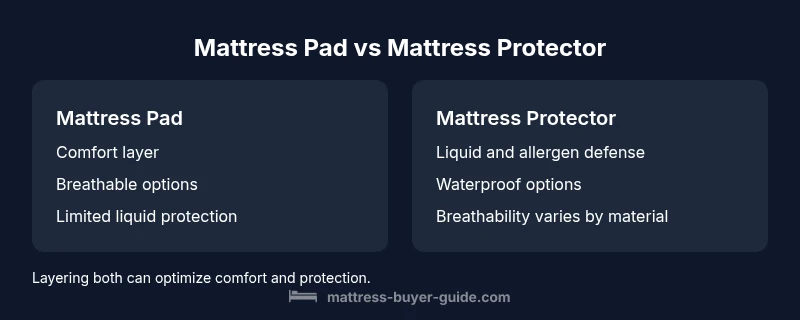
Mattress pads and mattress protectors perform different jobs and are rarely interchangeable. A mattress pad adds a soft, cushioned layer for comfort and minor contouring, while a mattress protector guards against spills, stains, and allergens. For most sleepers, start with a pad for comfort and add a protector if you need spill protection or allergen defense. The two can be layered for optimal sleep quality.
Mattress pad vs mattress protector: what they are and why they matter
In the realm of sleep accessories, the terms mattress pad and mattress protector are often used interchangeably, but they describe two distinct products with different goals. Mattress pad vs mattress protector is a fundamental decision that affects comfort, hygiene, and how you care for your mattress. According to Mattress Buyer Guide, pads are designed to soften the surface and improve pressure distribution, while protectors act as a barrier against liquids, allergens, and general wear. The Mood of a bedroom and the quality of your rest can shift dramatically depending on which you choose first. If you sleep hot, you may lean toward a breathable pad; if you have small children or a high spill risk, a protector might be your top priority. This block sets the stage for a nuanced comparison that helps you align your purchase with your sleep goals.
Core differences: comfort, protection, and breathability
When you compare mattress pad vs mattress protector side by side, the core differences revolve around purpose, materials, and how they influence the night. A pad is typically a thin to medium-thick layer that adds softness and a touch of contour without drastically altering the mattress feel. Breathability varies by material, with cotton and moisture-wicking fibers often performing best. In contrast, a protector is primarily a dust- and liquid-barrier. Many protectors are waterproof or water-resistant, and materials range from quiet fabric to crinkly vinyl-like layers. The result is a more secure sleep environment, especially for households with kids, pets, or incontinence concerns. Mattress Buyer Guide emphasizes that protection is not a guarantee against wear but a hygiene shield that can extend mattress life when used correctly. The decision often hinges on whether you value a softer surface or a stronger defense against accidents and spills.
How to choose based on your sleep style
Your sleep style should drive the decision between a pad and a protector. Side sleepers who want a cushioned surface may prefer a pad to relieve shoulder and hip pressure. Back sleepers seeking neutral support may benefit from a pad that preserves the mattress’ base feel while offering mild contour. Hot sleepers or those with nocturnal sweating may prioritize breathable pads made from mesh or cotton blends. For people with allergies or asthma, a protector with a barrier fabric can reduce exposure to dust mites and pet dander. The Mattress Buyer Guide team notes that layering is often the best of both worlds: start with a pad for comfort, then add a protector if you need spill or allergen defense. This approach provides a tailored sleep surface that adapts to changing conditions.
Layering for maximum comfort and protection
Layering is a practical strategy that many households adopt. Place a breathable mattress pad directly on the mattress to create a comfortable, cushioned surface. Add a protector on top for spill resistance and stain protection. Choose protectors with soft, quiet fabrics and breathable membranes to minimize warmth buildup. If heat retention is a concern, look for protectors marketed as breathable or with moisture-wicking properties. The two-layer combination can be especially effective for households with kids, pets, or seasonal allergies. Mattress Buyer Guide’s guidance highlights that layering is rarely a bad idea when your goal is to balance comfort with protection.
Cleaning, care, and lifespan
Care routines for mattress pads and protectors are a key longevity factor. Most pads and protectors are machine-washable, but verify the label for temperature and drying requirements. A mild detergent and gentle cycle extend fabric life, while air-drying prevents distortion. Because pads tend to accumulate body oils and sweat, washing more frequently can help maintain hygiene and feel. Protectors may handle spills better if you opt for waterproof variants, but heavy washing can degrade waterproof membranes over time. A practical tip is to wash pads and protectors separately from sheets to ensure thorough cleaning and drying. Regular washing also helps preserve breathability and prevent odor buildup, contributing to a healthier sleep environment.
Real-world scenarios: couples, kids, and memory foam
Different living situations demand different solutions. Couples might prefer a pad for comfort on one side of the bed and a protector for the other if there are spill concerns. Parents of young children may rely more on protectors for cleanliness and allergy control, while pads can be used to soften firm memory foam mattresses. Memory foam in particular often benefits from a pad that prevents heat buildup and maintains conforming support, but not all memory foam surfaces require a pad. Mattress Buyer Guide notes that adaptivity matters: any solution should permit easy rotation, laundering, and alignment to prevent bunching.
Price, value, and warranty considerations
Pricing for mattress pads and protectors varies widely. Pads range from basic budgets to premium cushioned options, while protectors span lightweight covers to heavy-duty, waterproof membranes. When evaluating price, consider the total cost of ownership, including washing frequency and potential fabric longevity. A key value question is whether you prioritize comfort or spill protection—and whether layering both provides long-term savings by extending mattress life. Warranty policies for mattresses generally don’t hinge on the use of a pad or protector, but some manufacturers recommend keeping a clean, barrier-free sleep surface. Always check the warranty terms for your mattress and any bedding accessories, and consider products with washable fabrics and durable seams for lasting performance. Mattress Buyer Guide emphasizes smart buying: focus on material quality, fit, and care instructions to maximize value.
Common myths and misconceptions
There are several myths about pads and protectors that can mislead buyers. Some people assume protectors are always bulky and ruin the feel of the bed, while others think pads are only for luxury beds and not for practical protection. In reality, there are breathable waterproof protectors that don’t add noticeable warmth, and many pads are designed to barely alter the mattress feel while delivering comfort. Another misconception is that you cannot upgrade from a protector to a pad mid-life; layering is flexible and allows you to adjust as sleep needs change. The most important step is to choose products with compatible fit and materials, so the layers work together rather than against each other. Mattress Buyer Guide’s framework encourages shoppers to test-fit layers on a weekend and monitor how they affect comfort and cleanliness.
Practical decision guide: quick-start steps
- Identify your primary goal: comfort, protection, or both. 2) Check mattress type and your sleep style to select the initial layer (pad for comfort, protector for protection). 3) If you want both, buy a compatible set that fits your mattress well to avoid gaps. 4) Review care instructions and wash frequency to estimate long-term value. 5) Consider heat and breathability; choose fabrics that promote cool, dry sleep. Following these steps helps ensure you pick a solution that supports ongoing sleep quality and mattress longevity.
Mattress Buyer Guide perspective and next steps
In the end, the decision between a mattress pad vs mattress protector aligns with your sleep goals, hygiene needs, and lifestyle. Mattress pads shine when comfort and subtle contouring are your priorities, while protectors excel at guarding against spills and allergens. For many households, a layered approach yields the best overall sleep experience: a pad for the feel you want, plus a protector to safeguard the investment. Mattress Buyer Guide recommends evaluating your nights, testing layers for fit, and choosing products that are easy to wash and maintain. With mindful selection and care, you can maximize both comfort and mattress longevity while maintaining a clean, healthy sleep environment.
Comparison
| Feature | Mattress Pad | Mattress Protector |
|---|---|---|
| Primary purpose | Adds a comfort layer and light contour | Defends against spills, stains, and allergens |
| Breathability | Typically high, depending on material | Varies; breathable options exist but waterproof versions can feel warmer |
| Water resistance | Usually not waterproof | Often waterproof or water-resistant |
| Maintenance | Machine-washable; lighter care | Machine-washable; some bulky models require care |
| Best for | Comfort-focused sleeping and layering flexibility | Spill protection, hygiene, and mattress longevity |
| Cost range | Low to mid-range options available | Mid to higher range depending on features |
The Good
- Enhances comfort and pressure relief
- Simple maintenance with machine washing
- Inexpensive entry point for better sleep quality
- Layering provides customization options
Cons
- Padding can reduce breathability if very thick
- Some pads shift or bunch during sleep
- Protector can feel crinkly or warm if waterproof
- Not all pads provide noticeable protection against liquids
Pad for comfort, protector for protection, layer both when needed
Prioritize your primary goal: comfort or protection. If both concerns exist, layering is a practical, sleep-enhancing solution.
FAQ
What is the difference between a mattress pad and a mattress protector?
A mattress pad adds softness and a small amount of contour, while a protector guards against liquids and allergens. They serve complementary roles and can be used separately or layered for enhanced comfort and hygiene.
A pad adds cushion, a protector blocks spills. You can use them separately or together.
Can I use both a mattress pad and a protector at the same time?
Yes, layering is common when you want comfort from a pad and protection from a protector. Ensure the fit remains snug to avoid shifting.
Yes—layering can give you comfort plus protection.
Do mattress pads affect mattress warranty?
Most warranties aren’t voided by using a pad, but always check your mattress policy. Extreme conditions or moisture buildup can influence warranty coverage.
Usually not, but check your policy to be safe.
Are waterproof protectors always noisy or hot?
Not always. There are breathable, quiet waterproof protectors made from modern fabrics. Look for claims like breathable or phase-change materials if heat is a concern.
Some are quiet and breathable; choose those with breathable fabrics.
How should I wash and dry both products?
Most pads and protectors are machine-washable. Use mild detergent on a gentle cycle and air-dry when possible to preserve fabric and waterproof layers.
Wash on gentle, air-dry when possible.
Is a pad enough for spills on a memory foam mattress?
For memory foam, a pad can add comfort, but spills can still reach the mattress. A protector is recommended if you’re at risk of spills or stains.
A pad helps comfort, but add a protector if spills are likely.
What thickness should a mattress pad be?
Most pads range around a quarter to half an inch thick, balancing softness with the mattress feel. Thicker pads change the feel more than thinner ones.
Most pads are about 1/4 to 1/2 inch thick.
Highlights
- Assess whether comfort or protection drives your decision
- Look for breathable materials to avoid heat buildup
- Layering can offer the best of both worlds
- Check care instructions to maximize lifespan
- Consider your mattress type and sleep position when choosing