Twin Mattress vs Queen Mattress: Which Size Is Right for You
Compare twin and queen mattresses to decide which size fits your space, budget, and sleep style. Learn dimensions, price ranges, longevity, and practical setup tips.


twin mattress vs queen is the most common size comparison for bedrooms. The twin saves floor space and cost, but can feel cramped for couples or heavier sleepers. The queen offers more surface area for two, plus better resale and bedding options, but requires more room and budget. This quick answer helps you decide which size fits your space, sleep style, and budget.
Size Overview: Twin vs Queen
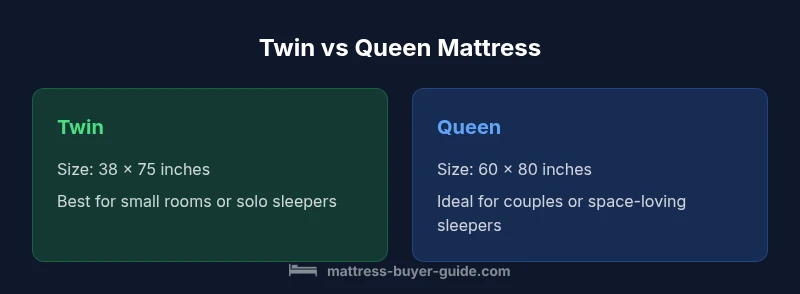
Understanding the core dimensions of twin versus queen beds is the first step in a rational decision. A standard twin mattress measures about 38 inches wide by 75 inches long, which makes it a compact, budget-friendly option ideal for small bedrooms, guest rooms, children’s rooms, or studio apartments where floor space is at a premium. A standard queen, by contrast, runs about 60 inches wide by 80 inches long, providing a substantial surface area that makes movement easier for couples and those who toss and turn at night. If you sleep alone and value open floor space, a twin may be the better fit; if you share the bed or desire extra room to spread out, a queen is usually the safer bet. Tall sleepers may also consider twin XL or queen XL variants to gain extra length without altering width.
Room and Layout Considerations
Bedroom layout often dictates mattress choice as much as personal comfort. In tight rooms, a twin frees floor space for a desk, dresser, or seating area and can simplify door swing and traffic flow. A queen, while larger, still fits in most standard bedrooms if you plan for adequate walking space around the bed. When you position the bed, ensure at least 24 inches of clearance on both sides for easy sheet changes and night-time access to nightstands. If you share a room, consider where you’ll place wardrobes or a bed frame with integrated storage to maximize usable space. For urban apartments, a twin may enable better use of a corner for a sofa or workstation.
Sleep Partners and Movement
Motion transfer and partner disruption are common concerns when choosing between twin and queen. A queen’s broader surface area typically reduces the chance that a restless partner will roll into you during the night, and it also accommodates two sleepers with more personal space. A twin, especially in small rooms or with a high-movement sleeper, can amplify disturbances because there is less room to separate. If you sleep alone, a twin’s smaller footprint often translates into less disturbance for neighbors or a shared room, and it’s easier to maneuver during setup or relocation.
Comfort Profiles: Surface Area and Edge Support
Surface area matters for comfort. The queen’s wider footprint allows two adults to reposition without feeling crowded and supports a broader range of sleeping positions. Edge support also tends to feel firmer on larger sizes because the frame and foundation distributions are broader. In contrast, a twin can feel more narrow, with less edge support if the foundation is not designed to counter sagging. If you value sleeping near a partner with minimal contact, a queen is often preferable; if you prioritize maximum under-bed storage and paneled frame options, a twin can be enough.
Costs and Value: Upfront vs Long-Term
Price is a practical driver in the twin vs queen decision. Twins generally cost less upfront and require smaller bed frames, foundations, and bedding, leading to immediate savings. Queens cost more, not only for the mattress itself but also for foundations, sheets, comforters, and potential higher shipping or delivery charges. Over time, a queen might offer better resale value and longevity when properly cared for, especially if two sleepers share the bed regularly. If you anticipate upgrading in the next few years due to space or family needs, plan for a price-step that anticipates a move to queen or larger.
Durability and Material Impacts on Longevity
Durability varies by material and construction, not strictly by size. Both twin and queen can be made with memory foam, latex, or spring cores, and each material ages differently under similar usage. In general, properly maintained foam and hybrid mattresses resist sagging and indentation; traditional innerspring designs rely more on coil count and edge support to maintain shape. When weighing twin versus queen, consider how you’ll rotate or flip (if applicable) and whether your foundation provides uniform support across the entire surface. Poor foundation compatibility can accelerate wear in either size.
Bedding, Foundations, and Accessories Compatibility
Bedding and foundations are not universally interchangeable between twin and queen. A twin uses a narrower sheet set, comforter, and protector, while a queen requires wider sheets and a larger cover. Foundations and bed frames must match the mattress size; in most cases, standard twin or queen foundations won’t fit the wrong size without modification. If you anticipate changing sizes in the future, plan for a modular frame or adjustable foundation that can accommodate a transition, along with compatible bed skirts, headboards, and storage accessories.
Setup, Transport, and Handling Tips
Both twin and queen mattresses benefit from careful handling during delivery. Because queen sizes are heavier and wider, two people or a professional mover improves safety and reduces the risk of damage to walls or doors. Use a protective cover and keep the mattress flat while moving. For stairs and tight hallways, measure doorways in advance, bring the mattress on its side if necessary, and use a dolly or moving straps to distribute weight evenly. After installation, check the bed’s centering and ensure the foundation is level to preserve long-term comfort.
Space-Saving Tips for Small Bedrooms
If you’re constrained by space, several practical steps can help you opt for the better balance of comfort and footprint. Consider a bed frame with built-in storage drawers or a low-profile platform to reduce visual bulk. A twin with under-bed storage can free up closet space, while a queen on a platform frame with integrated shelves can consolidate nightstand needs. Decluttering under the bed and choosing compact, storage-friendly bedding can dramatically improve perceived room size. If you frequently work from the bedroom, a twin may offer a more adaptable layout for a small home office zone.
Twin Is Best In These Scenarios
Twin mattresses excel in narrow bedrooms, guest spaces, or bunk-bed configurations where every inch of floor space matters. They are also a practical choice for single sleepers who value a budget-friendly option with straightforward replacement and maintenance. In multi-room homes, twins are easy to move between rooms or borrow for guest spaces, wedding registries, or kids’ rooms. If you foresee a future upgrade to a larger size, a twin lets you stretch your budget while you wait for a more spacious setup.
Queen Is Best In These Scenarios
Queen beds shine in master bedrooms and shared sleeping spaces where there are two sleepers who want ample personal space. They reduce the likelihood of nighttime disturbances and typically accommodate different sleep positions more comfortably. A queen also pairs well with most standard foundations and frames, and it offers a comfortable transition if you plan to grow family size or add a second bed in a shared room. If you prioritize longevity, resale value, and broad bedding choices, the queen is usually the safer long-term pick.
How to Measure Space and Compare Specs
A practical approach to choosing between twin and queen starts with precise room measurements. Measure the width and length of the room, ensure clear pathways around the bed, and account for door swing and furniture clearance. Compare bed dimensions with available floor space to confirm there is at least 24 inches (two paces) of walkway around the bed. Next, compare foundations, headboards, and low-profile frames. Finally, align the mattress size with your budget, lifestyle, and future plans to minimize regrets and maximize nightly comfort.
Care and Maintenance for Longevity
Long-term comfort depends on routine care. Rotate or reposition the mattress according to the manufacturer’s guidelines, use a breathable mattress protector, and ensure a clean sleeping environment to prevent dust and allergen buildup. Maintain evenly distributed weight across the surface, avoid sharp objects that can pierce the cover, and inspect the foundation and frame for wobble or sag. Regular cleaning and correct usage contribute to steadier support, less movement transfer, and a longer life for either size.
Decision-Making Framework: Quick Checklist
Use this concise framework to finalize your choice. Define your room size, number of sleepers, and budget; compare the two sizes on dimensions, costs, and bedding needs; assess foundation compatibility and frame options; consider future upgrade plans; and identify the trade-offs you’re willing to live with. A structured checklist helps ensure your choice aligns with both current conditions and future needs.
Comparison
| Feature | Twin mattress | Queen mattress |
|---|---|---|
| Dimensions | Twin: 38 x 75 inches | Queen: 60 x 80 inches |
| Typical price range | Twin: $200-$600 | Queen: $300-$900 |
| Best for | Single sleeper in small rooms | Couples or sleepers who want more space |
| Movement/edge support | Less surface area may increase contact with partner | More surface area generally improves motion isolation and edge support |
| Foundation compatibility | Fits standard twin foundations | Fits standard queen foundations |
The Good
- Cost-effective and space-saving for small rooms
- Easier to move and set up in tight spaces
- Twin bedding is widely available and affordable
- Queen provides more sleeping surface for couples
Cons
- Twin may feel cramped for couples or larger sleepers
- Queen requires more room, bedding, and upfront investment
- Upgrading from twin to queen may require new foundation or frame
Queen generally wins for couples; twin wins for small rooms or solo sleepers
If you share your bed or need generous space, queen is the safer long-term choice. If space and cost are primary constraints, twin remains a strong starter option.
FAQ
Is a twin mattress suitable for couples?
A twin can work for couples only if space is tight and both sleepers are comfortable with restricted space. Movement can disturb a partner more easily on smaller surfaces, and edge support may be limited. For most couples, a queen is preferable for comfort and independence.
A twin works for couples only if space is tight; for most couples, a queen is better.
What are the standard dimensions for twin and queen mattresses?
A standard twin mattress is about 38 inches wide by 75 inches long. A standard queen mattress is about 60 inches wide by 80 inches long. If you are tall, consider a twin XL or move up to queen XL variants for extra length.
Twin is 38 by 75 inches, queen is 60 by 80 inches; length may vary with XL sizes.
Which size fits small bedrooms best?
In very small bedrooms, a twin mattress uses less floor space and allows wider pathways and storage options. A queen can still fit if the room is at least 10 feet by 10 feet, but it may dominate the floor plan.
Twin fits smaller rooms, queen can fit larger small rooms.
Do bed frames differ for twin vs queen?
Yes. Twin and queen frames are sized to match the mattress; you cannot interchange most foundations without adjusting bed rails or supports. Ensure your foundation and frame support the mattress size you choose to avoid sagging.
Frames must match mattress size; you may need new foundation for a different size.
Can I upgrade from twin to queen without changing the bed frame?
Upgrading from twin to queen often requires a larger frame or foundation, since the width and length differ. Some frames are adjustable, but many require a dedicated queen-size foundation.
A standard upgrade usually needs a bigger frame or foundation.
How does bedding differ between twin and queen?
Twin and queen bedding differ in sheet sets, comforters, and protectors. Twin sets are narrower and cheaper; queen sets are more widely available and offer greater warmth and coverage for two sleepers.
Bedding is not interchangeable; choose the size you buy.
Highlights
- Measure your room before buying
- Twin saves space and money in small rooms
- Queen provides more sleep surface for couples
- Check foundation compatibility before purchase
- Plan for bedding and frame upgrades if you scale up