Full Size Mattress vs Twin: Which Is Best for Your Sleep Space?
Explore the practical differences between full size and twin mattresses. This guide covers dimensions, room fit, bedding needs, and use cases to help homeowners choose confidently.


In the debate between full size mattress vs twin, the twin saves space and money, while the full size offers significantly more sleeping surface. For a single sleeper or guest room, twin is usually the practical choice; for room efficiency with better comfort, the full size often wins. Your final call hinges on room dimensions and how you expect to use the bed.
Size Fundamentals: What Each Size Means
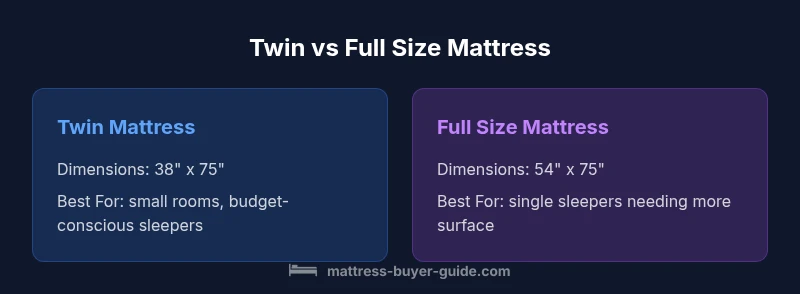
When comparing full size mattress vs twin, it's helpful to know the standard surface area and how that translates to sleep space. A twin mattress typically measures 38 inches wide by 75 inches long, while a full size mattress measures 54 inches by 75 inches. The extra 16 inches of width can make a noticeable difference for one sleeper, especially for side sleepers or those who shift positions at night. For couples, even a full can feel cramped depending on sleeping habits. In this section, we outline how these dimensions translate to real-world use, plus quick notes on bed frames, foundation options, and bedding compatibility. Throughout, remember that room layout and personal comfort preferences largely determine whether twin or full better fits your needs. If your bedroom is tight, the twin's footprint is a major advantage; if you want a more expansive sleep surface without moving to a larger size, the full offers a meaningful improvement.
Sleep Space and Comfort Considerations in the Full Size Mattress vs Twin Debate
Surface area matters for sleep quality. A full size provides a wider sleeping surface, which reduces arm or leg encroachment for most sleepers compared to a twin. In the full size mattress vs twin debate, surface area is the key. That extra width is especially noticeable for side sleepers who spread their arms or legs. However, a full is still a single bed, not a king, and two adults sharing a twin is generally not recommended. Heavier movement at night can create shared disturbances if the bed is too small for your sleep style. In practice, you should assess occupancy, movement patterns, and preferred sleep posture when weighing these two options. The goal is to balance comfort with the overhead of room and budget constraints.
Room Fit and Layout: When to Choose Twin or Full
Room size and layout influence how much you can actually enjoy the bed. In very small bedrooms, a twin can free floor space for a desk, dresser, or extra storage; in midsize rooms, a full may provide enough surface while still fitting a nightstand on each side. Consider doorway width, closet access, and under-bed storage when planning placement. If you anticipate moving the bed frequently, the lighter twin will be easier to reposition without assistance. For guest rooms serving multiple purposes, a twin may simplify furniture arrangements and maintain flexibility.
Bedding, Frames, and Accessories Compatibility
Sheets, blankets, and mattress protectors come in twin and full sizes, so shop carefully to avoid mismatches. Some bed frames are designed to support both sizes, while others are optimized for a single dimension; mismatches can cause gaps or shifting. When shopping, check the frame’s weight limit, rail compatibility, and whether you need a separate foundation. If you use a bed with built-in storage, verify how much clearance the mattress will have and whether a headboard or footboard affects mounting.
Real-World Scenarios: Who Should Pick Twin vs Full?
Consider a studio apartment or a bedroom shared by a teen and a friend—space constraints may favor twin, but a growing teen may appreciate the extra width of a full. For a dedicated guest room, twins maximize flexibility when space is tight. In a master bedroom where you anticipate long-term use and occasional guests, a full can offer better comfort without committing to a larger frame. Use these scenarios to guide your decision rather than default to a single option.
Decision Framework: A Step-by-Step How-To
Step 1: Measure your room and doorways to estimate available space around the bed. Step 2: List who will sleep on the bed and how often; consider seasonal guests. Step 3: Check your budget for the mattress and bedding, including sheets and protectors. Step 4: Compare twin and full options side-by-side using a simple criteria checklist (space, comfort, furniture compatibility, and future needs). Step 5: Choose the size that best aligns with your priorities and room layout. This framework helps prevent common misalignments between desire and practicality.
Comparison
| Feature | Twin Mattress | Full Size Mattress |
|---|---|---|
| Dimensions (WxL) | 38 x 75 inches | 54 x 75 inches |
| Sleeping Surface Area | 2,850 square inches | 4,050 square inches |
| Best For | Small bedrooms, budget-conscious sleepers | Single sleepers needing more surface or couples in compact spaces |
| Room Fit & Mobility | Easier to maneuver in tight spaces; lighter to move | Requires more room and effort to reposition; heavier but stable |
The Good
- Twin is budget-friendly and space-efficient
- Easier to move and set up, especially in tight rooms
- Broad bedding and frame options for twin sizes
- Good transitional size for kids or teens
Cons
- Limited space for couples or restless sleepers
- Full may require more room and larger furniture footprint
- Potential mismatches with frames or bedding if size isn't aligned
Twin suits small rooms and budgets; Full suits space-conscious sleepers needing more surface
If space and cost are your primary limits, twin is the better starting point. If you value extra sleeping surface in a smaller footprint, choose full.
FAQ
What are the exact dimensions of a twin and a full-size mattress?
Twin is 38 x 75 inches; Full is 54 x 75 inches. Some brands offer variations like Twin XL; always verify specs.
Twin is 38 by 75 inches; Full is 54 by 75 inches.
Is a twin better for children's rooms or guest rooms?
Twin works well in kids and guest rooms due to its compact size and lower cost. For guests who sleep together occasionally, a full can be preferable.
Twin is great for kids or guests; a full is better if guests may share the bed.
Will a full bed fit on a twin frame?
A full mattress generally won’t fit properly on a twin frame without modification; you’ll want a full-size frame and foundation.
A full usually needs a full frame.
Do twin and full require different bedding and sheets?
Yes. Twin and full use different sheet sets and mattress protectors. Always buy the correct size for your bed.
Yes, you’ll need the right-size sheets.
What should I consider if I plan to move the bed often?
Twin is lighter and easier to move; full is heavier but manageable with help or a dolly. Plan for proper lifting and disassembly.
Twin is easier to move.
Are there cost differences between twin and full?
Twin mattresses are generally cheaper upfront; full-size sets cost more for mattress and bedding but may offer better long-term value depending on use.
Twin saves money upfront; full can be worth it for more surface.
Highlights
- Measure your room before choosing a size
- Twin saves space and money for single sleepers
- Full offers more surface but needs more room
- Check bedding and frame compatibility early