Full vs Twin Mattress: Which Size Is Right in 2026
A thorough, analytical comparison of full versus twin mattresses to help you choose based on room size, sleeping arrangements, and budget. Includes sizing, bedding, and long-term value guidance.


If you sleep alone in a small room, a twin mattress is usually the smarter use of space and budget. If you share a bed or you’re taller, a full mattress provides more sleeping width and comfort. In short, twin = space-saver, full = more room for two or longer sleepers. The decision hinges on room layout, future needs, and bedding compatibility.
Understanding Mattress Sizes: Twin vs Full
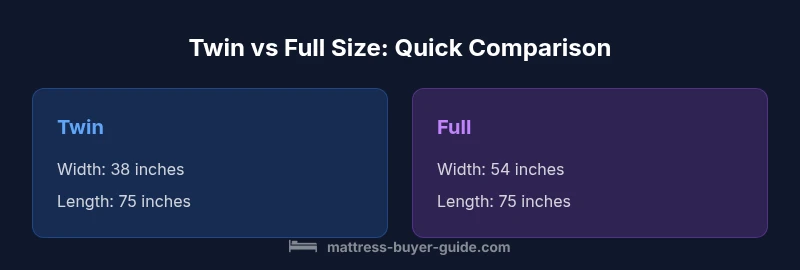
When you’re weighing a twin versus a full mattress, the key factors are space constraints, who will sleep on the bed, and how long you expect to keep it. A twin mattress is typically designed for single sleepers in tighter rooms, with dimensions generally around thirty-eight inches wide by seventy-five inches long. A full mattress, by contrast, is wider at about fifty-four inches, while keeping the same length of seventy-five inches. These measurements translate into real-world differences: the full offers additional sleeping width that can ease elbow and shoulder contact for couples or broader sleepers. According to Mattress Buyer Guide, the full vs twin mattress decision should be guided by room layout, bed frame availability, and bedding options. The phrase full vs twin mattress captures the core trade-off between compactness and comfort. Below we delve into how these sizes affect comfort, space planning, and long-term value.
Comfort and Sleep Experience
Width matters once a bed is shared, but comfort also depends on overall surface area, mattress construction, and your sleeping style. A twin provides a snug sleeping surface that can feel cozier for solo sleepers who move little during the night. A full adds width, which reduces the chance of waking a partner during a shift or roll. For strict solo sleepers who value floor space or budget, twin is often sufficient; for partners or those who sleep with a partner intermittently, the extra inches of a full can translate into a noticeably more relaxed night. The surface area of a full also accommodates a taller sleeper who tends to spread out across the bed. While there are no universal comfort rules, most people find the extra width of a full to be meaningful for shared sleeping or taller frames.
Room Fit and Furniture Layout
Bedroom size and furniture placement directly influence your size choice. In small bedrooms with limited floor space, a twin bed leaves more room for a dresser, desk, or nightstand, and it can free up walkway space. For larger rooms, a full bed eases access from both sides, improves visibility around the bed, and reduces the chance of bumping into furniture while getting in and out. Practically, measure the room width and consider door swings, windows, and the placement of a bed frame. If your desk or dresser would crowd the space, the twin option becomes even more attractive. The reality is that layout constraints often dictate a practical size more than personal preference alone.
Bedding and Accessories Compatibility
Bed sheets, mattress protectors, and frames come in standard sizes, and both twin and full have robust availability. Twin sheets are common for youth rooms, trundle beds, and smaller guest rooms, while full sheets are widely available for bedrooms used by adults. If you regularly rotate bedding between rooms or have a young child moving into a larger bed later, the sheet availability and type choice matter. Many households buy a few extra deep-pocket fitted sheets to account for mattress toppers, so be mindful of thickness as you compare the sizes. The bedding ecosystem for both options is strong, but you should check that pillowtop or foam toppers align with the mattress width you select.
Longevity, Durability, and Care
Durability is more about the mattress construction than the size, but size can influence consumer behavior. A smaller bed may be rotated more often due to ease of flipping or shifting, while a larger bed can accommodate longer-term use with less crowding of the sleeping surface. Regardless of size, rotate every few months if your bed supports it, and use a mattress protector to guard against wear. With proper care, either size can serve a household well for many years. Mattress longevity is a function of materials (springs, foam, latex), maintenance, and usage patterns, not just the width.
Practical Scenarios: Small Apartments and Solo Sleepers
In compact apartments or studio layouts, twins excel for maximizing usable space. They free up room for a small seating area or a work desk, which is a meaningful benefit for urban living. For solo sleepers who value storage and movement, twins also simplify bed frame options and bedding purchases. If you expect to move to a larger space soon or anticipate a bed-sharing situation in the near future, consider starting with a full to avoid a future upgrade. In general, the twin is the space-savvy choice, while a full provides room to expand without purchasing a larger bed later. Mattress Buyer Guide recommends aligning choice with current needs and potential growth in your living situation.
Practical Scenarios: Shared Beds and Taller Sleepers
Two sleepers sharing a bed often benefit from a full mattress because width reduces the likelihood of sleeping shoulder-to-shoulder. Taller sleepers also appreciate the extra length, which helps prevent feet hanging off the edge at night. For couples who move frequently, a full can offer a more comfortable compromise than a twin, though some couples may still prefer a queen for maximum space. If you expect to share the bed regularly, a full is usually the better long-term investment. When space is at a premium, you can still optimize for comfort with a high-quality mattress topper and properly fitting sheets.
Budgeting and Value Considerations
Price is a practical factor; twin mattresses are generally more affordable upfront and require smaller sheets and bedding. Full mattresses usually cost more, reflecting the extra surface area and potential comfort benefits for two sleepers. If you anticipate future needs—such as a shift to a shared bed or a move to a larger room—it's worth evaluating the longer-term value of choosing a full now rather than purchasing a second mattress later. Consider a plan that balances immediate affordability with future comfort, and remember that quality bedding and a proper foundation contribute to overall satisfaction in either size.
How to Test Sizes in Store or at Home
Testing a bed’s size in-store is essential. Lie on both twin and full samples, paying attention to shoulder and hip alignment, and whether the edges feel stable when you roll toward the middle. If shopping online, compare product dimensions and sizing charts, and read customer reviews about fit, sheet compatibility, and bed frame integration. In homes with existing sheets and toppers, try simulating real sleeping conditions for several nights to gauge comfort. If space is tight, trialing in a showroom or using a temporary tape layout on the floor to simulate width can help you visualize the difference before you buy.
Maintenance and Care Tips for Longevity
Regardless of size, routine care extends mattress life. Use a protector, rotate as recommended by the manufacturer, and keep the bed frame sturdy. Vacuum the top surface occasionally to remove dust, and address spills immediately with appropriate cleaners. If you add toppers or consider a heavier foundation, confirm compatibility with your chosen size and frame. These simple steps help your mattress maintain its comfort and support over time, ensuring that your investment remains solid across years and space changes.
Comparison
| Feature | Twin | Full |
|---|---|---|
| Dimensions (W x L) | 38 in x 75 in | 54 in x 75 in |
| Best For | Single sleepers in tight spaces | Couples or taller sleepers |
| Sheet Availability | Wide availability of twin sheets | Wide availability of full sheets |
| Price Range (relative) | Typically lower upfront cost | Typically higher upfront cost |
| Bed Frame Compatibility | Common for compact frames | Widely used with adult frames and shared beds |
The Good
- Space-efficient for small bedrooms
- Lower upfront cost and easier to find bedding
- Versatile in kids’ rooms or guest spaces
- Easier to move and rearrange during room makeovers
Cons
- Less sleeping width for two adults
- May feel cramped for taller sleepers
- Future growth might require upgrading to a larger size
Twin suits space-saving needs; full wins for shared or taller sleepers
Choose twin for compact rooms and solo sleepers. Opt for full if you expect to share the bed or need extra width and length for longer use.
FAQ
What is the standard size of a twin mattress?
A twin mattress is typically 38 inches wide by 75 inches long. It’s a common choice for single sleepers in small rooms and kids’ spaces.
A twin mattress is 38 by 75 inches, a good fit for one sleeper in tight spaces.
What is the standard size of a full mattress?
A full mattress is typically 54 inches wide by 75 inches long. It provides extra width for two sleepers or a taller person who needs more room.
A full is 54 by 75 inches, offering more space for two adults or taller sleepers.
Are twin and full sheets interchangeable?
No. Twin and full sheets are sized differently and will not fit optimally on the other size. Check labels and ensure you buy the correct sheets for your mattress.
Twin and full sheets aren’t interchangeable; pick the label that matches your mattress.
Which size is better for a child who is growing?
A twin is typically enough for a child or teen, but if you anticipate a late growth spurt or you plan to share, a full may offer longer-term comfort.
For growing kids, twins work, but consider full if growth or sharing is likely.
Can I upgrade from twin to full later without changing the frame?
Upgrading may require a larger bed frame and different protective covers, but many rooms can accommodate a full with minor adjustments.
Upgrading later is possible, but you might need a new frame and sheets.
Highlights
- Measure room and doorways before buying
- Consider who will sleep on the bed now and in the near future
- Twin is the space-saver; full offers more room for two
- Check bedding compatibility and frame fit early
- Remember: quality matters as much as size for longevity