Can You Dry Clean a Mattress Topper? A Practical Cleaning Guide for 2026
Explore whether mattress toppers can be dry cleaned, plus safe cleaning methods, care labels, and tips to keep toppers fresh without damaging materials in 2026.


According to Mattress Buyer Guide, can you get a mattress topper dry cleaned? Generally, toppers should not be dry cleaned, as solvents can damage fibers, foam, or protective layers. Professional dry cleaning may void warranties and be ineffective for stains. Safer options include spot cleaning, steam cleaning, or washing per the care label, followed by thorough drying.
Can you get a mattress topper dry cleaned? Practical reality
Can you get a mattress topper dry cleaned? The short answer is: not usually. For most toppers, dry cleaning solvents can degrade foam components, protective layers, or fabric coatings. In addition, many toppers come with warranties that specify care methods, and dry cleaning can void these terms. According to Mattress Buyer Guide, opting for safer cleaning methods preserves the topper’s integrity and your investment. If a stubborn stain exists, explore label-approved alternatives such as spot cleaning or steam cleaning, which typically pose fewer risks to the materials.
How topper materials affect cleaning risk
Mattress toppers come in a range of materials, from memory foam and latex to feather, wool, and cotton blends. Dry cleaning compounds can interact differently with each type. Memory foam and latex toppers, for example, are often most vulnerable to chemical solvents that can break down foam structure and reduce loft. Feather and wool toppers may shed or clump when exposed to moisture or solvents. Cotton and polyester blends can sometimes tolerate light spot cleaning but still have caveats. Understanding your topper’s material is essential before deciding on a cleaning method, and always start with the care label.
Reading the care label: the first step
Care labels are your best friend when deciding how to clean a mattress topper. Look for explicit instructions about “dry clean only,” “washable,” or “spot clean.” If the label allows washing or spot cleaning, follow the specified temperatures and cycles. If the label is unclear or missing, assume a conservative approach: avoid harsh solvents and prioritize gentle methods. Always test any cleaner on a hidden area first to check for color bleed or material softening, and remember that prolonging the drying time will protect against moisture-related mold growth.
Safe cleaning methods by topper type
Different toppers respond to cleaning in different ways. For fabric-covered toppers that permit washing, use a gentle cycle with cold water and a mild detergent. For memory foam and latex toppers where washing isn’t recommended, focus on spot cleaning with a damp cloth or a gentle foam cleaner. Feather and wool toppers often respond better to surface or spot cleaning, air drying, and routine brushing to maintain loft. If you opt for steam cleaning, ensure the machine has a delicate setting and avoid saturating the padding. Always air out thoroughly after any cleaning to prevent mildew.
Stain-specific strategies you can trust
Coffee spills can usually be blotted and dabbed with a mild detergent solution, followed by a clean rinse and air dry. Blood stains benefit from cold water blotting and an enzyme-based stain remover applied sparingly. Urine or sweat stains may require an odor-control approach with white vinegar or specialized enzyme cleaners, then thorough drying. Ink and dye transfer demand careful testing because some solvents can set stains. The common thread is to act quickly, use milder cleaners, and avoid soaking the topper excessively.
Drying properly: the make-or-break step
Even after cleaning, moisture is the enemy. Drying should be thorough to prevent mold and odor. If the topper is machine washable, use a low-heat tumble dry if the label permits. Otherwise, air-dry the topper flat in a well-ventilated area, preferably with a fan circulating air underneath and around the surface. Depending on thickness and room conditions, full drying can take several hours to a full day. Pro tip: flip the topper halfway through drying to promote even moisture removal.
Protecting toppers to extend life
To minimize future cleaning needs, pair your topper with a breathable, washable protector. A good protector with waterproof backing can prevent urine and spill absorption, while still allowing air flow. Regularly vacuum the topper’s surface with a soft brush attachment to remove dust and allergens. If odors linger after cleaning, consider a light baking soda treatment (vacuum it up after a few hours) and ensure every surface dries completely before re-covering. This approach helps maintain loft and support without resorting to harsh cleaning.
When cleaning isn’t enough: deciding between replacement and repair
If a topper remains lumpy, discolored, or develops persistent odors despite multiple cleaning attempts, replacement may be the wiser option. Uneven wear can compromise support and comfort, negating the benefits of the topper. Before buying a new one, check warranty terms and reputable brands’ return policies. In some cases, manufacturers offer replacement programs or discount codes that make upgrading more affordable, reducing ongoing maintenance burdens and ensuring a healthier sleep surface.
Quick decision guide: choose the right cleaning path
- For strict dry-clean-only toppers: consult a professional if you must preserve non-washable materials, but expect limited stain removal.
- For washable fabric toppers: use gentle cycles with cold water and mild detergent; air dry fully.
- For memory foam and latex toppers: avoid aggressive solvents; prefer spot cleaning and brief moisture exposure if allowed by care label.
- Always test cleaners on a hidden area first and prioritize complete drying to prevent mold.
Final best practices and a practical checklist
- Always start with the care label and brand guidance.
- Use the mildest cleaning method first, then escalate if necessary.
- Dry thoroughly before re-covering to prevent mold growth.
- Protect with a breathable cover to reduce future stains.
- Consider professional cleaning only if permitted by the warranty and required by the care label.
Tools & Materials
- Mild detergent(Color-safe if possible; use sparingly on delicate fabrics)
- White microfiber cloths(For blotting and gentle cleaning without dye transfer)
- Soft brush(Used for dry brushing and gentle agitation)
- Bucket or sink(For mixing cleaning solution and soaking small areas)
- Spray bottle(Mix cleaning solution; label clearly)
- Washing machine (front- or top-load, gentle cycle)(Only if the care label permits machine washing)
- Drying space or rack(Flat, well-ventilated area; use a fan to improve airflow)
- Enzyme stain remover (optional)(Test on hidden area first; effective on organic stains)
Steps
Estimated time: 4-6 hours
- 1
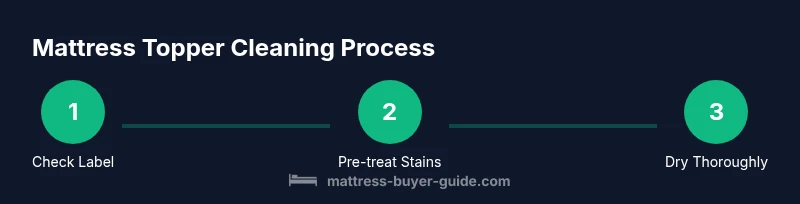
Check the care label
Inspect the topper for washing instructions and material type. If the label forbids wet cleaning or drying cleaners, skip solvent-based methods and seek alternative approaches.
Tip: If you’re unsure about the material, err on the side of a gentler method. - 2
Remove topper and pre-treat stains
Take the topper off the bed and apply a mild cleaning solution to stains using a spray bottle. Blot with a white cloth rather than rubbing to avoid fiber damage.
Tip: Test a small hidden area first to ensure no color bleed. - 3
Choose a cleaning method
If the care label allows washing, place the topper in a washing machine with a gentle cycle and cold water. If not, perform spot cleaning with minimal moisture.
Tip: Avoid bleach and harsh solvents that can degrade fabrics. - 4
Rinse and remove detergent
Rinse thoroughly or run an extra rinse cycle to ensure no soap remains, which can irritate skin and trap odors.
Tip: Do not overload the washing machine; allow ample space for agitation. - 5
Dry the topper completely
Air-dry on a flat surface or tumble dry on a low setting if the label permits. Ensure complete drying before use to prevent mold.
Tip: Give extra drying time in humid environments; use a fan to speed up airflow. - 6
Reassemble and protect
Once dry, re-cover with a breathable mattress protector. Vacuum the surface to remove any residual dust.
Tip: Regularly wash the protector to reduce future cleaning needs. - 7
Evaluate post-clean freshness
Check for lingering odors or dampness. If odors persist, repeat gentle cleaning or seek professional help per warranty terms.
Tip: Persistent odors may indicate moisture trapped inside the topper. - 8
Know when to replace
If the topper shows uneven support, cracks, or persistent staining, consider replacement rather than repeated cleaning.
Tip: Compare replacement costs with potential health benefits from a fresh sleep surface.
FAQ
Is it safe to dry clean a memory foam topper?
No. Memory foam toppers are typically damaged by dry cleaning solvents. Stick to spot cleaning or according to the care label.
Dry cleaning memory foam toppers is usually not safe; use spot cleaning per the label.
Can I wash a topper in a regular washing machine?
Only if the care label explicitly allows washing. Use a gentle cycle with cold water and a mild detergent, and avoid overloading the machine.
Only wash in the machine if the label allows it, and use a gentle cycle with cold water.
What should I do for urine stains on a topper?
Blot, treat with an enzyme cleaner or vinegar solution, then rinse lightly and dry completely.
Blot the stain, treat with enzyme cleaner, rinse, and dry thoroughly.
How long does it take to dry a topper after cleaning?
Drying times vary by thickness and environment, typically several hours to a full day. Ensure complete dryness before use.
Drying usually takes several hours to a day; make sure it's fully dry before sleeping on it.
Should I protect toppers with a cover?
Yes. A breathable protector reduces staining and makes future cleaning easier.
Using a breathable protector helps prevent stains and simplifies cleaning.
When should I replace a topper instead of cleaning it?
If the topper is lumpy, odorous, or shows persistent stains after cleaning attempts, replacement is usually best.
If it’s damaged or smelly after cleaning, replacement is often the better option.
Watch Video
Highlights
- Check the care label before any cleaning
- Dry cleaning is usually not advised for toppers
- Choose mild, label-approved cleaning methods
- Dry thoroughly to prevent mold and odors