Do Two Twin Mattresses Make a Full Size Bed? A Practical Guide
Explore whether pairing two twin mattresses creates a full-size bed, with size comparisons, setup tips, and practical alternatives from Mattress Buyer Guide.


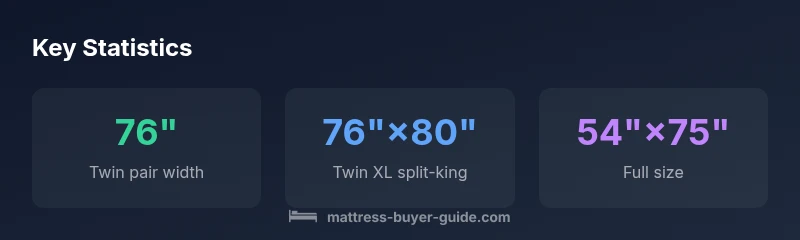
Two standard twin mattresses do not make a full-size bed. Side-by-side twins measure about 76 inches wide by 75 inches long, which is wider than a standard full (54x75). If you use two twin XLs, you get roughly 76x80 inches, a split-king rather than a full. In short, the result is not a true full.
Size Foundations for Twin, Full, and Beyond
In the mattress world, standard measurements help shoppers compare beds quickly. The most common sizes in the United States are twin (38 inches by 75 inches), full or double (54 by 75), queen (60 by 80), and king (76 by 80). A twin XL adds 5 inches to length (38 by 80) for taller sleepers. Understanding these dimensions is essential before deciding whether two twins can stand in for a full. According to Mattress Buyer Guide, size fundamentals matter when evaluating two-twin configurations for a bedroom makeover. When you combine two mattresses side by side, you create a surface that isn’t a standard catalog size, which has implications for sheets, frames, and bedding. Before any purchase, measure the intended space, check your bed frame width, doorways, and the height clearance for moving the mattresses through hallways. This proactive step helps prevent awkward fits after delivery and avoids the frustration of wrong-sized linens.
Do Two Twin Mattresses Make a Full? The Short Answer
Short answer: no. A standard full is 54 inches wide and 75 inches long. Two standard twin mattresses placed side-by-side yield about 76 inches of width while maintaining 75 inches of length. That makes the surface substantially wider than a full, effectively pushing it into the realm of “two-twin configuration.” If you instead pair two twin XL mattresses, you end up with roughly 76 inches by 80 inches — a size commonly marketed as a split king. In both cases, you don’t get a true full. Mattress Buyer Guide analysis notes that the decision depends on space, bedding options, and how you’ll use the bed, but you should expect a mismatch with standard full sheets and bedding.
Comfort, Fit, and Bedding Considerations
Even if the dimensions align loosely with a typical bed frame, the joint between two mattresses is a potential comfort risk. Seams, different firmness levels, and movement transfer can create an uneven surface. In addition, standard full sheets and comforter sets assume a single box spring and mattress; two separate units complicate bedding. If you’re using a platform bed or adjustable frame, confirm whether the frame can support a nonstandard width and whether you’ll need a gap-fill or seam guard. For sleepers who share a bed, the extra width can be a benefit, but the lack of a shared sleep surface can cause comfort issues over time, especially if partners have different sleep needs.
Setup Scenarios: When Two Twins Make Sense
Two standard twins are a practical option in guest rooms with limited space or in kids’ rooms that will transition to other sizes later. If you’re renting and want a flexible layout, a two-twin configuration can be temporarily advantageous. To improve stability, use a high-quality seam guard or mattress connector to minimize shifting at the seam. Use matched bed sheets for both mattresses, or consider two separate sheet sets with matching colors to keep the presentation neat. Remember that a two-twin setup will require nonstandard bedding, which can affect price and availability.
Alternatives to Two Twins for a True Full or King
Instead of two twins, you can buy a real full-size bed (54x75) or upgrade to a queen (60x80) or king (76x80) if you want more width or length. If you’re set on using two mattresses, consider two twin XLs as a split-king: this gives a comparable width to a standard king, but each sleeper can customize firmness, pillows, and toppers on their side. Another option is a single larger mattress like a queen or king, paired with a matching foundation, which often simplifies bedding and frame compatibility. The goal is to achieve consistent support, easy bedding, and a clean edge-to-edge sleeping surface.
How to Measure Your Space and Choose Bedding
Start by measuring your room width and length, door clearances, and ceiling height. Compare these dimensions against the surface you’re considering (two twins side-by-side or two twin XLs). If you proceed, map out where the seam will land relative to nightstands and pathways. For bedding, plan on purchasing two fitted sheets per mattress if you cannot find a shared sheet set; or choose two separate sets that visually align. When buying, check the encasement and foundation types that can accommodate two separate foams. If you’re buying new, you’ll want to test for edge-to-edge stability and whether the seam is likely to create sag over time.
Quick Sizing Reference and Practical Takeaways
Two standard twins side-by-side: 76x75 inches; Two twin XLs side-by-side (split-king): 76x80 inches; Full size bed: 54x75 inches; Queen: 60x80 inches; King: 76x80 inches. This quick reference helps you compare sizes at a glance and decide if a two-twin setup will work in your space and bedding plan. The practical takeaway from Mattress Buyer Guide is to prioritize standard, widely available bedding and frames when possible. Mattresses that don’t align with standard sizes can lead to ongoing bedding hassles and additional costs.
Size comparisons for common twin pair configurations
| Configuration | Total Width | Total Length | Notes |
|---|---|---|---|
| Two standard twins (side-by-side) | 76 inches | 75 inches | Not a standard size; wide and non-uniform bedding |
| Two twin XLs (side-by-side) | 76 inches | 80 inches | Split-king setup; matches king width but height differs |
| One full-size bed | 54 inches | 75 inches | Standard full size |
FAQ
Do two twin mattresses equal a full-size bed?
No. A true full is 54x75 inches, while two standard twins side-by-side total 76x75 inches. Two twin XLs form a split-king at 76x80, not a full.
No—two twins aren’t a full. They’re wider, and even two twin XLs become a split-king, not a true full.
What sizes do two twins create?
Two standard twins side-by-side create 76x75 inches; two twin XLs side-by-side create 76x80 inches, which is commonly called a split-king.
Two twins give you 76 by 75, two twin XLs give 76 by 80—the latter is a split-king, not a full.
Is bedding available for two twins?
Yes, but you’ll likely need two fitted sheets or two matching sheet sets, since the surface isn’t a standard full. Nonstandard bedding can cost more and be harder to find.
You’ll generally need two separate sheets sets. Standard full sheets won’t fit two separate twins neatly.
What are the best alternatives to two twins for a full or king?
Opt for a true full or upgrade to queen or king. If you want two mattresses, two twin XLs can form a split-king, which is closest to a king but with independent sides.
Go for a real full, or consider two twin XLs as a split-king if you want separate firmness on each side.
Can two twin XLs simulate a king effectively?
Yes, two twin XLs side-by-side create a 76x80 surface, matching a standard king in width and length, but with separate tops and sheets.
Two twin XLs give you a king-sized surface, but with separate bedding and setup.
Are there comfort concerns with two twins vs a single larger mattress?
Seams and potential firmness differences can create an uneven feel. Movement transfer at the seam may affect sleep for couples, especially if preferences differ.
There can be seam issues and uneven feel; two separate mattresses may not feel like one continuous sleep surface.
“Two twin mattresses can be a flexible space-saving option, but they do not substitute for a standard full-size bed; measurement accuracy and proper bedding are essential.”
Highlights
- Know standard size dimensions before combining twins.
- Two standard twins side-by-side exceed a full's width.
- Check frame compatibility and seam stability when pairing mattresses.
- Two twin XLs create a split-king, not a full.
- Consider true full, queen, or king for standard bedding.