Memory Foam Mattress vs Latex Mattress: A Thorough Comparison
A rigorous comparison of memory foam vs latex mattresses, covering comfort, cooling, durability, care, and value to help you choose the right fit for your sleep needs.


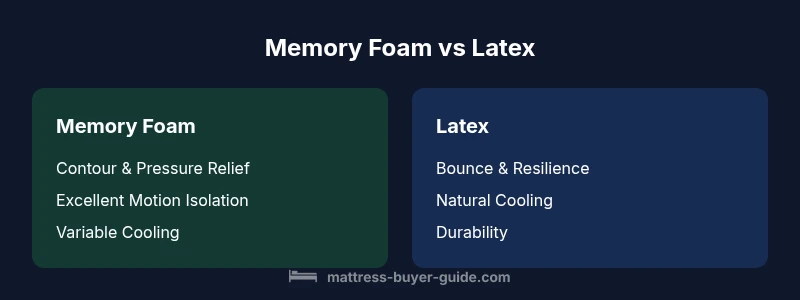
In the memory foam mattress vs latex mattress debate, memory foam excels at pressure relief and motion isolation, while latex delivers bounce, durability, and cooler sleep. Your choice hinges on how you sleep, temperature sensitivity, and budget. Mattress Buyer Guide offers an evidence-based framework to decide which aligns with your needs.
What memory foam mattress is and how it works
Memory foam mattresses use viscoelastic foam that reacts to body heat and pressure to contour to curves. This contouring support can dramatically reduce pressure points for many sleepers, especially those who move frequently during the night. The material excels at motion isolation, so a partner’s movements are less likely to disturb you. According to Mattress Buyer Guide, memory foam’s ability to absorb movement makes it a strong choice for light sleepers and couples who share a bed. However, some users report an initial off-gassing odor when unpacking new memory foam, and a portion of sleepers find the surface too soft or “sinky.” If you sleep hot, you may notice more heat retention with some memory foam formulations unless you choose gel-infused or open-cell variants.
In this comparison, we’ll focus on the memory foam mattress vs latex mattress dichotomy and help you map your preferences to a practical decision. The Mattress Buyer Guide team emphasizes that the best pick aligns with your sleeping position, temperature needs, and daily routine rather than trends.
What latex mattress is and how it works
Latex mattresses are built from natural or synthetic latex. Natural latex, often sourced from rubber trees, tends to be breathable and resilient, offering a buoyant feel with faster response than memory foam. Latex can be Dunlop or Talalay processed, each delivering a slightly different texture and support profile. The core advantage is durability and a cooler sleeping surface because latex naturally disperses heat better than many memory foams. Latex tends to offer more bounce and a less “mushy” sink, which some sleepers prefer for easier movement and quicker changes in position. The Mattress Buyer Guide team notes that latex’s all-natural appeal and consistent support contribute to a longer useful life, though premium latex mattresses carry higher upfront costs.
For readers balancing comfort with durability, latex presents an appealing alternative to memory foam in the memory foam mattress vs latex mattress comparison.
Core differences at a glance
- Comfort feel: Memory foam provides deep contouring and cradle-like pressure relief, while latex offers a supportive, bouncy, more resilient surface.
- Temperature: Latex sleeps cooler by design, whereas memory foam can retain heat unless enhanced with cooling layers.
- Durability: Latex typically resists sagging longer than standard memory foam, especially in mid-range products; high-density memory foam can close the gap but may still show wear over time.
- Maintenance: Latex is often more resistant to moisture and lends itself to quick, regular rotation; memory foam benefits from keep-dry conditions and periodic rotation to avoid forming impressions.
- Price/value: Memory foam tends to be more affordable upfront, with a broad range of densities; latex models are generally pricier but may deliver longer lifespans and resale value.
Comfort and feel: contouring vs bounce
When comparing memory foam mattress vs latex mattress, the feel is the core differentiator. Memory foam contours closely to the body, distributing weight and reducing motion transfer. This can feel like a gentle hug that eases pressure across the hips, shoulders, and spine. The downside for some is slower recovery after movement and the potential for a “sinking in” sensation that may make getting out of bed less effortless. Latex, by contrast, is naturally buoyant and responds quickly to movement. You’ll notice a lifting sensation rather than sinking, which can help with mobility and spinal alignment for some sleepers. The result is less of a contour and more of a balanced, buoyant support. In a memory foam mattress vs latex mattress analysis, your preferred support feedback will guide your choice.
Temperature and cooling: heat management
Cooling performance is a hot topic in the memory foam mattress vs latex mattress debate. Traditional memory foam can trap heat for some sleepers, especially if the mattress uses dense foam without ventilation. Many modern memory foam models incorporate open-cell structures, gel infusions, or zoned foams to mitigate heat buildup. Latex is inherently breathable due to its cellular structure and larger air channels, which tends to promote a cooler sleeping surface. If you sleep hot or share your bed with a partner who moves, latex’s cooler profile can be a significant advantage. Still, individual room temperature, bedding, and ventilation play major roles in overall sleep temperature. Mattress Buyer Guide highlights that cooling features should be a priority for hot sleepers when evaluating memory foam vs latex options.
Durability and longevity: expected lifespans and warranties
Durability is a central factor in the memory foam mattress vs latex mattress decision. Latex mattresses generally resist sagging longer and maintain bounce and support over time, making them a strong candidate for long-term use. High-density memory foam can also be very durable and maintain shape with proper care, but it may still show impressions after years of use, especially under heavier weight zones. Warranty length and coverage vary by brand and materials; a robust warranty can signal confidence in product longevity. Mattress Buyer Guide notes that long-term value often hinges on density, core construction, and how the foam or latex is manufactured. Always review the warranty terms to understand what is and isn’t covered during wear and tear.
Motion isolation and sleep quality
Memory foam’s standout feature is motion isolation. If you share a bed with a restless partner or pet, memory foam can significantly reduce nocturnal disruptions. Latex, with its quicker responsiveness, offers less motion isolation by comparison but still provides adequate, balanced performance for many sleepers. For shoppers prioritizing uninterrupted sleep, memory foam mattress vs latex mattress performance in this area often tilts in memory foam’s favor. The degree of motion transfer can vary by density, layering, and construction. Mattress Buyer Guide suggests testing with a partner or using a sleep test period to observe how movement affects your sleep quality.
Allergen considerations and safety
Latex can be naturally resistant to dust mites and mold due to its structure, and many natural latex mattresses are made with fewer synthetic additives. If you have latex allergies, this is a critical factor; natural latex may cause reactions in sensitive individuals. Memory foam, often manufactured with adhesives and other additives, requires attention to off-gassing and proper airing before first use. Both types can be suitable for allergy sufferers if you choose hypoallergenic covers and maintain a clean sleeping environment. Mattress Buyer Guide emphasizes selecting materials verified for low VOC emissions and proper certifications to reduce chemical exposure.
Maintenance, care, and cleanliness
Maintenance practices differ subtly between memory foam and latex. Memory foam benefits from regular rotation to prevent permanent indentations, and keeping the surface dry helps extend its life. Latex is more forgiving if you rotate periodically and maintain a dry, ventilated environment. Both types respond well to a quality mattress protector and a washable cover. Regular vacuuming of the bed frame and surrounding area can also limit dust buildup. In the memory foam mattress vs latex mattress conversation, thoughtful, consistent care is a practical way to maximize comfort and longevity.
Price ranges and value: cost considerations
Price is an important factor in the memory foam mattress vs latex mattress decision, but it’s not the only predictor of value. Memory foam models span a wide range—from budget-friendly options to premium, high-density foams with advanced cooling and zoning. Latex models typically sit at a higher price point, especially for natural latex or Dunlop/Talalay variants, but they often deliver strong durability and a longer lifespan. When evaluating price and value, weigh comfort, durability, warranty, and maintenance costs over time. Mattress Buyer Guide advises focusing on total cost of ownership rather than upfront price alone.
Environmental impact and materials safety
Environmental considerations matter for many shoppers in the memory foam mattress vs latex mattress comparison. Natural latex is a renewable material with a smaller petrochemical footprint than many synthetic foams, though production processes vary by brand. Memory foam relies on petrochemical-based foams, and the environmental impact can differ depending on density, manufacturing standards, and certifications. If sustainability is important, look for certifications like Oeko-Tex or CertiPUR-US, and consider brands that prioritize responsible sourcing and reduced chemical emissions. Mattress Buyer Guide recommends evaluating the full lifecycle impact of your mattress choice.
How to test and decide: a practical decision framework
A structured approach can simplify the memory foam mattress vs latex mattress decision. Start with your sleeping position and any pain points: memory foam is often best for targeted pressure relief and motion isolation, while latex suits sleepers who value bounce and durability. Consider your temperature preference and whether you sleep hot, then assess maintenance willingness and budget. If possible, use trial periods offered by retailers to test both options in real-world conditions. Finally, evaluate warranty terms and return policies to ensure long-term satisfaction. Mattress Buyer Guide provides a decision checklist you can adapt to your room and climate.
Real-world scenarios: who should pick memory foam vs latex
- If you share a bed and want minimal motion transfer, memory foam is a compelling option. If you sleep hot but crave buoyant support, latex may be preferable. For couples with different preferences, a zoned or layered approach can balance the benefits of both materials. For budget-conscious buyers, memory foam often offers a broader selection, but if long-term durability is your priority, investing in higher-density memory foam or mid-to-premium latex may pay off over time. Mattress Buyer Guide’s framework helps align these scenarios with your personal sleep goals.
Comparison
| Feature | Memory Foam Mattress | Latex Mattress |
|---|---|---|
| Feel/Contour | Deep contouring, pronounced pressure relief | Bouncy, responsive surface with less sinking |
| Cooling | Can trap heat unless enhanced with cooling tech | Generally cooler due to breathable latex |
| Durability | High-density foams improve longevity but may sag | Natural latex often more durable and resilient |
| Motion Transfer | Excellent motion isolation | Good but less isolating than memory foam |
| Price Range | Broad range; affordable to premium options | Typically higher upfront cost with long-term value |
| Allergies/Materials | Can off-gas; choose hypoallergenic covers | Natural latex offers mold/mite resistance but allergy risk if latex-sensitive |
The Good
- Memory foam offers superior pressure relief and motion isolation
- Latex provides durability and cooler sleeping surface
- Both can be excellent long-term investments with proper care
- Extensive model variety in memory foam options
Cons
- Memory foam can sleep hot and feel too soft for some
- Latex models are often pricier upfront
- Latex may cause allergic reactions for sensitive individuals
- Off-gassing risk with some memory foam brands
Memory foam is best for pressure relief and motion isolation; latex is preferred for durability and cooling.
Choose memory foam if you prioritize minimizing motion and deep pressure relief; choose latex if you want a cooler surface and longer-lasting support. The Mattress Buyer Guide team suggests considering your sleep position, temperature sensitivity, and budget, then testing both options during a sleep trial before deciding.
FAQ
Is memory foam better for pressure relief than latex?
Memory foam typically offers superior pressure relief due to its contouring properties, which can alleviate joint pain for many sleepers. Latex provides support, but the response is more buoyant and less cradling. Personal comfort preferences drive the final choice.
Memory foam often hugs your curves for pressure relief, while latex offers a firmer, bouncy support. Your comfort preference decides which feels best.
Which sleeps cooler, memory foam or latex?
Latex generally sleeps cooler due to its breathable structure. Memory foam can trap heat unless enhanced with cooling layers. If temperature is critical, lean toward latex or cooling memory foam options.
Latex tends to sleep cooler, while memory foam can be warmer unless it has cooling features.
How long do memory foam and latex mattresses last?
Durability depends on material density and construction. Latex often lasts longer than standard memory foam, but high-density memory foam can approach latex in durability with proper care. Check warranties for specifics.
Latex usually lasts longer, but high-density memory foam can be very durable too. Always review the warranty.
Are memory foam mattresses safe for allergies?
Memory foam can be compatible with some allergy-friendly covers, but off-gassing can occur. Ensure certifications and choose hypoallergenic covers. For latex allergies, avoid natural latex options.
If you’re allergic, check certifications and covers; memory foam can be allergy-friendly, but be mindful of off-gassing. Avoid latex if you have a latex allergy.
Which is better for back pain—memory foam or latex?
Both can support spinal alignment; memory foam excels at contouring around pressure points, while latex offers resilient support that maintains alignment with movement. Your preferred feel and pain locations will guide the choice.
Memory foam contours for pressure relief; latex supports with bounce. Either can help back pain depending on where you experience symptoms.
Do latex mattresses off-gas a lot?
Natural latex typically has low VOCs but may still off-gas modestly if synthetic blends are used. Look for certifications and choose products with minimal chemical additives to reduce odors.
Latex usually has low odors, especially natural latex with proper certifications.
Can I test memory foam and latex at home before buying?
Many brands offer sleep trials you can use to test memory foam vs latex in your own bedroom. Take advantage of a generous return window if the first night isn’t comfortable. Combine trials with in-store testing when possible.
Most brands offer sleep trials—use them to test both materials in your own room, and return if needed.
Highlights
- Assess your sleep position and pain points first
- Consider cooling needs when choosing memory foam vs latex
- Evaluate durability and long-term value over upfront cost
- Use trials and warranties to ensure fit
- Look for certifications about emissions and materials