Queen Mattress vs King: Which Size Is Right for You?
A rigorous, data-driven comparison of queen versus king mattresses. Learn about dimensions, room fit, sleeping dynamics, cost considerations, and practical buying tips to decide which size best suits your space and sleep needs.


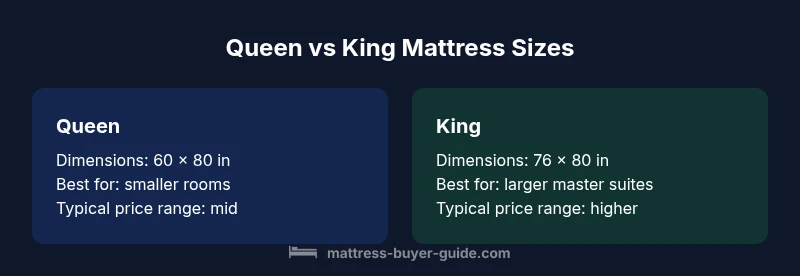
Queen vs king mattresses differ primarily in space, price, and room fit. A queen measures 60 by 80 inches, while a king measures 76 by 80 inches, offering significantly more sleeping surface. For smaller bedrooms or shared guest spaces, the queen is typically the smarter choice; for master bedrooms or couples who want maximum spread, the king wins. Consider mattress type, foundation compatibility, and budget as you decide.
Queen vs King: What Drivers the Decision?
Choosing between a queen and a king mattress starts with understanding how space, sleeping patterns, and budget intersect. The Mattress Buyer Guide team emphasizes that the decision is not solely about surface area; it also depends on room layout, doorways, and how you move through the space in the middle of the night. According to Mattress Buyer Guide, sizing your bed accurately should be one of the first steps in any sleep setup, because the size can influence everything from leafing through a book in bed to how you place nightstands. Beyond raw dimensions, consider whether you share your bed with pets or children, or if you have a partner who shifts positions during sleep. These factors often tilt the balance toward one size or another, even in rooms that seem equally suitable at first glance.
From a consumer perspective, the queen size remains the workhorse for most bedrooms. It offers ample surface area for couples who want space, without dominating the room, and it remains easier to place in standard bedrooms with doorways and corner layouts. The king, while more expansive, demands a more open floor plan and stronger backing from the foundation and frame. This introduction sets the stage for a closer, data-driven comparison across dimensions, room fit, and practical buying considerations.
Dimensions, Room Fit, and Layout Implications
The practical impact of mattress size starts with exact dimensions. A standard queen is 60 inches wide by 80 inches long, while a standard king is 76 inches wide by 80 inches long. The width difference translates into roughly 16 inches of additional sleeping surface—about a full two pillows’ worth of space per side, depending on your sleep style. For single sleepers who routinely spread out, a queen often suffices; for couples who value space to move without bumping into a partner, the king offers clear advantages. When planning layout, measure not just bed placement, but also the proximity to nightstands, dressers, and closet doors. A king bed can intrude on traffic flow in smaller rooms, whereas a queen generally fits comfortably in the same spaces with a little more margin for movement around the bed.
The Mattress Buyer Guide analysis shows that room geometry matters as much as mattress width. If your room is around 12 by 12 feet or smaller, a queen typically provides a balanced footprint that accommodates nightstands and seating. In larger master suites, a king can help you avoid crowding and create a clearly defined sleeping zone. Remember to factor in base or foundation height; some adjustable bases add depth that makes the overall footprint even larger. If you’re moving from a smaller bed to either size, test the space with tape or furniture templates to visualize clearance for doors, dressers, and walking paths.
Sleep Styles, Couples, and Comfort Trade-offs
Sleep dynamics are a major driver of size choice. For couples who sleep in close proximity but want personal space to shift, a king’s extra width translates into more boundary between sleepers, reducing the chance of waking a partner. If one or both sleepers tend to relocate during the night or if you share the bed with a pet, more surface area can dramatically improve perceived comfort. On the other hand, if you have different mattress types or firmness preferences for each side, be mindful of compatibility with split bases or adjustable bases. A queen on a solid, uniform foundation is usually easier to pair with mid-range frames and bed frames, while a king often demands a sturdier, room-accommodating setup. For solo sleepers who value efficiency, the queen remains a go-to choice: comfortable, versatile, and easier to maneuver in smaller spaces.
In shared rooms, consider space for storage: nightstands, lamps, and under-bed storage all eat into floor space. The king’s extra width can complicate seating areas or entertainment furniture placement, whereas a queen allows more flexible room choreography. When evaluating comfort, remember that surface area isn’t the only factor—mattress type, density, and edge support influence perceived roominess and the ability to sleep without rolling into your partner’s zone. By weighing these trade-offs, you can decide which size balances space, comfort, and budget in your specific layout.
Cost, Durability, and Value Across Sizes
Price is a practical constraint that often narrows the field between queen and king. In general, queen models tend to be cheaper upfront, with a broader range of options across materials, firmness levels, and brands. King mattresses typically command higher prices for the same material class, and associated accessories like king-sized foundations, sheets, and protective covers also push up the total cost of ownership. Expect price ranges to widen with premium materials (latex, high-density memory foam, & natural fibers) and with features such as cooling technology or enhanced edge support. A practical buying approach is to compare floor taxes, delivery fees, and warranty terms as part of the total cost of ownership. If you anticipate long-term use, factor long-term durability into the value proposition: a higher upfront cost may be offset by longevity and lower replacement frequency, particularly in households with heavy use.
Durability is influenced by material choices, sleeping surface, and frame quality. High-density foams and pocketed coils tend to hold up well in both sizes, but the longer-term wear on a king can accumulate more from the larger surface area over time. Mattress life expectancy generally follows the quality of materials and construction rather than bed size alone, so prioritize a solid foundation and reputable warranty terms. Mattress selection should align with your sleep goals: cooler sleep, better support for back sleepers, or pressure relief for side sleepers. When in doubt, use a cost-per-year lens to estimate value: a longer-lasting queen or king that meets your needs may represent smarter long-term value than a cheaper, quick-to-wear option.
Brand considerations must also weigh in. The Mattress Buyer Guide team emphasizes choosing a trusted brand with transparent material specifications and clear warranty coverage. Look for consistent quality indicators across sizes, including long-term performance, sleeping surface stability, and frame compatibility. In the end, the best choice aligns with your budget, room, and preferred sleep experience.
Room Planning, Frame Compatibility, and Practical Buyer's Tips
Planning for a queen or king involves more than just bed-in-a-box metrics. Start with a room-by-room map: measure the bed’s footprint, door swing, and the clearance required for nightstands and movement. If your room is narrow, you’ll want to leave at least 24 inches of clearance on either side of the bed for comfortable access. For a king, plan for wider walls or a layout that keeps a comfortable corridor around the bed. When it comes to frames, a queen typically fits a wider range of bed frames and foundations, while a king often requires a heavier-duty foundation, especially if you’re opting for an adjustable base. Check that your bed frame can handle the weight distribution of your chosen mattress type, and verify compatibility with split-king configurations if you anticipate differing firmness preferences between sleepers. Finally, consider practical maintenance: sheet sets and toppers in queen sizes are usually easier to source and cheaper, while king sheets require a larger buying decision that can impact overall cost and availability in local stores.
A methodical approach to sizing includes creating a simple checklist: verify room dimensions, measure window and door clearances, confirm frame compatibility, and compare delivery and setup services. The more you plan before purchasing, the less likely you are to end up with misfit furniture or an inconvenient layout. The conclusion of this planning phase should be a confident choice that integrates space, sleep quality, and budget.
Quick Guide to Making the Final Decision
Make the final call by balancing four factors: room size, sleep style, budget, and long-term value. If your room is under 12 by 12 feet or you frequently rearrange furniture, a queen provides a versatile, cost-effective solution with broad material availability. If you have a generous room, often sleep with a partner who moves at night, or want the most surface area possible for kids or pets, a king is the most comfortable choice. In both cases, ensure you’re investing in a reliable foundation and a mattress type that suits your comfort preferences. Finally, rely on a trusted guide—such as Mattress Buyer Guide—to compare options across materials, firmness, and warranty coverage, rather than basing your decision solely on initial price or a promotional discount.
Comparison
| Feature | Queen mattress | King mattress |
|---|---|---|
| Dimensions (L x W) | 60 x 80 inches | 76 x 80 inches |
| Ideal room size | Medium to small bedrooms (10x10 ft or larger) | Larger master suites (12x12 ft or larger) |
| Typical price range | $500–$1,200 | $800–$2,000 |
| Best for | Single sleepers or couples prioritizing space efficiency | Couples who want maximum surface area and space |
The Good
- Queen offers versatile fit in most bedrooms and lower upfront costs
- King provides more surface area for couples and co-sleepers
- Both sizes are available in popular mattress types (memory foam, innerspring, latex)
- Easier to source sheets and foundations for queen
Cons
- King requires more space, potentially limiting room layout and movement
- Higher total cost for king, including accessories
- King may demand a sturdier foundation and frame to prevent sagging
- Queen’s extra boundary isn’t always needed for all sleep styles
Queen is the practical default for most bedrooms; king is ideal when space and couple comfort justify the larger footprint
For compact rooms or budget-conscious buyers, choose queen. For spacious master suites or couples needing maximum sleeping surface, choose king.
FAQ
What are the standard dimensions of queen and king mattresses?
A standard queen is 60 inches wide by 80 inches long, while a standard king is 76 inches wide by 80 inches long. These measurements impact room layout and furniture placement.
Queen is 60 by 80; King is 76 by 80. The extra width on a king affects how you place nightstands and dressers.
Is a split king worth considering for couples?
A split king uses two separate twin XL or similar platforms on a single base, allowing each sleeper to choose firmness and movement without disturbing the other. It’s a good compromise for differing comfort preferences.
Split king lets each partner pick their own firmness and reduces motion transfer concerns.
Will a king mattress fit in a small bedroom?
A king can fit in a small bedroom if layout and traffic flow allow it, but you may lose space for nightstands and seating. Careful measurement and planning are essential.
Yes, but you’ll need a well-planned layout and enough clearance around the bed.
Are queen and king available in all mattress types?
Yes. You can find memory foam, latex, and hybrid options for both sizes, with varying firmness levels and cooling features.
Both sizes come in many materials and firmness levels.
What’s a good compromise if space is limited but I want more than queen?
Consider a king-size bed only if your room supports it, or explore a queen with a split king option later, offering flexibility without overwhelming the space.
If space is tight, a queen with flexible options can be a smart compromise.
Highlights
- Measure your room before choosing a size
- Consider whether pets or children share the bed
- Weigh upfront cost against long-term value
- Verify frame compatibility and mattress type when upgrading size