Is Queen Mattress Bigger Than Full? A Comprehensive Size Comparison
Explore whether a queen mattress is bigger than a full, with detailed dimensions, space considerations, and buying guidance to help you pick the right size for your bedroom.


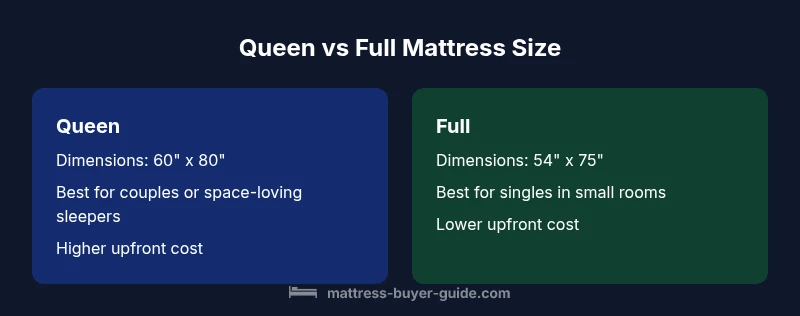
Is queen mattress bigger than full? In most cases, yes: a queen typically measures 60 by 80 inches, while a full (double) is 54 by 75 inches. The additional width and length provide more space for solo sleepers and couples who shift at night. In tighter bedrooms, the queen can still fit, but it requires careful layout.
Size Basics and the central question
According to Mattress Buyer Guide, the question is frequently framed as a sizing problem: is queen mattress bigger than full? The simple answer is yes in most cases, but the nuance matters. The size difference translates directly into usable space, which affects not only comfort but room layout, sheet availability, and even the type of foundation you can use. This article analyzes the queen versus full decision from multiple angles—space, cost, frame compatibility, and long-term value—so you can make an informed choice that aligns with your sleep needs and your room dynamics.
Space and Layout: How much room do you need?
Room size matters more than you might think. A queen bed occupies more floor space, but it also centers more easily in larger bedrooms without feeling cramped. In tight spaces, a full can be a practical anchor, but you’ll want to consider circulation space around the bed for dressers, nightstands, and door access. If you share the bed, the extra width of a queen can reduce nighttime disturbances because each sleeper has more personal space. For solo sleepers working with a small room, the decision often comes down to whether the extra width justifies removing other furniture or sacrificing floor area for a larger sleep surface.
Dimensions and surface area: Exact measurements you should know
The standard queen mattress measures 60 inches wide by 80 inches long, which yields a surface area of 4,800 square inches. In contrast, a full mattress measures 54 inches wide by 75 inches long, for a surface area of 4,050 square inches. These numbers translate into practical differences: the queen provides about 750 extra square inches of sleeping surface, equivalent to roughly an extra full-size sheet or a small backpack’s worth of space. Taller sleepers also benefit from the extra length, especially if you tend to stretch out during sleep.
Sleep partners and movement: Who benefits most
If you routinely sleep with a partner, the queen’s extra width makes a substantial difference. It reduces encroachment during restless nights and allows for better edge-to-edge sitting and getting in and out of bed. For solo sleepers, the decision hinges on room constraints and budget. Some sleepers who value strict space efficiency may still opt for a full in a small bedroom, especially if they have compact bedding and a minimalist frame. The key is to balance personal space with wardrobe, dresser size, and walking clearance around the bed.
Frames, foundations, and bedding compatibility
Frame compatibility is a practical consideration. Queen frames and foundations are widely available and typically fit standard queen sheets and bedding through common retailers. Full frames are also widely available, but in mixed-size bedrooms you may encounter mismatches if you upgrade the mattress without updating the frame. When upgrading from full to queen, you may need to replace or adjust the bed frame, foundation, and potentially the headboard or footboard to ensure a stable, level sleep surface. Double-check dimensions of your current frame before buying.
Mattress materials and how size influences feel
Material type (memory foam, innerspring, hybrid) can impact the perceived space difference between queen and full. A high-density memory foam queen may feel more spacious due to how the foam distributes weight and reduces motion transfer, while a full in hybrid form could feel boxier if the bed is heavier or taller. Consider your preferred sleeping position, heat preferences, and edge support when evaluating how the size interacts with the chosen material. In practice, the queen’s larger surface improves sleep quality for most couples and taller individuals, especially on nights of restless movement.
Durability, longevity, and warranty considerations
Durability is linked to material quality, not size alone, but larger sizes may experience different wear patterns due to increased surface area and frame load. When evaluating warranties, check whether the coverage applies equally to queen and full sizes and whether any additional costs apply for larger sizes. If you expect heavy use from two sleepers, the queen is generally the safer long-term option, provided you choose a sturdy foundation and a mattress with robust edge support. Mattress durability claims should be validated by independent reviews and manufacturer specifications.
Budgeting and value: When is a queen worth it?
Budget considerations are often driven by room size, existing furniture, and long-term sleep goals. While a queen tends to cost more upfront than a full, it can provide better long-term value in terms of comfort, durability, and resale value. If you frequently share the bed, or if you want more space to move freely without disturbing a partner, the queen offers a compelling value proposition. If the room is very tight or you’re price-sensitive, a full can still meet basic comfort needs, but you should plan for an upgrade later if your situation changes.
Setup, maintenance, and care basics
Setting up a queen requires careful measurement of the room, ensuring there is at least 2 feet of clearance on each side for easy bed-making and cleaning. Regular care, including rotating the mattress every 3–6 months and using appropriate bedding, can extend life. For sizes, you’ll want to invest in properly fitted sheets with elastic all around and ensure your mattress protector fits snugly to prevent moisture and staining. Routine cleaning, safe handling during moves, and a stable foundation are all part of maintaining a queen-sized sleep surface.
Common myths and pitfalls to avoid
A frequent myth is that size alone determines comfort; mattress feel, support, and personal sleep preferences matter more than dimensions. Another pitfall is assuming bigger is always better in every room—too large a bed can crowd a small space, impede night-time movement, and crowd your storage options. Always measure your bedroom, doorways, and hallway clearances to ensure you can move the mattress into place and set up the base without damage or back strain.
Quick takeaways for quick decisions
When choosing between queen and full, the decision hinges on room size, sleep arrangement, and budget. If you share a bed or want more room to move, the queen wins on space and comfort. If you sleep solo in a smaller room, a full can work in the short term, but plan for a future upgrade as needs evolve.
Quick comparison at a glance
- Queen: 60" x 80"; more space, better for couples or taller individuals; higher upfront cost; needs bigger room; widely compatible with standard frames.
- Full: 54" x 75"; cheaper upfront; fits smaller rooms; less space for movement; compatible with standard frames, but edge space is more limited.
Comparison
| Feature | Queen mattress | Full mattress |
|---|---|---|
| Dimensions (L x W) | 60 x 80 inches | 54 x 75 inches |
| Best For | Couples and taller sleepers; those who move at night | Solo sleepers in smaller rooms; budget-conscious buyers |
| Surface Area | 4,800 sq in | 4,050 sq in |
| Frame Compatibility | Standard queen frames widely available | Standard full frames; ensure exchange compatibility if upgrading |
| Typical Price Range (contextual) | Generally higher, depends on materials and brand | Generally lower, depends on materials and brand |
| Ideal for Edge-to-Edge Sleep | Better for two sleepers; less risk of encroachment | Narrower footprint may limit shared sleep space |
The Good
- More sleeping space for solo sleepers
- Better for couples who share the bed
- Improved room for taller adults
- Higher resale value potential with better comfort
Cons
- Higher upfront cost
- Requires a larger bedroom footprint and more clearance
- Heavier and more cumbersome to move
- Not ideal for very small rooms or tight layouts
Queen generally wins for couples or growing sleepers; full is a viable option in small rooms or tight budgets.
If two people share a bed or you value extra stretch space, choose queen. If space is extremely limited or cost is the primary concern, a full can suffice, with plans to upgrade later.
FAQ
What are the standard dimensions for queen and full mattresses?
A queen mattress measures 60 inches by 80 inches, while a full mattress measures 54 inches by 75 inches. These are the conventional US sizes used by most manufacturers. The difference in dimensions translates into a larger sleep surface for the queen, which can impact comfort and room layout.
Queen is 60 by 80 inches, full is 54 by 75 inches. The queen offers more space, which can improve comfort for couples or taller sleepers.
Is a queen worth it for a single sleeper?
For a solo sleeper, a queen is often worth it if you value extra personal space and the option to move without hitting a partner. If space or budget is tight, a full can be adequate, but you may outgrow it sooner if your sleep needs change.
If you want more space and flexibility, go with queen; otherwise, full can work in a smaller room.
Can I use a queen bed frame for a full mattress?
In most cases, you cannot use a queen frame for a full mattress without modifications. Frames and foundations are typically sized to match the mattress. If you downsize from queen to full, you may need to swap to a full frame or adjust the hardware for a secure fit.
Usually not without modifications; use a frame that matches the mattress size.
Does choosing a mattress type affect the best size?
The mattress type (memory foam, springs, hybrid) affects feel and support more than size alone, but it can influence perceived space. For example, memory foam often feels more compact and can sometimes be placed closer to edges, while hybrids may be heavier to handle in larger sizes.
Type influences feel and handling, but size still governs surface area and space.
Are there regional size variances I should know about?
Most of the US adheres to standard queen and full dimensions, but regional deviations do exist in some markets. Always verify the exact dimensions from the retailer or manufacturer before purchasing to avoid ordering errors.
Standard sizes are common, but check the exact dimensions where you shop.
What should I consider if I have a small bedroom?
In a small bedroom, you may prioritize a full or even a twin XL if space is extremely tight. If you can accommodate it, a queen can still fit with smart layout choices, such as a platform bed with drawers for storage and careful dresser placement to preserve traffic flow.
In tight rooms, consider your layout—storage and traffic flow matter as much as bed size.
Highlights
- Queen offers more space for couples and taller sleepers
- Full is better for small rooms and tighter budgets
- Frame compatibility matters when upgrading sizes
- Material and base choices influence comfort as much as size