Difference Between Mattress and Mattress Pad: A Practical Guide
Meta description: Explore the difference between mattress and mattress pad, how each functions, and how to choose the right combination for better sleep. Learn practical guidance from Mattress Buyer Guide.


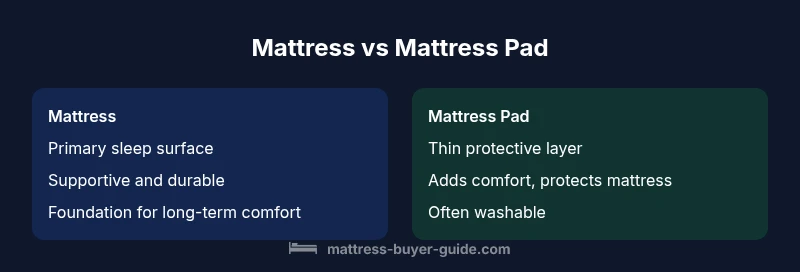
Mattress and mattress pad serve different roles in your sleep setup. The mattress is the primary sleeping surface that provides support and durability, while a mattress pad is a thin, removable layer that adds comfort and protects the mattress. Knowing their differences helps you tailor a bed that fits your budget and sleep needs.
Differences in Core Function: Mattress vs Mattress Pad
The core difference between a mattress and a mattress pad begins with function. A mattress is the primary sleeping surface that accepts and distributes body weight, supports spinal alignment, and resists sagging over time. It is built from sturdy materials—springs, foam, latex, or hybrids—and is designed to endure years of regular use. A mattress pad, by contrast, is a thin, flexible layer placed on top of the mattress. It serves mainly as a comfort booster and protective barrier. Pads are typically filled with padding or foam and wrapped in a fabric cover. The distinction matters for sleep quality, mattress longevity, and hygiene over the life of your bed. According to Mattress Buyer Guide, many shoppers confuse these terms, but understanding the difference helps you tailor a setup that matches your sleep goals. Here we unpack the key functional contrasts and what they mean for real-world use.
Layering and Practical Use: How They Interact
In a typical bed setup, the order matters. The mattress forms the foundation, providing shape, support, and durability. A mattress pad sits on this foundation, offering a soft interface that can alter initial comfort and perceived temperature. Sheets go over both, helping maintain a stable surface. You can think of the mattress as the structural frame of a house and the mattress pad as the interior finishing that adds softness, protects the surface from stains, and eases cleaning. While a mattress pad can modestly improve immediate comfort, it cannot compensate for a mattress that lacks support or has significant sagging. This distinction becomes important when weighing upgrades: you may extend the life of your current mattress with a pad, but you should address core support if your mattress is past its prime.
Performance Factors: Comfort, Support, Temperature, and Hygiene
Comfort and support originate primarily from the mattress. If you wake with back or neck pain, poor spinal alignment is often the culprit, and a pad cannot fix that root issue. Temperature regulation is often influenced by both layers: some mattress pads add extra insulation that can trap heat, while others use breathable fabrics to promote airflow. Hygiene is another area where pads deliver tangible benefits: pads are easier to wash or replace, reducing exposure to spills and allergens without needing to clean the entire mattress. The best approach is to assess your sleep problems (sagging, overheating, stains, allergens) and address them with the right combination of mattress quality and pad maintenance.
Durability, Cleaning, and Maintenance
A mattress benefits from regular maintenance—rotation, occasional deep cleaning, and protective covers—to maximize lifespan. A mattress pad, in contrast, is designed for easier care. Most pads are machine-washable or spot-cleanable, which simplifies upkeep and helps maintain a clean sleep surface. Using a pad can also reduce direct staining and sweat absorption on the mattress itself, potentially extending its life. When selecting a pad, check care instructions and fabric type, especially if you have sensitive skin or allergies.
Real-World Scenarios: When to Use Each
If you’re starting from scratch with a new mattress, invest in a quality mattress first to ensure proper support. Add a mattress pad if you want extra comfort or a protective barrier against spills, sweat, or body oils. For renters or short-term setups, a pad can be a cost-effective solution that preserves the mattress when you’re not ready to commit to a full replacement. If you already own a mattress that shows signs of wear but hasn’t sagged noticeably, a high-quality pad or topper may buy time, but be mindful that significant sagging often requires a mattress replacement for long-term relief.
Budgeting for Sleep: Value, Longevity, and Trade-offs
Budget considerations shape your decision. A good mattress is a larger initial investment but lasts longer and provides the core sleep experience. A mattress pad is comparatively affordable and can dramatically affect comfort and hygiene with minimal upfront cost. If affordability is a constraint, prioritize the mattress and pair it with a washable pad as a protective, low-effort upgrade. Over time, you can refresh your sleep surface incrementally by updating the pad or adding a topper, instead of replacing the entire mattress.
How to Compare Options: Key Criteria and a Quick Checklist
When comparing mattresses, examine support, durability, and warranty length. For mattress pads, evaluate thickness, fill material, fabric weave, and machine-washability. Create a simple checklist:
- Is the mattress providing consistent support without sagging?
- Does the pad add comfort without significantly altering the feel of the mattress?
- Are care instructions practical for your lifestyle?
- Will the pad interfere with the mattress warranty?
- Do you need additional protection against allergens or stains?
Buying Guide: Questions to Ask Retailers
Ask about compatibility, return policies, and care requirements for both products. Inquire about how the pad affects temperature and moisture transfer, and whether the mattress warranty covers issues that arise when used with a pad. Request samples of fabric and padding, and if possible, test the setup with your typical sleep positions to assess comfort and support.
Common Myths About Mattress Pads
Myth: A pad can fix a poor mattress. Reality: Pads add comfort and protection but cannot replace core support from a worn mattress. Myth: Pads are only for protection. Reality: They also influence feel, temperature, and hygiene, but their impact is limited if the mattress is not supportive.
Comparison
| Feature | Mattress | Mattress Pad |
|---|---|---|
| Main purpose | Primary sleep surface that provides support and durability | Thin, protective/comfort layer on top of the mattress |
| Thickness/structure | Thick, complex construction (springs/foam/latex) | Thin, flexible padding with fabric cover |
| Durability and lifespan | Longer lifespan with proper care and alignment | Limited lifespan; extends mattress life by protecting surfaces |
| Care & cleaning | Requires routine care (rotation, deep cleaning as needed) | Often machine-washable or easy spot-cleaning |
| Impact on hygiene | Direct sleep surface; hygiene depends on mattress condition | Barrier against stains and allergens; easier cleaning |
| Best for | New or high-quality mattresses that require solid support | Existing mattresses needing protection or a minor comfort boost |
The Good
- Provides durable, long-lasting foundational support
- Pads extend mattress life by protecting surface from wear and stains
- Pads are often removable and washable for easy maintenance
- Upgrading with a pad can improve sleep hygiene without replacing the mattress
- Pads offer a cost-effective way to refresh comfort without major investment
Cons
- Pads do not replace core mattress support when the mattress is worn
- Pads can shift or bunch if not properly fitted, causing discomfort
- Overreliance on a pad may delay necessary mattress replacement
- Ill-fitting pads can interfere with fitted sheets and overall bed feel
Prioritize a quality mattress for core support; use a mattress pad for protection and optional comfort
A solid mattress is the foundation of good sleep. A mattress pad adds protection and customizable comfort, but it cannot compensate for a worn-out mattress. The Mattress Buyer Guide team recommends choosing a strong mattress first and adding a pad to suit your hygiene and comfort preferences.
FAQ
What is the essential difference between a mattress and a mattress pad?
The mattress provides the primary support, durability, and shape needed for spinal alignment, while a mattress pad is a thin, removable layer that adds comfort and protects the mattress from stains and wear. The pad cannot replace the structural support of a mattress.
The mattress is the main support; the pad adds comfort and protection.
Can a mattress pad replace a mattress?
No. A mattress pad is not designed to replace the core support of a mattress. If your mattress has noticeable sagging or loss of support, you should consider replacing the mattress rather than relying on a pad to fix the issue.
No, pads don’t replace the mattress itself.
How do I clean a mattress pad vs a mattress?
Mattress pads are typically easier to clean and are often machine-washable or spot-cleanable. Mattresses require more comprehensive cleaning approaches and preventive care, such as protective covers and routine rotation, but deep cleaning is usually less frequent and more involved.
Pads are easier to wash; mattresses need more careful cleaning.
Will using a mattress pad void my mattress warranty?
Most warranties consider pads acceptable as long as they do not damage the mattress or alter its intended use. Always check the warranty terms for your specific mattress and pad combination to avoid accidental voids.
Check your warranty terms to be safe.
How long does a mattress pad last?
Pad longevity depends on usage, care, and material quality. With regular washing and proper fitting, a pad can last several years, though it may lose loft or become less effective over time.
Pads can last for a few years with proper care.
What should I consider when buying both together?
Ensure the pad fits your mattress dimensions, doesn’t shift, and is washable. Consider the material for sleepers with allergies or temperature sensitivities and verify that the pad won’t interfere with the mattress warranty.
Get a well-fitting, washable pad that suits your needs.
Highlights
- Prioritize core support from the mattress itself
- Use a mattress pad to protect and personalize comfort
- Choose wash-friendly pads for easier maintenance
- Check compatibility with your mattress warranty
- Budget wisely by balancing upfront cost and long-term value